River Song's Diary

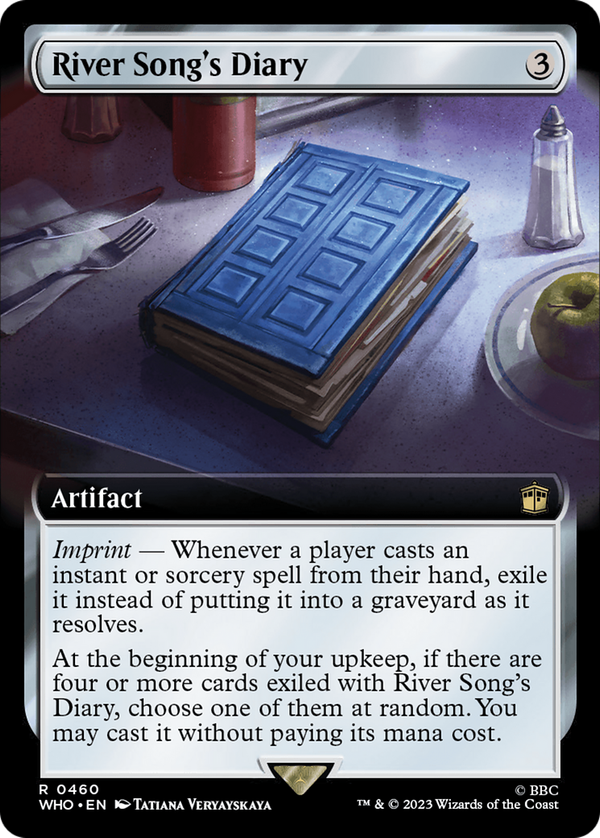
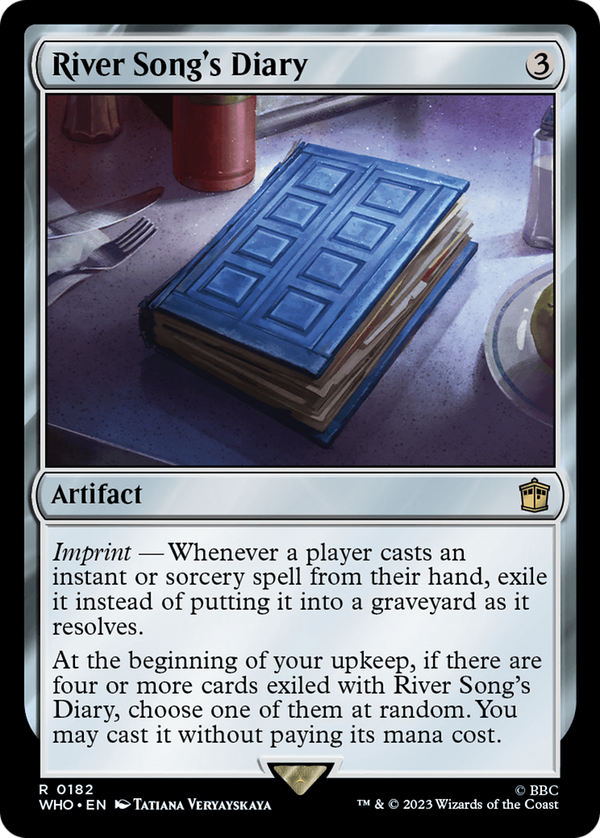
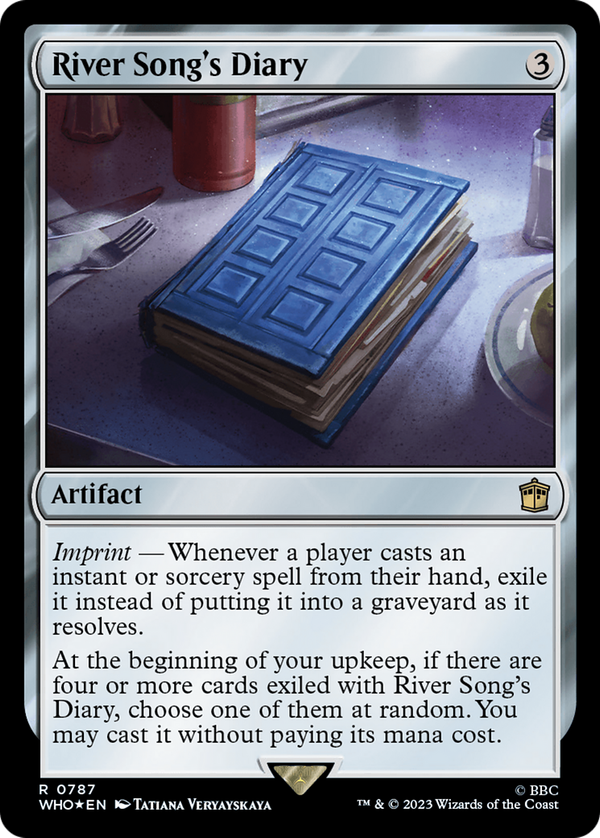
Most spell-recursion pieces let you pick the payoff: flash back the counterspell you need, buy back the burn that closes the game. This inverts the deal. The imprint clause is passive and universal (it exiles every instant and sorcery cast from hand, yours and your opponents', as those spells resolve), so it fills as a byproduct of ordinary play rather than deliberate setup. The catch lives in the upkeep trigger: once four cards accrue, you cast one chosen at random, for free, but you do not choose which. That randomness is the design's whole balancing act. The engine rewards a diet of spells that are all live in the abstract, since the game will pick the caster's payout for them, and it punishes decks that lean on situational answers that only matter at instant speed against a specific board. It also cuts both ways literally: an opponent's exiled spell is fair game to recast, so the artifact can turn their removal or their draw spell against them. The book conceit is doing quiet mechanical work here, framing the accumulation as pages written and later reread. What emerges is a value engine that asks you to build for consistency of quality across your instants and sorceries rather than for a single perfect answer, because the diary decides what gets read aloud.