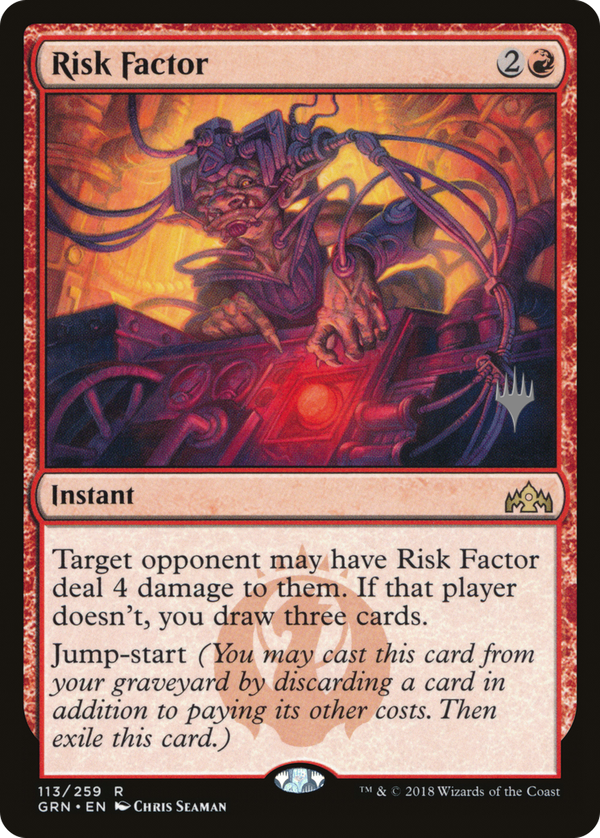
Risk Factor


The trick is that there is no good answer. Hand your opponent a choice between taking four to the face and giving you three cards, and they will pick whichever hurts you more: which means whatever they choose, you bank the version you can afford to be happy with. This is punisher design, the lineage that runs back through Browbeat, and the genre's old flaw was always that "your opponent decides" tends to mean "your opponent gives you the worst half." What separates this one is jump-start. The card is not a single decision but two, cast from hand and then again from the graveyard, and the discard cost feeds the second cast more than it taxes it (red aggro and spell-velocity decks are happy to ditch a card to keep the pressure on). Stacked across both halves, the menu is eight damage or six cards, or any split, and the opponent has to make the call twice against a board state that has only gotten worse for them. That is the structural answer to the punisher problem: you do not need either mode to be a bargain when the math compounds. Against a low life total the damage is lethal pressure; against a stabilized board the three cards refuel the assault. The opponent is choosing the speed of their loss, not whether to take the deal.