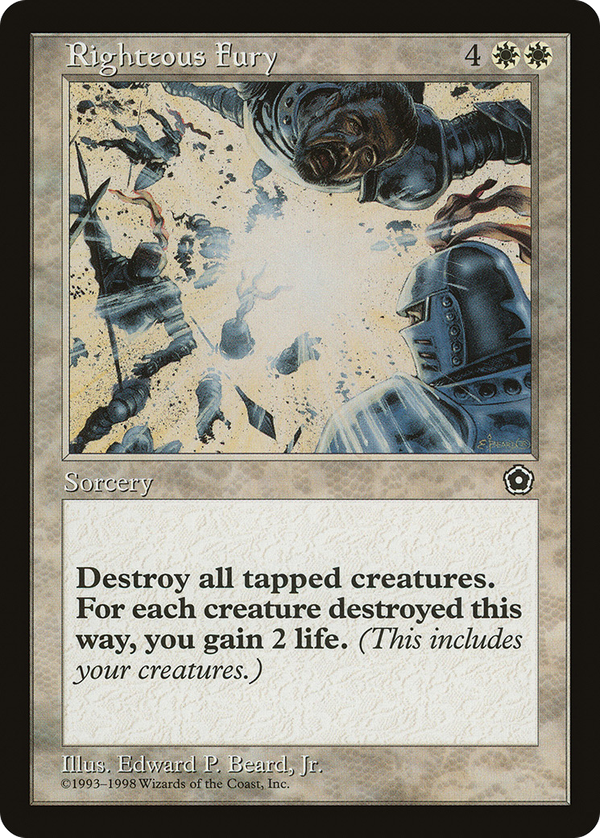
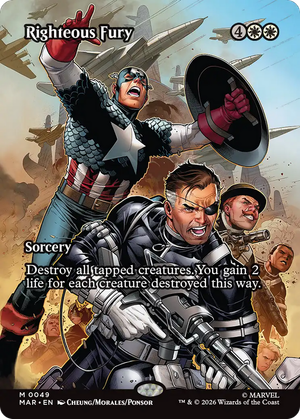
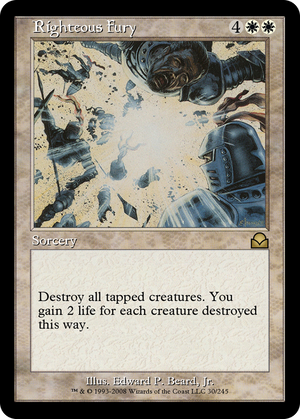
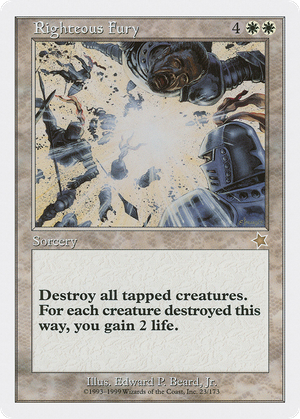
Righteous Fury

Aggression has a cost, and this wrath makes the attacker pay it. Rather than the symmetric "destroy all creatures" reset, it punishes a specific act: turning a team sideways. Destroying only tapped creatures is the whole design idea, reframing the sweeper as a defensive counterpunch. You hold onto it while an opponent commits to a swing, then cash in once their board is tapped out, while your own untapped creatures survive. The lifegain rider compounds the lesson: the more aggressive the opponent has been, the more creatures are tapped, the bigger the swing back in life total. It rewards patience and reading how a board commits to attacking rather than reaching for a board wipe whenever things get crowded.
The friction is built into the timing window: at sorcery speed, you cannot ambush an attack mid-combat, so the card asks you to survive a turn and sweep on your own, which limits how cleanly it answers a developed board. Conceived for a product whose mission was to teach the game in plain language, it nonetheless states a real strategic principle, and it sits in a lineage of conditional sweepers that care about creature state rather than creature count: the same impulse behind later effects keying off tapped, attacking, or untapped permanents. The wrath that only hits tapped creatures is the cleanest expression of that idea.