Rhystic Lightning


The Prophecy take on the rhystic mechanic, where every spell came with a tax clause that handed the choice to your opponent. The design tension here is real: four damage at instant speed for three mana is a premium rate, well above the burn curve of its era, but the card almost never delivers it against a player who has two mana untapped. What you actually buy is a forked threat. Either the spell resolves at full value because they cannot or will not pay, or you spend three mana to deal two and they spend two to stop the rest, a tempo trade that often favors them. The rhystic line works best as a closer, fired when the opponent is tapped out or when two damage is already lethal and the tax becomes irrelevant. That conditionality is exactly why the mechanic never anchored a competitive deck: it reads as a generous rate and plays as a negotiation you usually lose. The cycle Rhystic Lightning belongs to was an experiment in pushing decisions onto the opponent rather than the caster, an idea Wizards revisited far more successfully in cards like Rhystic Study, where the tax compounds over a whole game instead of resolving once. Here the tax is single-use and the payoff is burn, which makes it a clean museum piece for how the rhystic design space rewards persistent effects over one-shots.
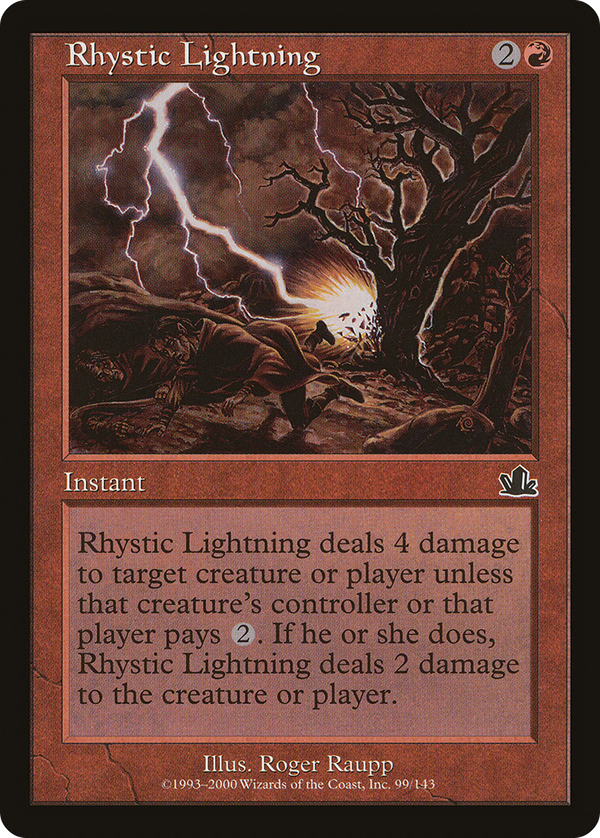
Rules text
. If they do, Rhystic Lightning deals 2 damage to the permanent or player.