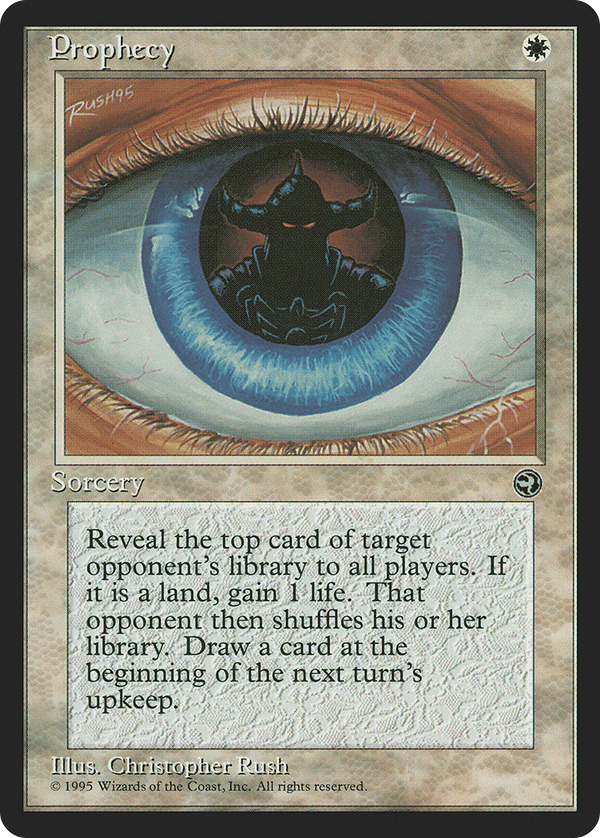
Prophecy

A cantrip with a top-of-library reveal aimed at the wrong player, and a perfect specimen of why Homelands is the punchline it is. The card draw is fine: pay one white, get a card next upkeep, which in 1995 was a respectable rate. But the rider, looking at the top of an opponent's library, gaining a life if it happens to be a land, then shuffling that information away before you can act on it, is design that fights itself. The whole appeal of looking at a library is the chance to do something with what you learn; this hands you a single point of conditional life and then deletes the knowledge with a forced shuffle. There is no bottoming, no second card, no choice for either player. The shuffle even disrupts your opponent's own draw, which sounds like upside until you realize you have spent a card and a turn of delay to randomize someone else's deck for them. It reads like a card built backward from a flavor prompt about foresight, with the mechanics bolted on afterward and none of them pointing the same direction. The cleaner template that would emerge later, scry on your own library attached to a cheap spell, does everything this attempts and more, which makes Prophecy a useful fossil: proof of how much sharper white card-selection design got once Wizards figured out whose library you actually want to see.