Rhystic Deluge


The "Rhystic" line of cards built its design around a single recurring question: pay a little now, or let your opponent do the thing for free? This is the tapper variant, and the structure shows exactly how the mechanic was meant to work. For a single blue mana, you ask the opponent to spend one more to keep a creature untapped. The cost is trivial in isolation, which is the point: the tax is not meant to stop them once but to bleed them across a turn cycle. Activate it on their attacker before combat and they either lose the attack or pay; activate it on their blocker and they pay or it gets through. Repeated activation is where the design lives, since each individual prompt is cheap enough to feel like nothing and expensive enough to add up. The Prophecy set leaned hard into this "pay-or-suffer" template (Rhystic Study being the famous survivor of the cycle), and the deluge version asks the controller to treat blue mana as a renewable lock on the opposing board. The weakness is the same as the strength: a player with mana to spare simply pays and ignores it, so the card rewards a board state where the opponent is already tapped low. It is the tax-as-tempo idea distilled, decades before pseudo-Pacifism effects and ward taxes carried the same logic forward into cleaner shells.
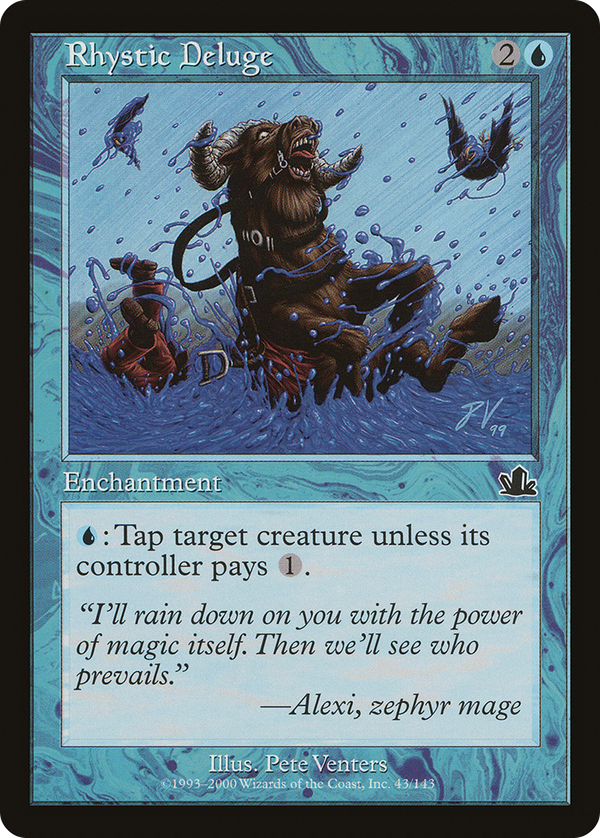
Rules text
: Tap target creature unless its controller pays  .
.