Revival of the Ancestors




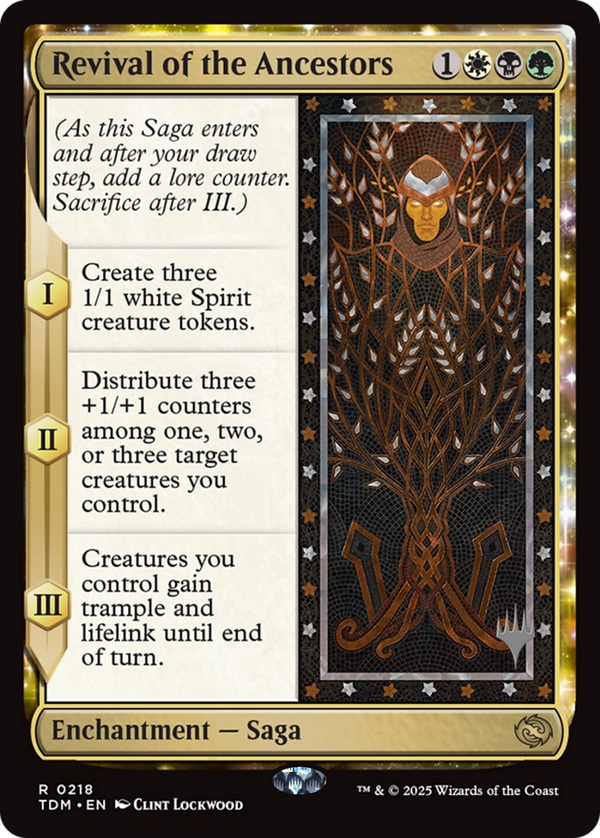
Three chapters that read like a compressed curve: a board the turn it enters, a way to make that board bigger next turn, and a way to make it lethal the turn after. The arc is what the design is selling. Chapter I builds the wide base, three bodies to hang counters on and to feed later math; Chapter II asks a real distribution question, since three +1/+1 counters spread across one creature, two, or three each point at a different threat model; Chapter III is the payoff that turns accumulated stats into damage that gets through and life that comes back. The clock is built into the Saga itself: the finish is locked to the third lore counter, so the tokens have to survive two turns of the opponent's answers before trample and lifelink arrive to cash them in. That gap between setup and payoff is the tax the card pays for stacking three effects most decks would run as separate cards. It rewards a battlefield that is already committed rather than one built from scratch, and it is vulnerable to the removal-heavy opponent who can pick off the Spirits before the counters land. Abzan's identity has always leaned on outlasting rather than exploding; this bottles that patience into a three-turn arc with a defined ending.