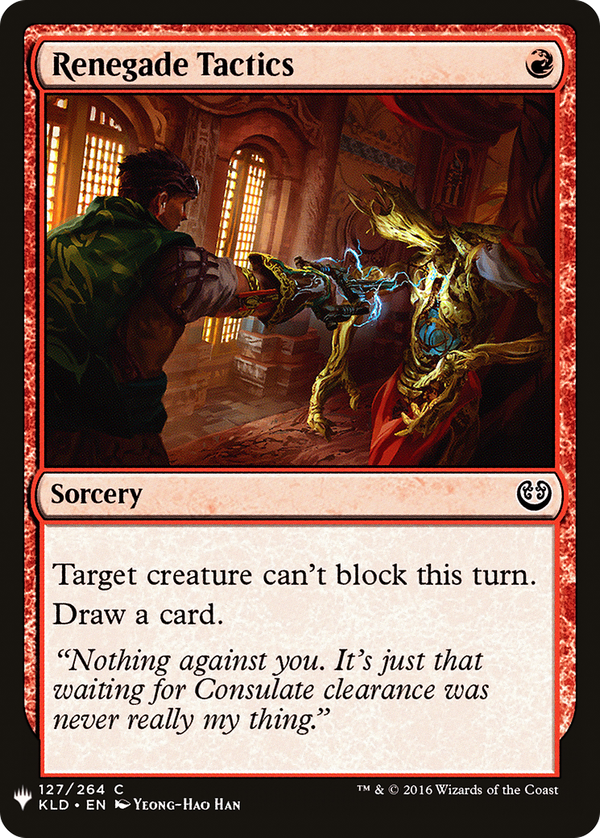
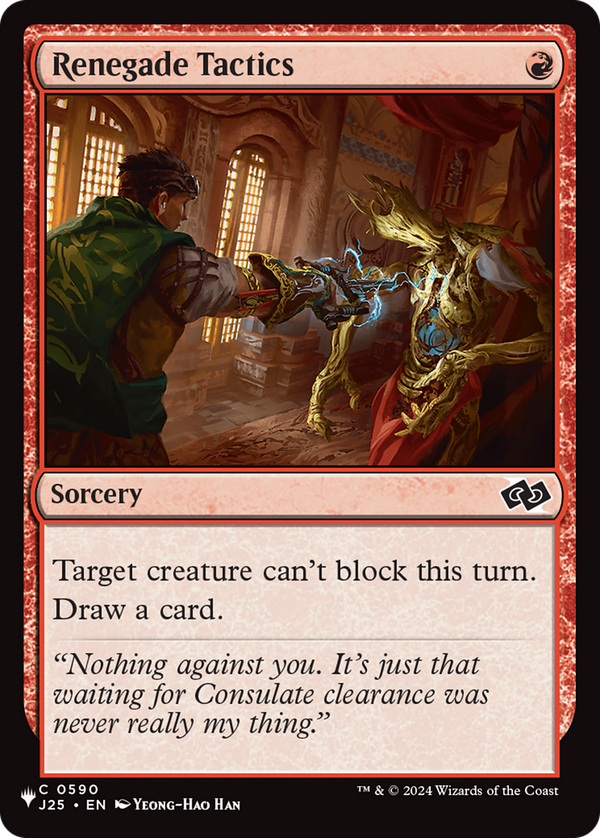
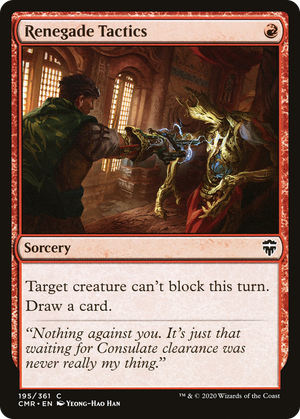
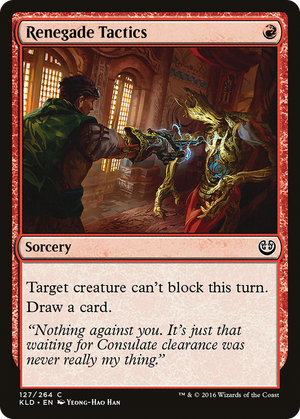
Renegade Tactics

The combat math here is older than the card itself: paying one mana to make a blocker step aside is the unblockable trick aggressive red decks have always wanted. What separates this from a dead-in-hand evasion enabler is the back half, the cantrip stapled onto the same slot. Because the draw replaces the card, the spell rarely costs you tempo or cards even when the "can't block" clause is doing nothing important: point it at any legal creature, resolve it, and you have refilled. The catch is that the draw is not unconditional. It needs a target creature to cast and must resolve on a legal one; against an empty board, or when your only target is removed in response and the spell fizzles, you draw nothing. That is a real constraint, but a shallow one, since a legal creature to target is usually the reason you wanted the card in the first place. Used as intended, the "can't block" line works as pseudo-removal against a single ground-holder (a wall, a fattie parked on defense) without spending an actual removal card, while the cantrip keeps your hand whole as you push the last points through. It is a humble piece of design but a precise one: it understands that the failure mode of a combat-only spell is being stranded on a stalled board, and it hedges that risk with a draw that lands whenever there is a creature to name.