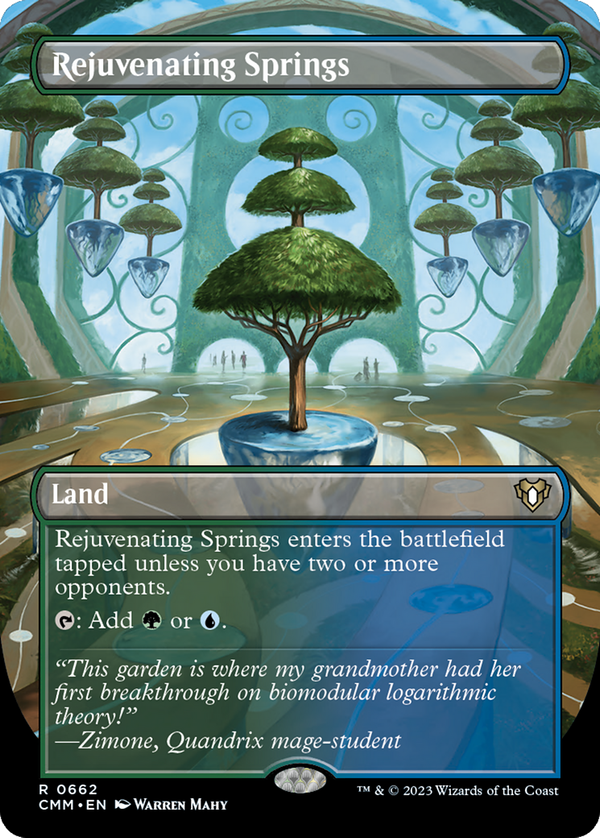
Rejuvenating Springs
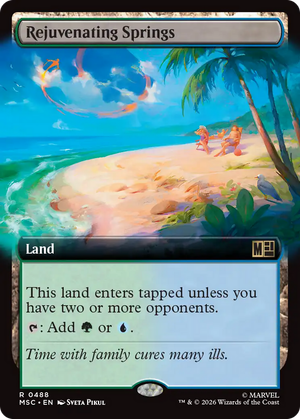
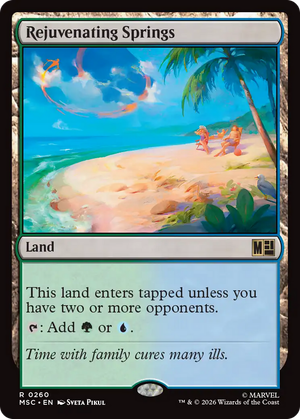
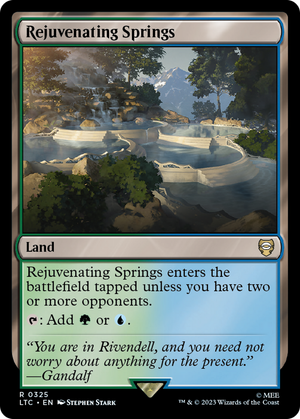
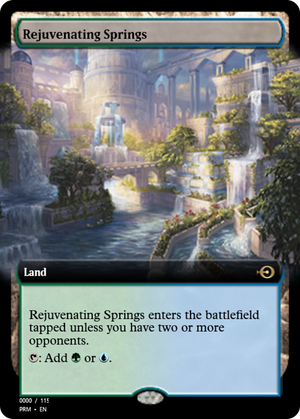
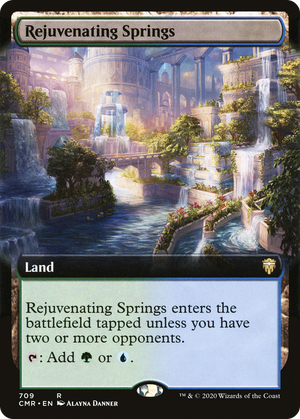
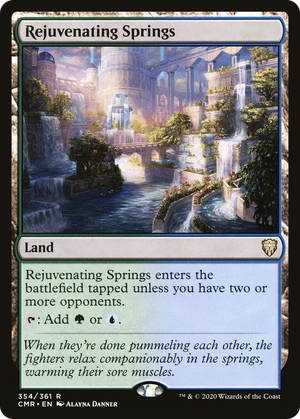
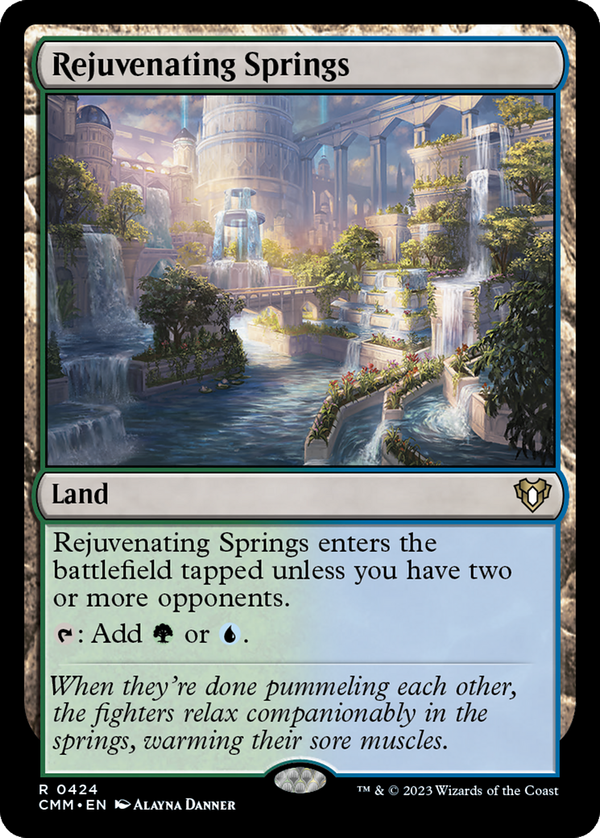
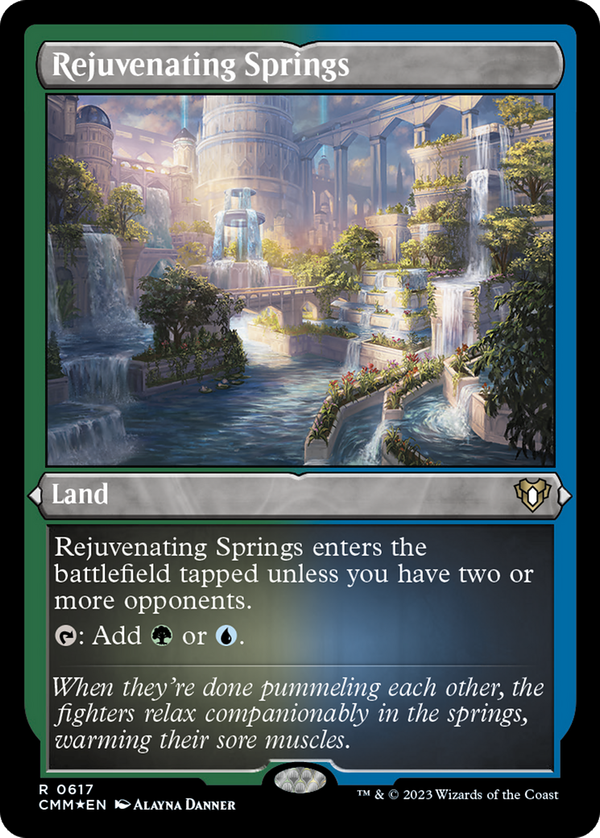
Every tapped-dual cycle before this one measured its tempo cost against a two-player baseline: the land almost always entered tapped, and you paid the turn. Here the condition inverts. At a table of three or more, the drawback never fires, and the card behaves like an untapped Simic dual with no life loss, no fetch requirement, and no basic-type dependency. It is a green-blue source priced for a pod and quietly penalized in a duel, and that split is the design working exactly as intended. Rather than tuning a single number to sit uncomfortably between one opponent and several, the counter test lets the same card be a strict downgrade in one seat and a clean, tempo-neutral dual in another. That conditional untapping does structural work older lands handled with drawbacks you always paid: instead of a fetch trigger or a life payment recurring every time the land mattered, the entry condition front-loads the entire cost into a single yes-or-no check, made once, on the turn it enters. The result is a fixing land that reads as unremarkable until you notice it was built for a seat count most fixing lands never had to consider.
Rules text
 : Add
: Add  or
or  .
.