Ramirez DePietro, Pillager



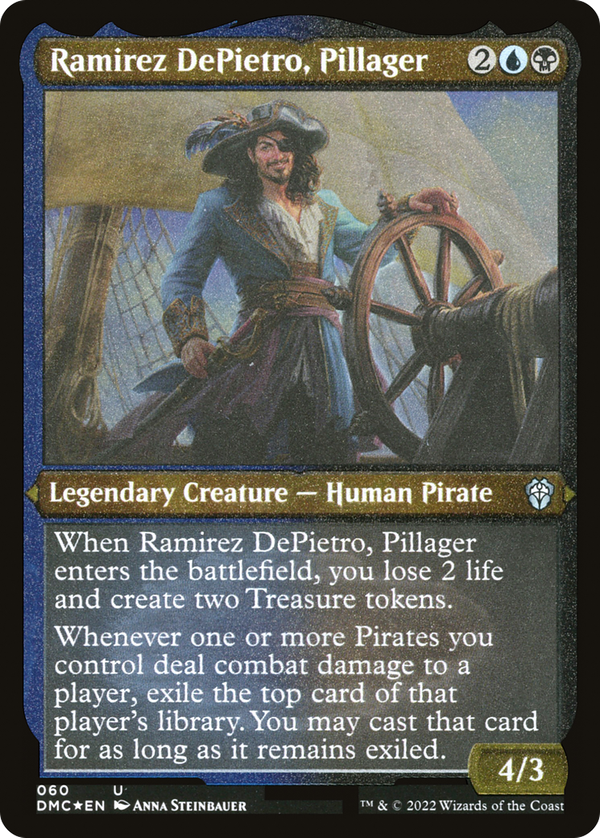
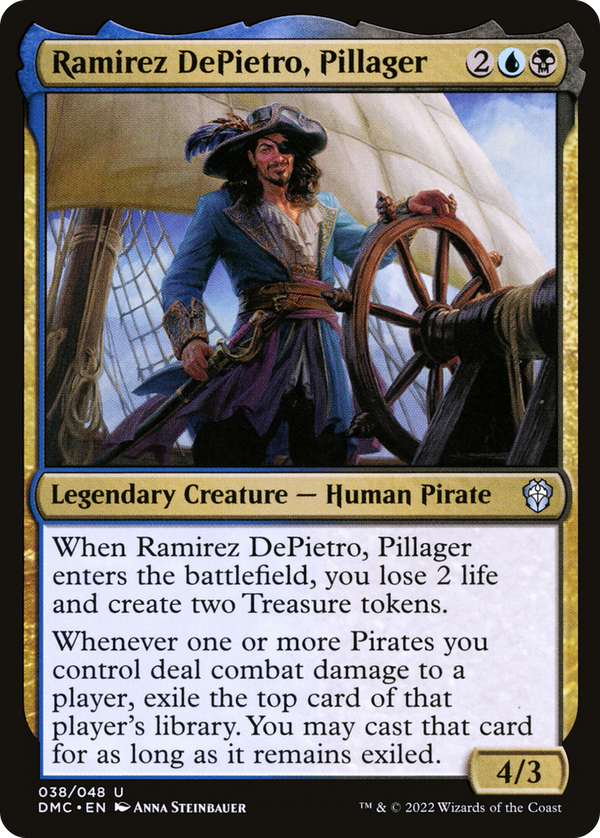
The theft clause is the interesting part, and it is built to reward a wide board rather than a big one. Because the trigger reads "one or more Pirates you control deal combat damage to a player," it fires once per player struck rather than once per attacking Pirate, so two raiders punching the same opponent still exiles only a single card from that opponent's library. The reward, then, is spreading combat damage across multiple players: strike three different players in a turn and you exile three cards, one from each. That distinction shapes the whole approach. You want evasive bodies fanning out, and the cards you exile become a standing pool of borrowed spells with no expiration: the oracle grants casting rights for as long as each card stays exiled, so nothing rots on a clock. That open-endedness is what makes this an engine and not a one-shot; every profitable combat step feeds the reserve, and you spend from it whenever mana allows. The entry payment is the counterweight, front-loading two life and two Treasure to smooth the awkward turns before the Pirates come online and to underwrite casting whatever you steal. This is a Pirate-tribal payoff that turns connecting in combat into durable card advantage, and the two-color identity leans on blue-black's evasion and reach rather than promising a rainbow of stolen options.