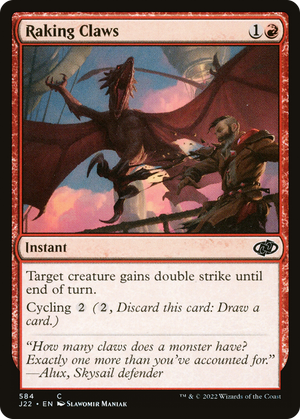
Raking Claws


Double strike as a combat trick is a math problem wearing a poker face. Granting it to an unblocked attacker doubles the damage outright, which is often the whole point: this is a burst-of-reach effect first, a combat blowout second. The sharper defensive payoff comes when a blocker steps in, because a creature with double strike lands its first-strike damage before an equal-sized blocker can deal any, turning an even trade into a clean kill or letting your attacker survive a fight it would otherwise lose. The fragility is narrower than it looks. If the opponent has an instant-speed removal spell, the double strike still fizzles once the target is gone; that is the real dead-mana scenario. The cycling clause is the hedge against holding a trick that never finds its window. When the board refuses to line up, the card converts into a fresh draw rather than sitting inert in hand, and that escape hatch quietly changes how many copies you can justify running. A pump spell that can cash itself in for a card is one you can lean on harder without drowning in situational effects during the games where nothing connects. The design does not overreach: it is a plain doubling of an attacker's output, with a built-in exit for the turns when doubling zero is worthless.
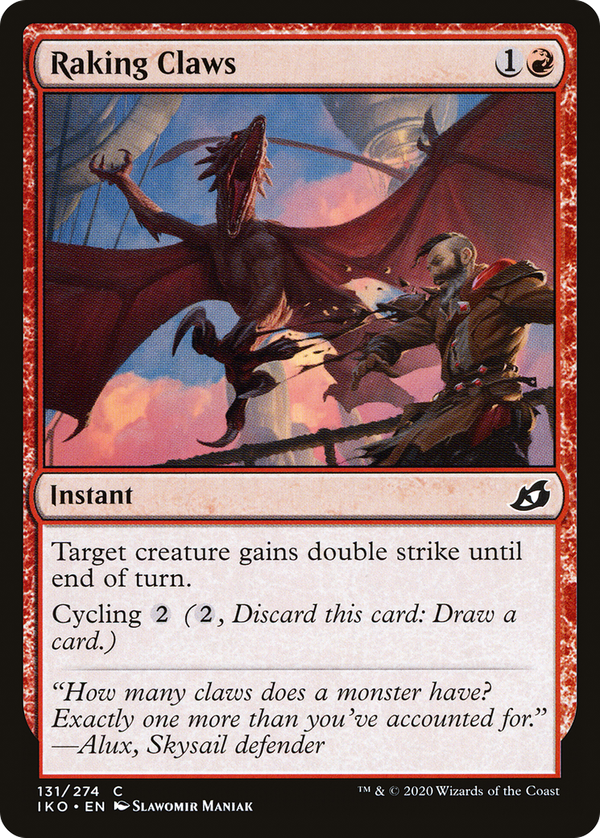
Rules text
 (, Discard this card: Draw a card.)