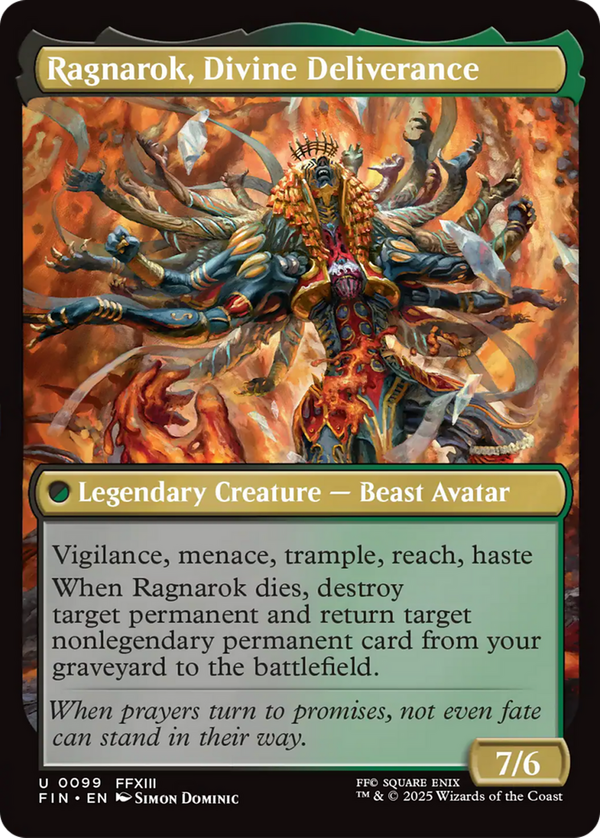
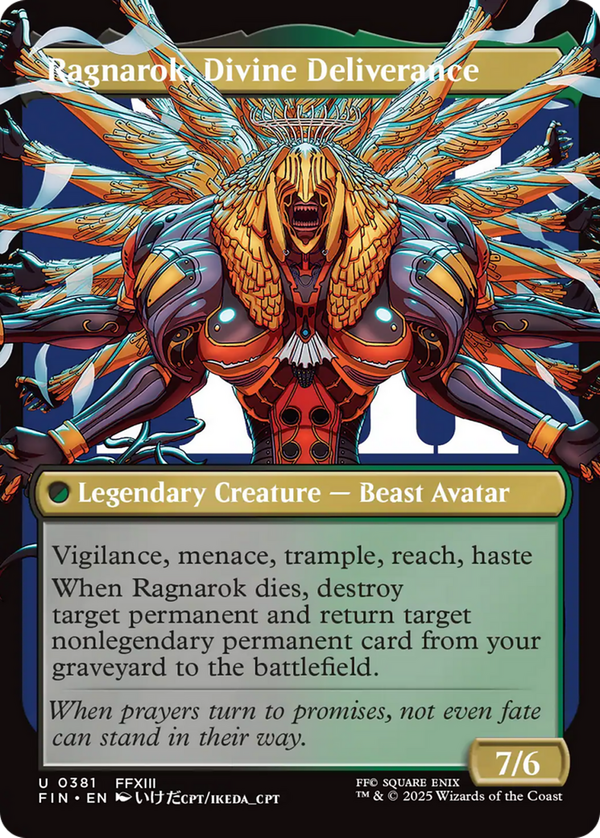
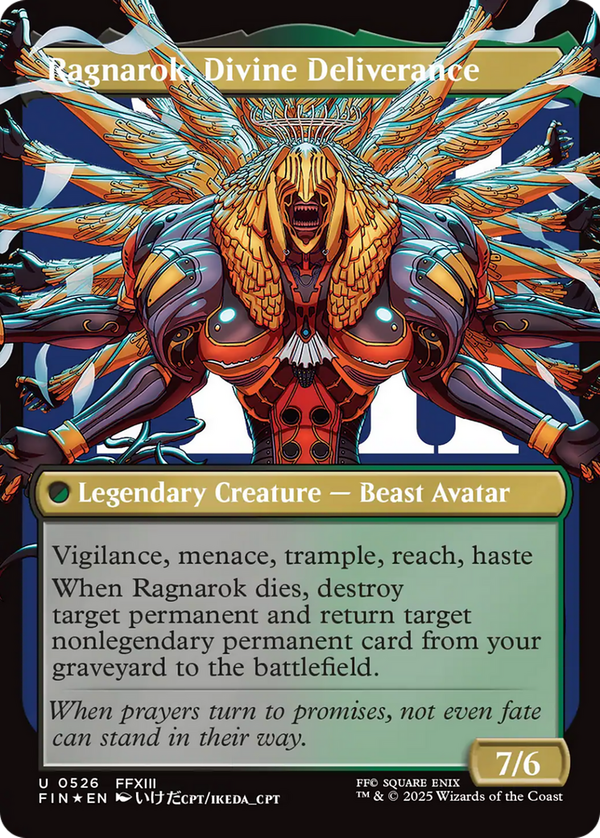
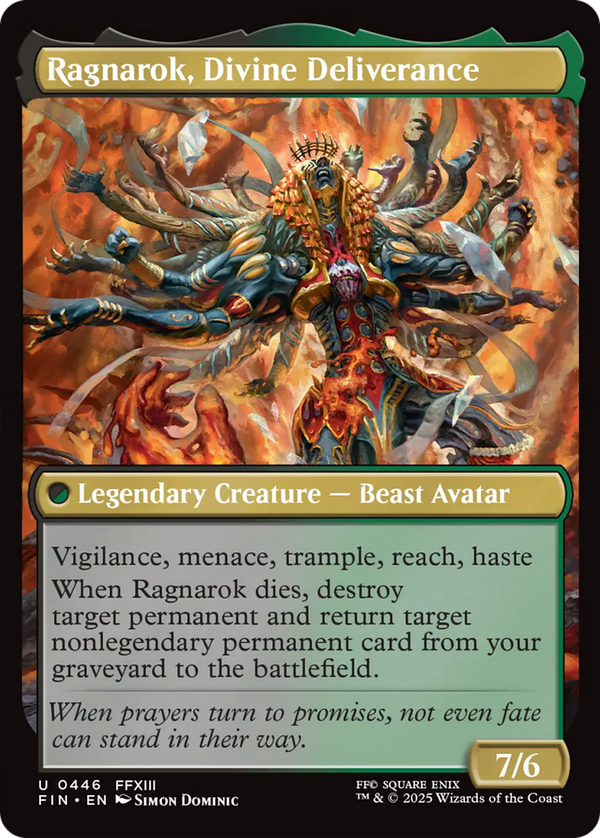
Ragnarok, Divine Deliverance
Five keywords stacked on one seven-mana body is loud, but the design's real weight sits in the death trigger, which turns a fragile, over-keyworded finisher into a two-for-one payoff for dying. The offensive suite is redundant on purpose: haste means it attacks immediately, vigilance keeps it back to block, while menace and trample push damage through defenders on the ground. Reach is the one defensive keyword in the pile, catching fliers on the crackback rather than helping it connect. But the keywords are the bait, not the payload. When it dies, it destroys a permanent and reanimates a nonlegendary permanent from your graveyard, and that last clause is where the tension lives. The nonlegendary restriction quietly bars the obvious loop (returning the card onto itself), so the return points outward, at whatever value engine, threat, or utility piece you have already fed to the yard. It converts an opponent's clean answer into a swing of card advantage rather than a dead end, which is the black-green throughline: attrition that makes trading with you feel like a losing exchange. The body draws the removal spell; the trigger punishes it. The card is built around the idea that killing it should cost more than leaving it alone, and the pile of keywords exists mostly to make sure it gets killed.