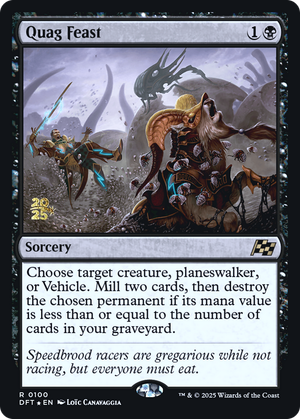
Quag Feast


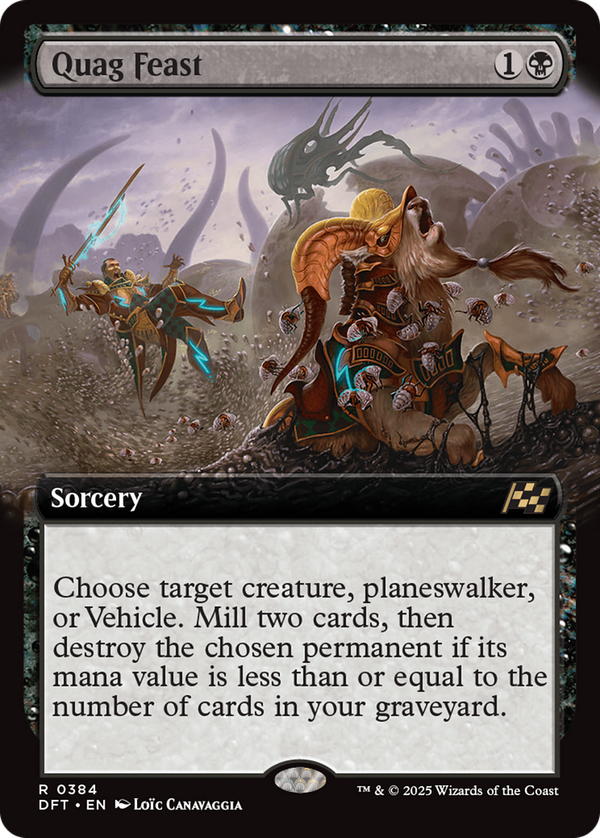
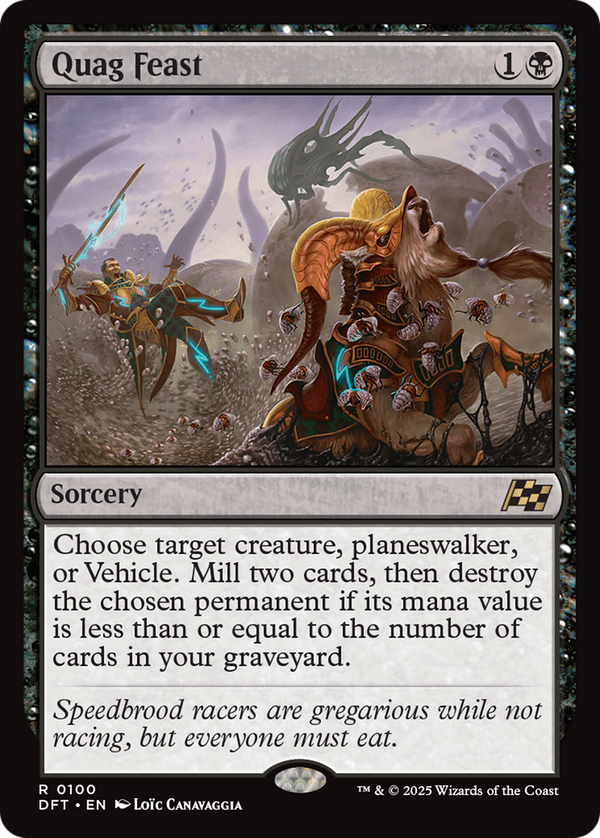
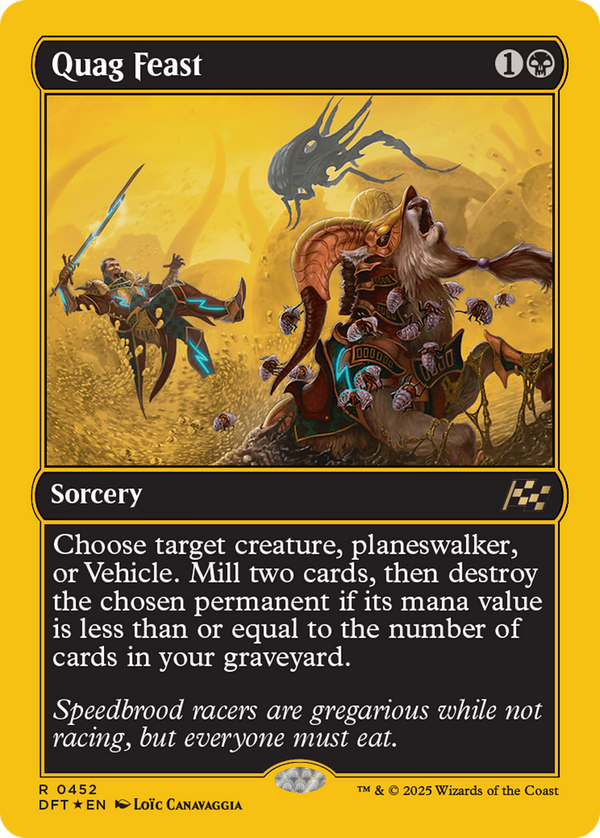
Removal that pays for itself with the same action it uses to gate itself. The mill-two clause is not a graveyard-strategy bolt-on; it is the pricing mechanism. Two cards go into the yard, then the game checks whether your graveyard has grown enough to answer the target you chose, which means the spell is cheapest against small permanents early and reliably lethal against big ones once a few turns of natural attrition have filled the count. That inverts the usual tempo math on cheap black removal: most two-mana kill spells are strongest on turn two and decay as the board upgrades, while this one starts narrow and widens as the game runs long. Because the check counts cards in your graveyard rather than caring what those cards are, the mill is deterministic math, not a gamble. You know before you cast whether the two cards you are about to bin push the target's mana value under the threshold, so choosing the target before the mill resolves is a decision made with complete information: this is a spell you sequence around, not one you hope through. Black self-mill decks already stock their yards passively, from fetch effects, cantrips, and combat trades, so the mana-value clause that reads as a restriction is mostly a formality by the midgame. And it answers planeswalkers and Vehicles alongside creatures, which quietly makes it a broader catch-all than its creature-first framing suggests.