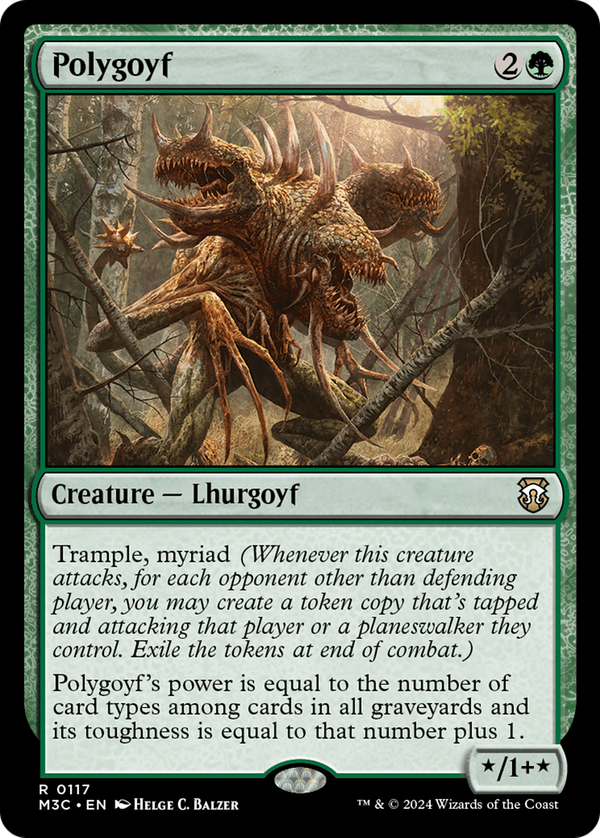
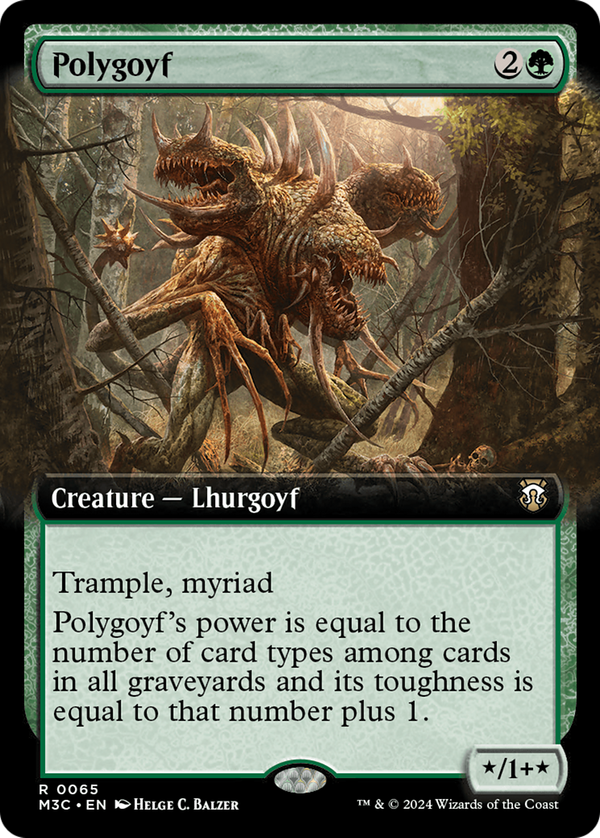
Polygoyf


Take the game's most iconic scaling body and staple a mechanic that reproduces the attacker once per opponent, and the design stops treating the multiplayer table as an obstacle and starts treating it as fuel. The size clause is the familiar Lhurgoyf census, the same accounting Tarmogoyf has always used: a tally of how many distinct card types are sitting in graveyards, all of them, at the moment you check. In a crowded pod that tally fills faster, because more players means more fetched lands, more spent spells, and more dead creatures feeding the count. Myriad is what converts that stat line from a fair beater into a fanned-out assault. Each attack spins off a tapped, attacking copy aimed at every other opponent, and because those copies read the same shared count of types, they arrive at the identical enormous size as the original before the exile clause sweeps them at end of combat. Crucially, that swarm does not compound the growth: token copies are not cards, and they cease to exist the instant combat ends, so nothing they contribute ever reaches a graveyard to raise the total. The engine's growth comes from the game itself getting messier, not from the tokens it generates. Trample keeps all of it from being walled off by a single blocker, driving the scaled power through on every front simultaneously. Where the classic version of this creature asked how large one attacker could get, this one asks how many opponents a single swing can menace at that size at once.