Polukranos, Unchained



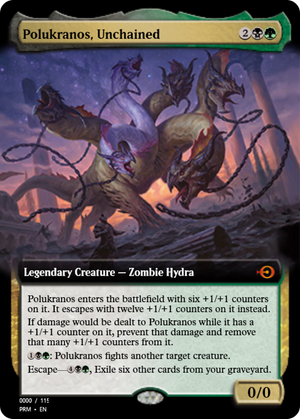
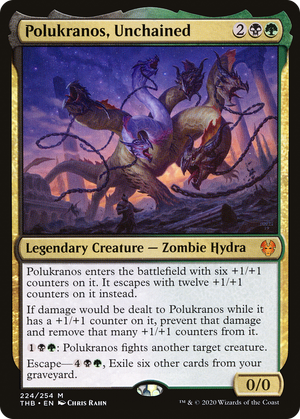
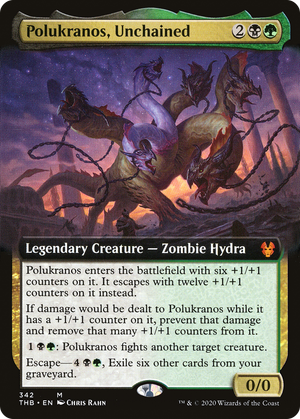
The counters here are a health bar, not a stat line. This Hydra tracks its survival through the +1/+1 counters it enters with, and the prevention clause reworks how it dies: every point of incoming damage is converted into a counter stripped off the stack rather than a step toward death. That means the creature erodes exactly as far as the damage goes. A small blocker chips it down one counter per point over multiple combats; a single large hit can carve away the whole stack at once; and repeated fights whittle it just as surely as they wound anything else. What the prevention buys is not invulnerability but predictability: you always know how many more points it can absorb before it drops. The fight ability is where that armor turns into a weapon. Because Polukranos can shrink instead of dying, it exchanges damage with a rival, folds the return blow into its own counters, and lives to fight again. The two entry sizes are the real design tension. Cast from hand it arrives modest, a body that must earn its keep; escaped from a stocked graveyard it returns twice as large, a monster that has already died once and comes back overbuilt to survive the next round of removal. The Escape cost is deliberately flat: exile exactly six cards, get exactly twelve counters, no sliding scale. That fixed toll is what makes the recursion feel paid for rather than free, a titan built to be killed and to keep refusing it.
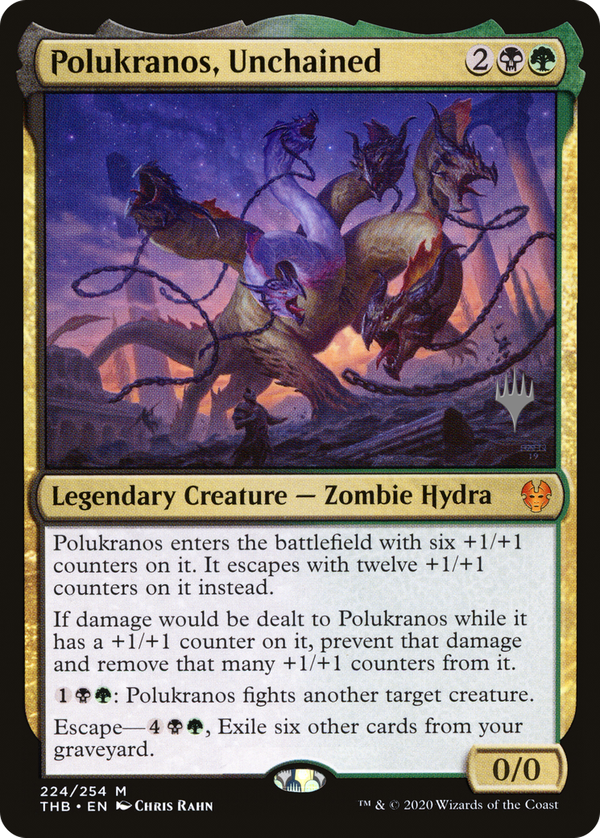
Rules text
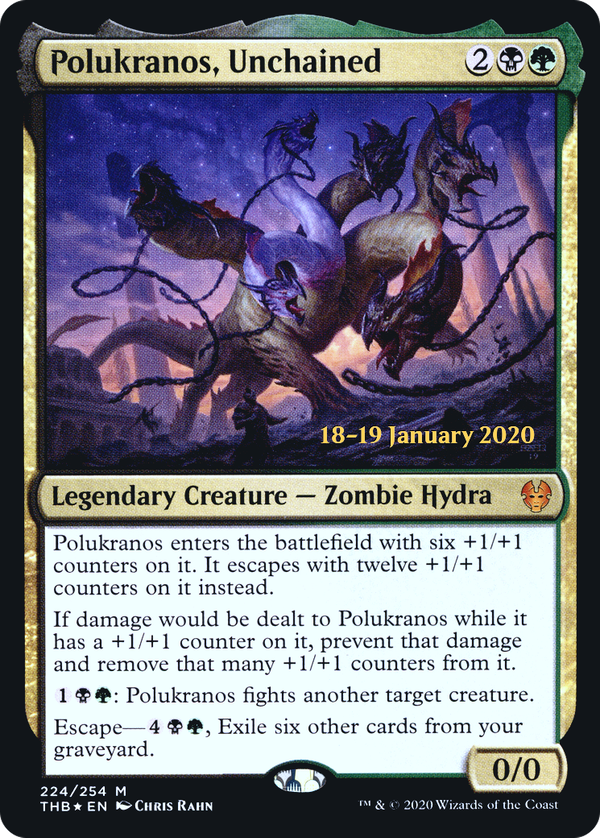
 : Polukranos fights another target creature.
Escape—
: Polukranos fights another target creature.
Escape— , Exile six other cards from your graveyard.