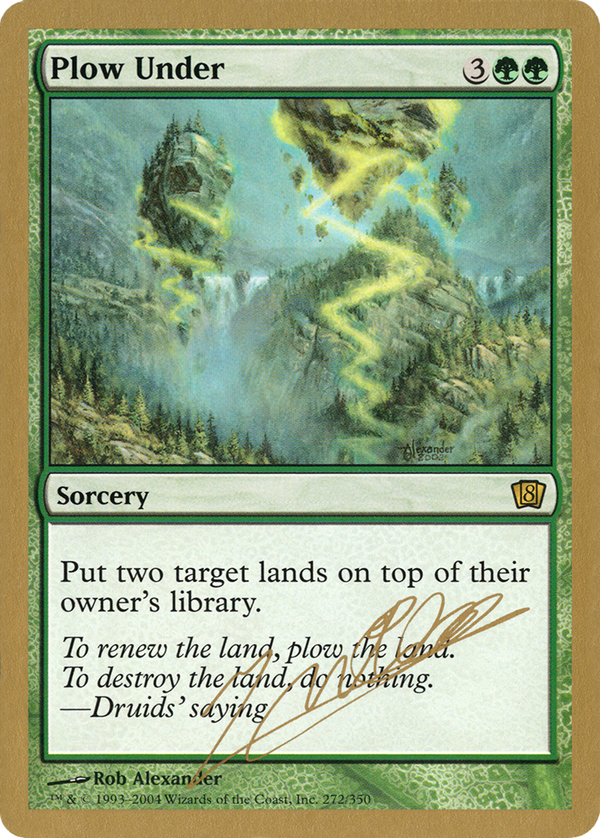
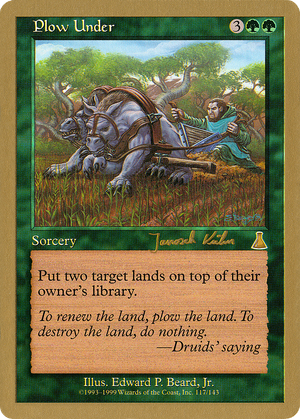
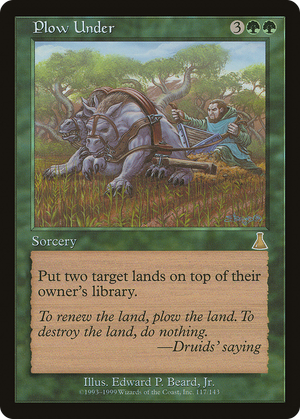
Plow Under


Stone Rain costs three mana and sets an opponent back a land. This costs five and sets them back two lands plus a draw step, which is the real currency. Putting a land on top of the library does not destroy it; it taxes the next two turns, because both lands have to be redrawn and replayed before the opponent has made any forward progress at all. Against a deck stumbling on land drops, that is a soft lock: every turn they spend recovering is a turn they cannot deploy threats. The strategic weight rides on the word "top" rather than "graveyard." Destruction trades one-for-one and the opponent simply draws fresh cards; this trades one-for-two-and-change while denying the opponent any new gas, which is why it became the centerpiece of green-based prison and ramp shells built to outpace a stunned opponent. The friction is the five-mana sorcery cost: it is too slow to be a tempo play and too expensive to chain casually, so it asks to be cast off ramp or recurred for value, turning a single denial spell into a recurring lockdown engine. The card represents a specific philosophy of land destruction that Wizards has grown wary of since: not the brute-force Armageddon sweep, but the targeted, repeatable grind that strands an opponent a full turn behind and refuses to let them dig out.