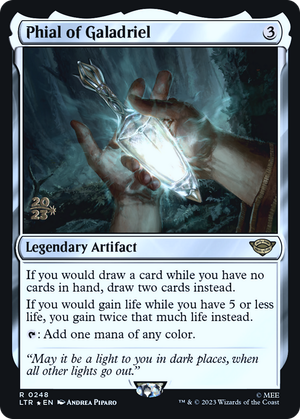
Phial of Galadriel

Both replacement effects here reward being in trouble, which is a deliberate inversion of how card advantage and lifegain usually get priced. Draw engines normally scale with a full grip and a developed board; lifegain normally matters most when you are already healthy and want to stretch a lead. This flips the incentive on both counts. The draw-doubling only fires once your hand is empty, rewarding the hellbent, all-gas play patterns that spend cards recklessly and then want a refill. The life-doubling only kicks in at five or less, precisely the range where a single lifegain effect is the difference between a stabilized turn and a dead one. Neither clause does anything when you are comfortable; both come alive when you are desperate, which is an unusual place to hang a payoff, and it makes the artifact read as a comeback engine rather than a lead-extender. The mana ability is the concession that keeps a build-around like this honest: even in the games where you never crater your life total or burn out your hand, it still taps for any color, so it never sits in play as a dead card. That third line is what lets you run the artifact without committing to the desperate lines at all, turning the two situational replacement effects into upside you can afford to leave unused rather than the whole reason the card is in the deck.
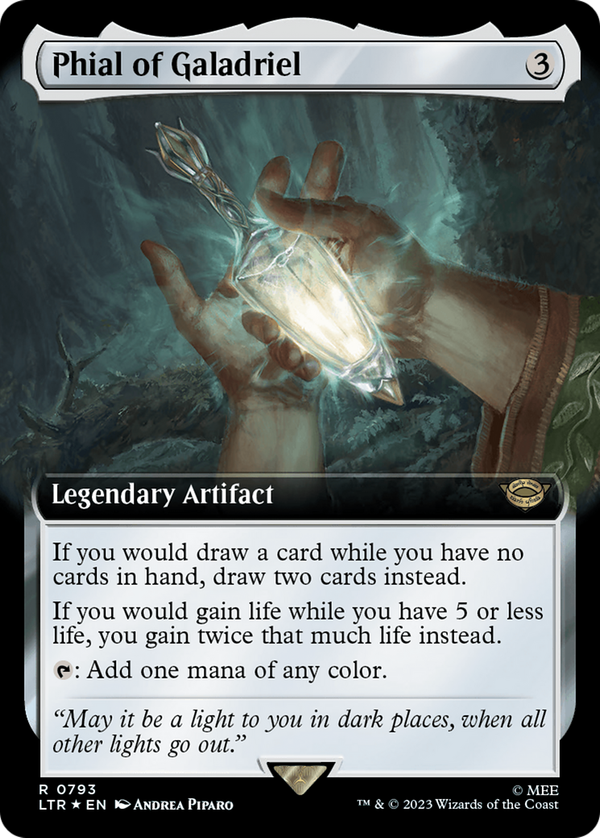
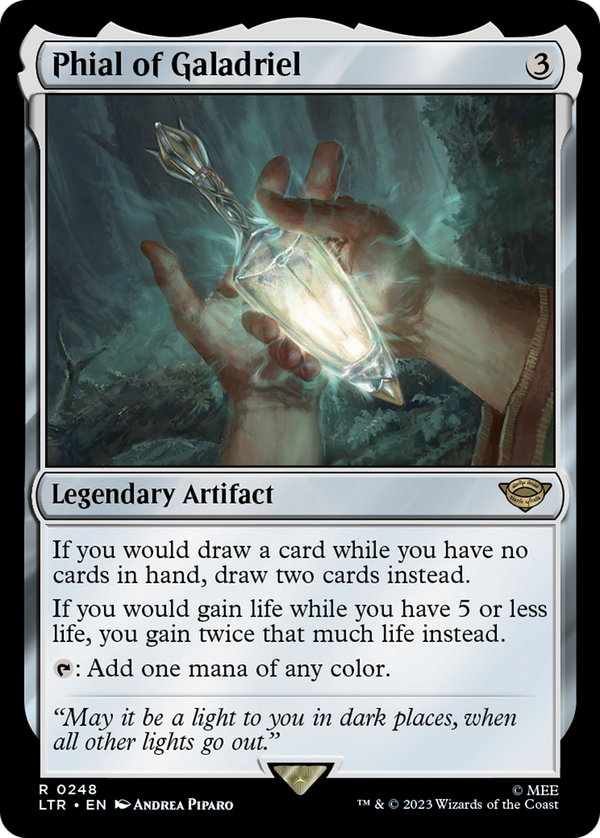
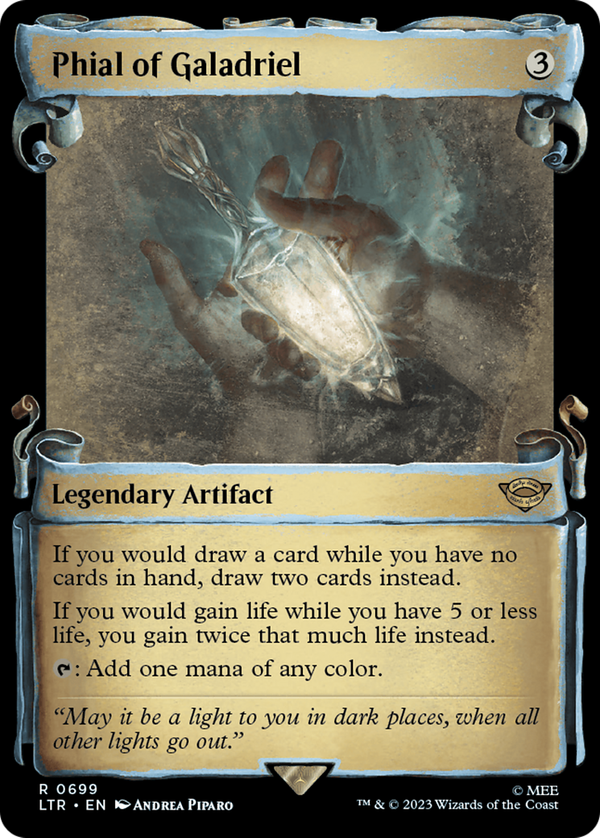
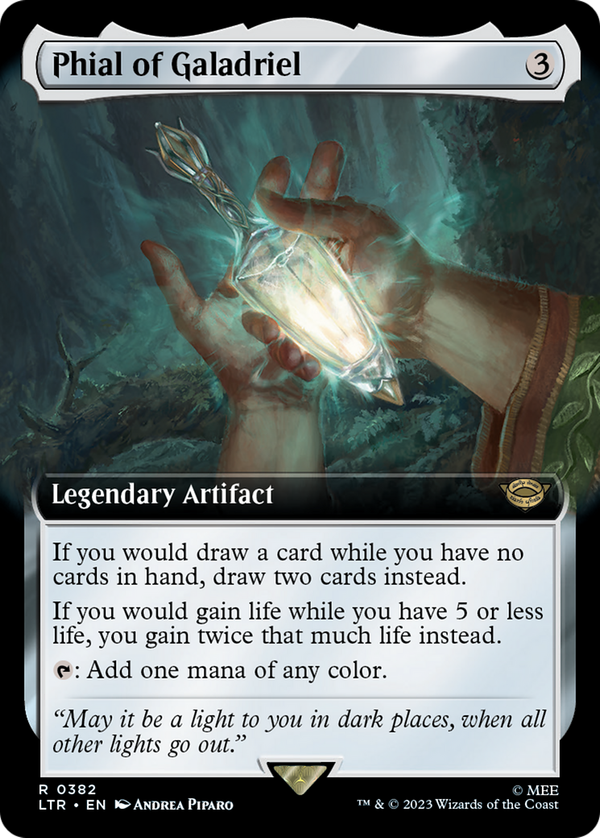
Rules text
 : Add one mana of any color.