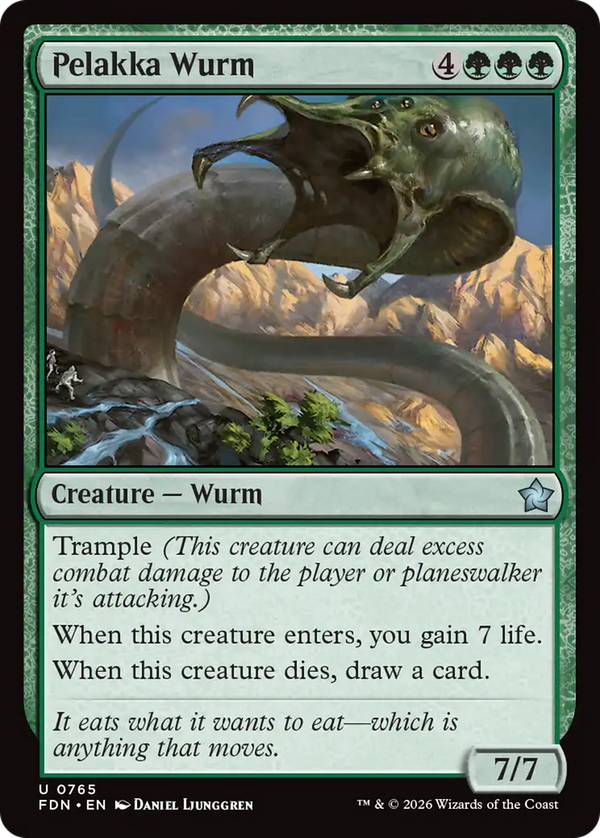
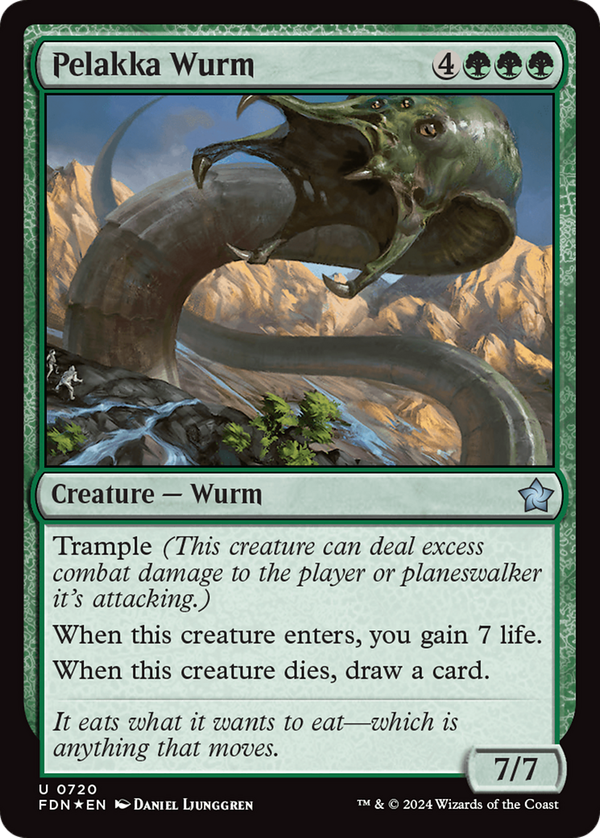
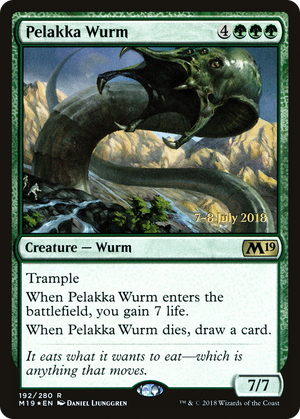
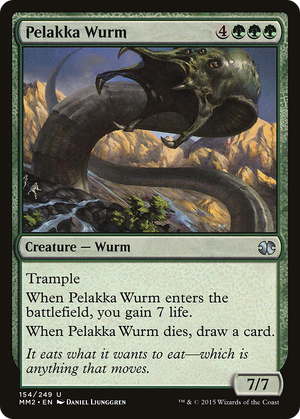
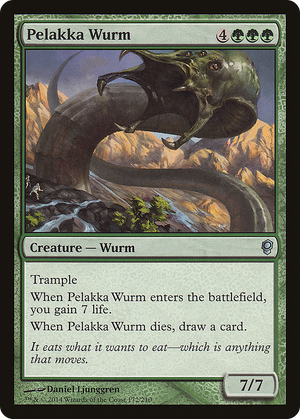
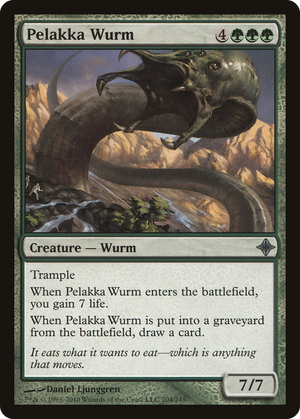
Pelakka Wurm


Three rewards, one card, paid out across every phase of a fat green creature's life cycle: seven life when it enters, a 7/7 trample body while it lives, a card when it dies. The structure is what makes the body do double duty. Block it and they trade a card for a card while the life is already banked. Race it and the trample math punishes a smaller chump. Spot-remove it with something that sends it to the graveyard, like Doom Blade or Murder, and the death trigger turns their answer into a wash: you draw a card off the kill. The seven-mana cost is the price that keeps the spread in check; this is a creature for the part of the game where mana is plentiful and the question is no longer whether you can deploy threats but whether each one earns its slot against removal. The asymmetry is the clever part. The back-end draw rewards killing it, but it only fires on death, so exile-based answers (Path to Exile, Swords to Plowshares) cut it off cleanly: they leave no body to die and no card to draw, and the front half is just as conditional in the other direction, since the life and the eventual card both depend on the wurm resolving. That payout-stacking, where the body and the triggers each justify the others, became a template for how green pays for the top of its curve once raw stats stopped being enough.