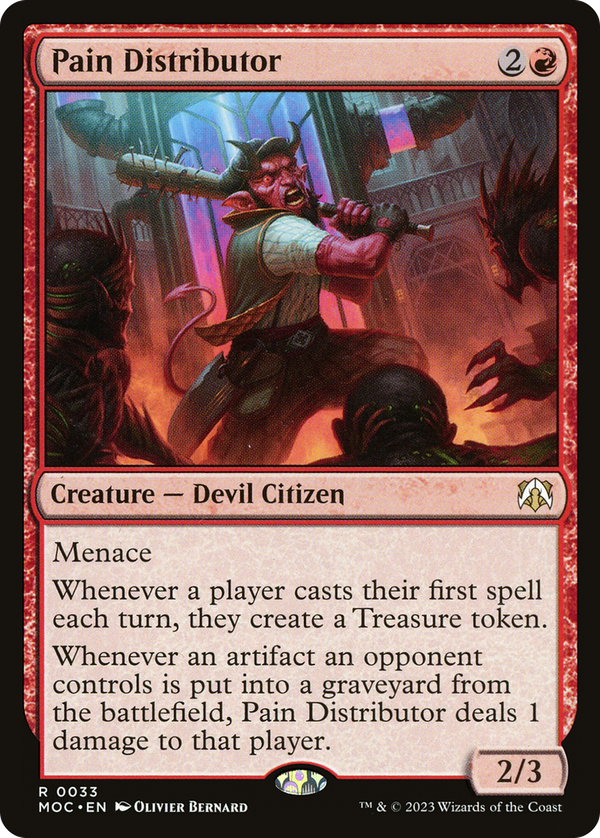
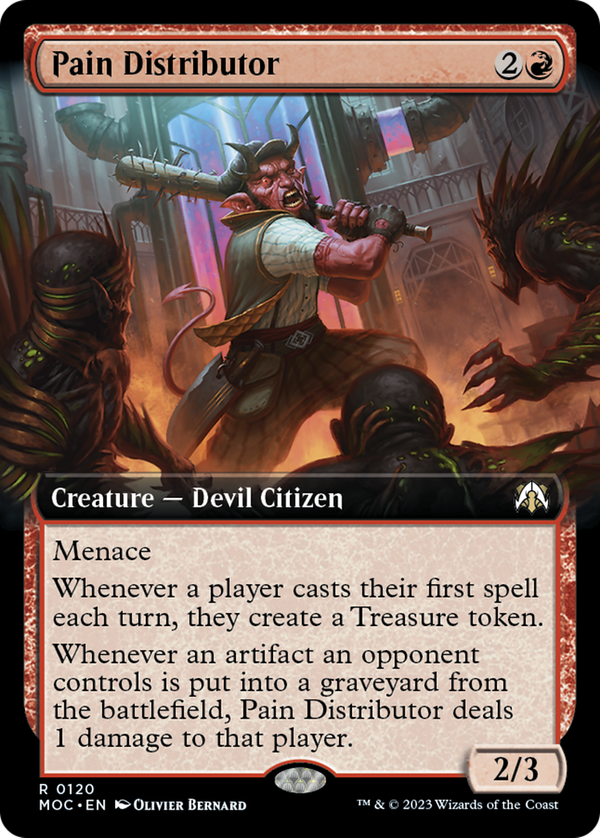
Pain Distributor


The symmetry is the trick here. Handing a Treasure to every player for casting their first spell each turn looks generous to the point of self-sabotage: you are ramping the whole table, feeding the exact opponents you need to beat. But the second ability closes the loop the first one opens. Treasures are artifacts, and they die by being sacrificed for mana, which means every time an opponent cracks one of the tokens you gave them, they take a point of damage on the way to their own resources. The card weaponizes the most reflexive action in a Treasure-rich board state: spending. It turns generosity into a slow bleed, taxing acceleration rather than denying it, and the more the table leans on artifact ramp the harder the tax bites. Menace on the 2/3 body keeps it relevant as a clock while the engine ticks, but the real work is structural: it rewrites what an opponent's Treasure means the moment it hits the battlefield. Most punisher designs force a choice between two bad options; this one lets a player do exactly what they wanted to do and charges them for it afterward. The damage is only ever one point at a time, so the effect never locks a game, only pressures it, and that restraint keeps the design honest as a tax rather than a wall. It asks a Treasure-heavy metagame to reconsider whether all that free mana is quite as free as it looks.