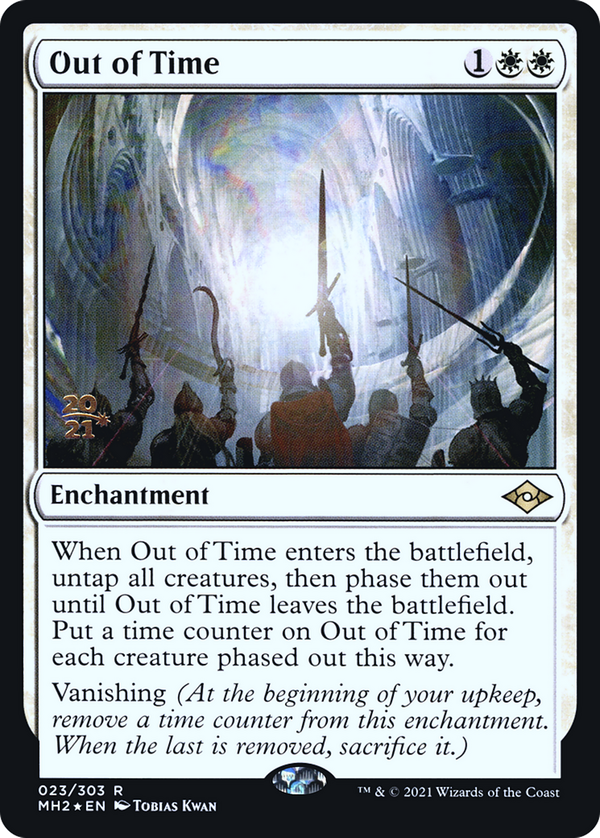
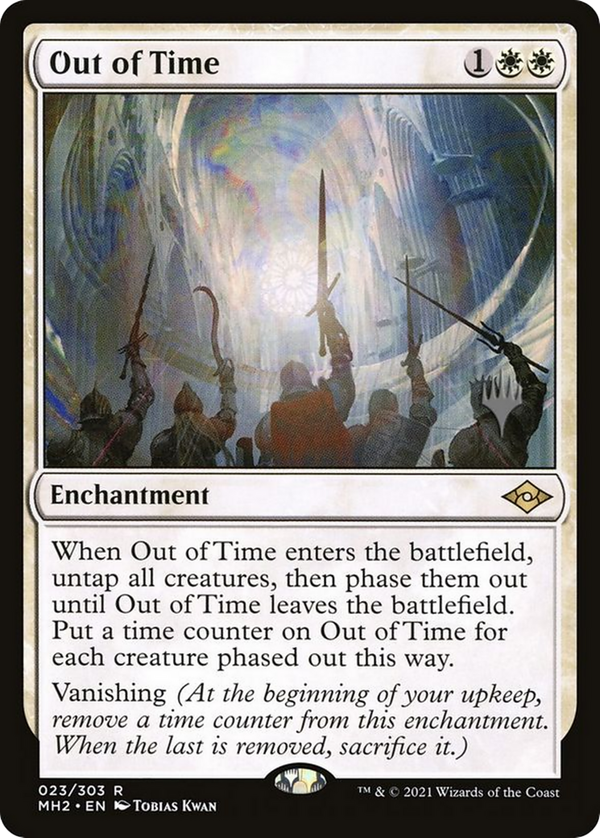
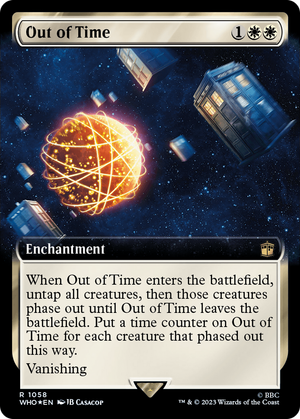
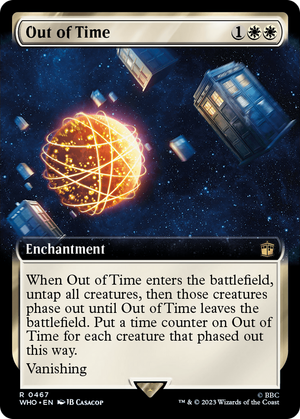
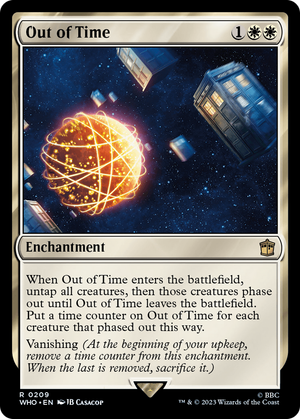
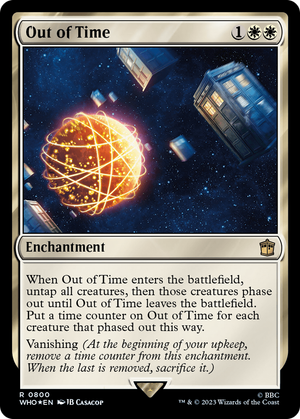
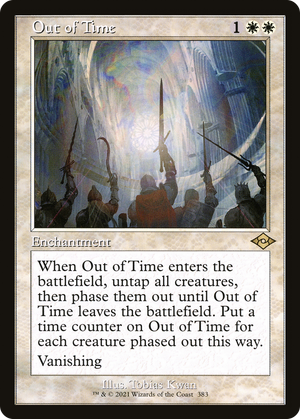
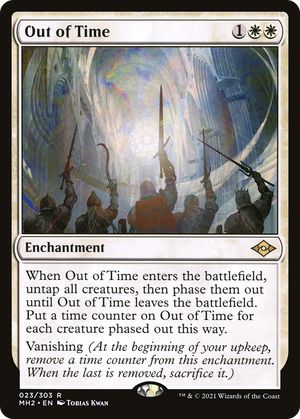
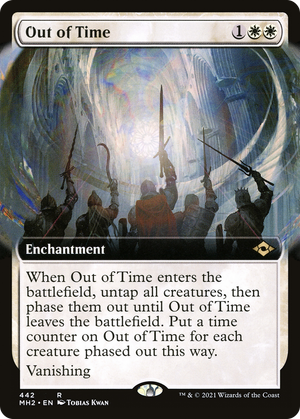
Out of Time


A symmetrical Fog with a fuse attached. The trick most such effects pull is buying a single turn; this one takes the whole battlefield off the table and then bills you for it. Every creature that phases out, yours and everyone else's, becomes a time counter, so a crowded board sets a long clock and a sparse one sets a short one. That self-metering is the elegant part: the more it stops, the longer the stop lasts, which turns the enchantment into a variable-length ceasefire rather than a fixed one. While it sits there, the phased-out creatures do not exist for any purpose (they cannot block, be targeted, sacrificed, or bounced), and they return exactly as they left when Vanishing finally sacrifices it. That return clause is where the real design tension lives, because both players get their armies back at once, and whoever is better positioned to use the empty window in between wins. Phasing was long a curiosity mechanic, a way to write temporary removal that dodged indestructibility and hexproof without touching the graveyard; wrapping it around a mass reset and pricing the duration off the board state is what makes this more than a symmetrical stall. The controller chooses when to trigger the pause, but not how long it lasts, and that gap between agency and consequence is the whole engine.