Out of the Tombs


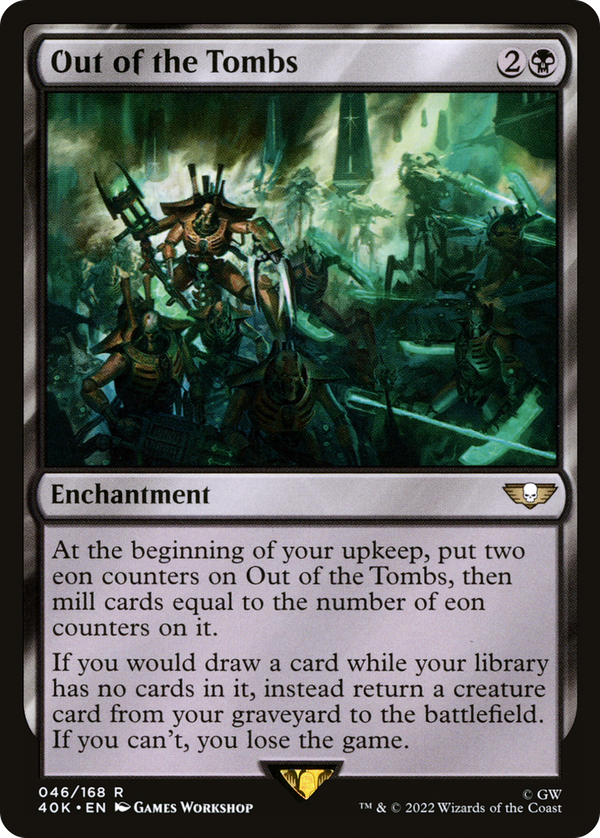
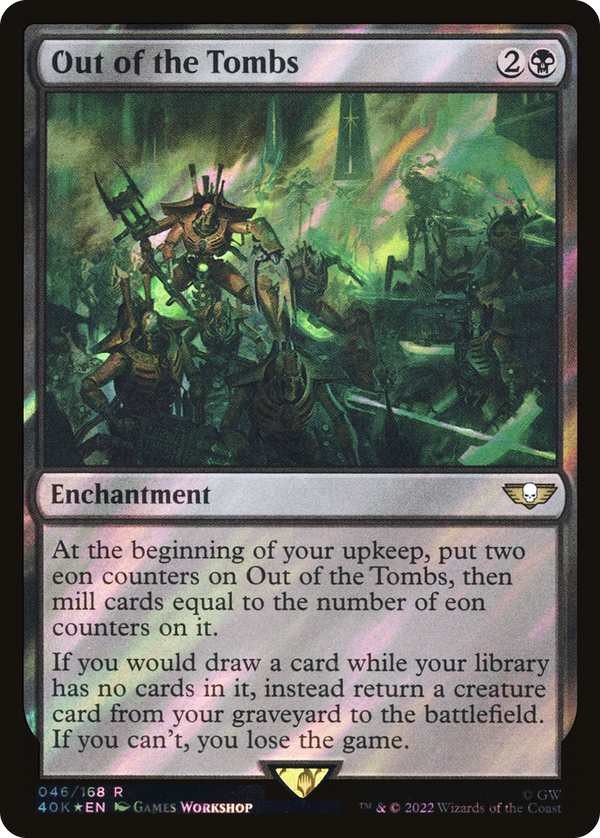
Self-mill decks usually treat an empty library as the enemy: the thing you race, the clock you have to beat before your draw step becomes a lethal fizzle. This inverts the arithmetic entirely. The eon counters compound every upkeep (two, then four, then six), so the mill accelerates until the deck empties itself far faster than any natural draw would, and instead of a loss condition the empty library becomes the engine. Once you can no longer draw, each attempted draw reanimates a creature from the graveyard, turning what was catastrophe into a recurring free reanimation every time the game asks you to draw. The design tension is precise: the enchantment races to zero on purpose, and the reward only unlocks once you have crossed the line most self-mill decks spend the whole game avoiding. The failure clause is the honest part of the deal. When the graveyard runs dry of creatures, the same replacement effect that was saving you becomes the thing that kills you, so the engine demands a graveyard stocked deep enough with creatures to keep feeding the draws it now converts. It is a permanent that asks you to speedrun your own deck-out and then live inside it, which is a stranger and more committed version of self-mill than the archetype normally allows.