Orochi Soul-Reaver


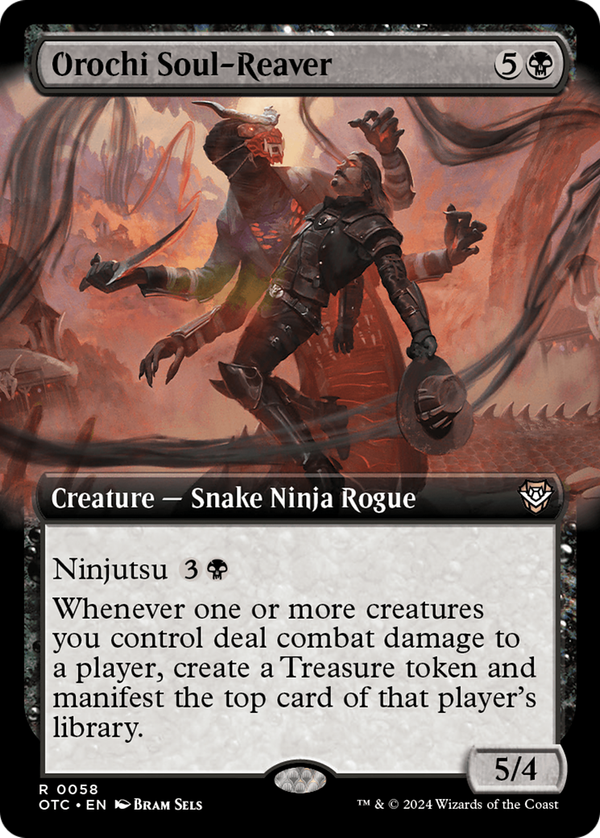
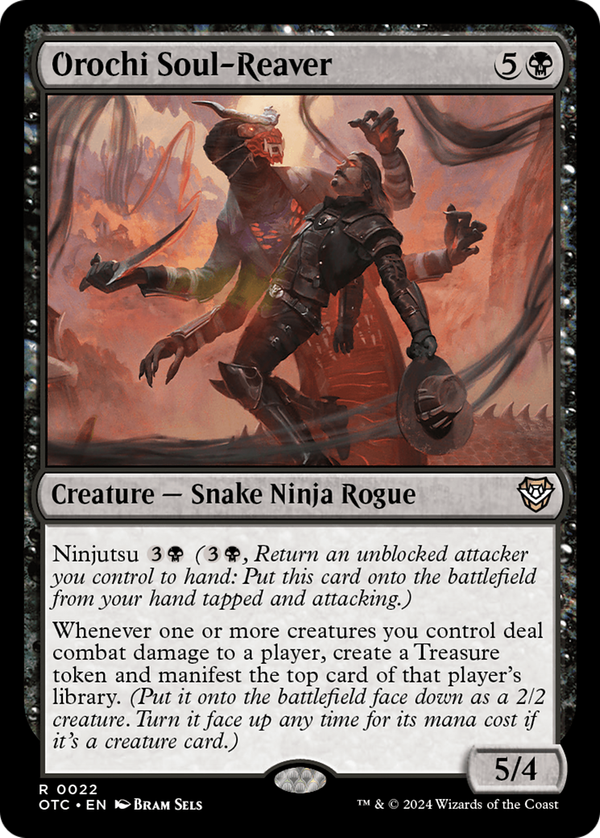
Ninjutsu was built to reward the connecting attacker: sneak a body past unblocked defense, then swap it out at the last moment for something bigger. This 5/4 turns the connection itself into an engine. The combat-damage trigger is gated per player: once your creatures land a hit on someone, you get a Treasure and manifest the top card of that player's library, so a single connecting swing simultaneously ramps your own board and strip-mines their deck into a face-down 2/2 under your control. The manifest is the sharper half; it does not exile or discard, it repossesses, converting the top of a deck into a creature that fights for you and can flip up if the card underneath happens to be a creature. Because the ninjutsu clause drops it onto the battlefield already tapped and attacking, the trigger fires the same turn it arrives, sidestepping the summoning-sickness delay that usually keeps a six-mana body from doing anything the turn it lands. The balancing wrinkle is directional: it wants an unblocked attacker to bounce and a defender who is not trading, so its value lives entirely in getting through rather than grinding a stalled board. The Treasure generation softens its own steep entry cost, letting the ramp compound toward whatever the manifests reveal. It sits at the junction of three mechanics that rarely share a card, and every line it opens is oriented around punishing an undefended attack step.
Rules text
 (, Return an unblocked attacker you control to hand: Put this card onto the battlefield from your hand tapped and attacking.)
Whenever one or more creatures you control deal combat damage to a player, create a Treasure token and manifest the top card of that player's library. (Put it onto the battlefield face down as a 2/2 creature. Turn it face up any time for its mana cost if it's a creature card.)
(, Return an unblocked attacker you control to hand: Put this card onto the battlefield from your hand tapped and attacking.)
Whenever one or more creatures you control deal combat damage to a player, create a Treasure token and manifest the top card of that player's library. (Put it onto the battlefield face down as a 2/2 creature. Turn it face up any time for its mana cost if it's a creature card.)