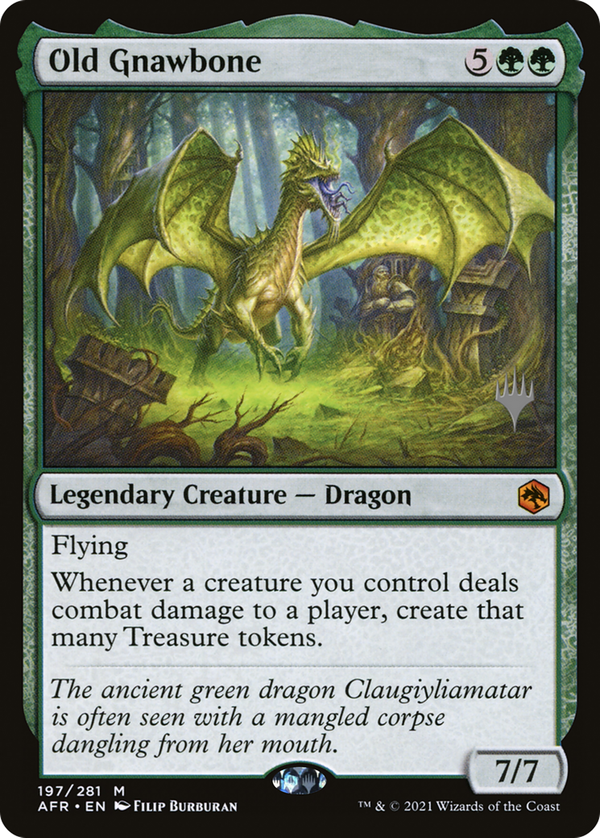
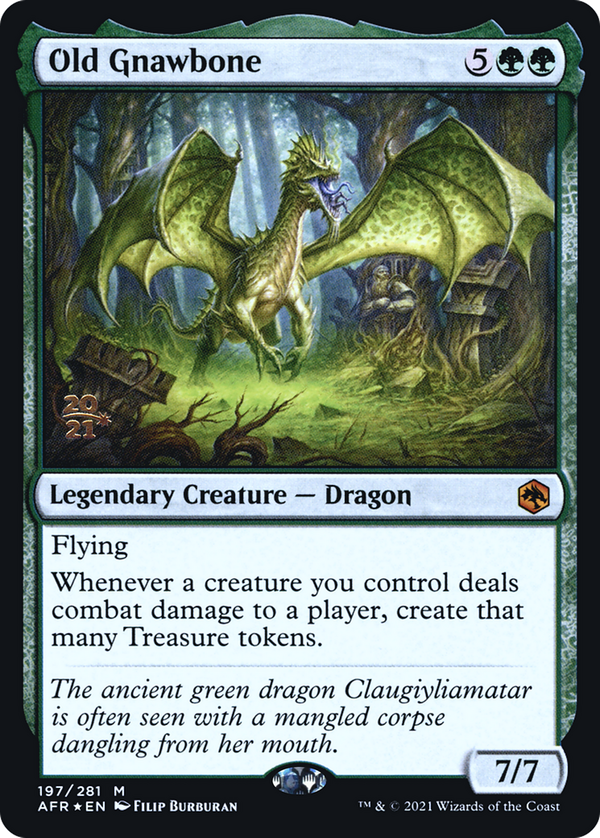
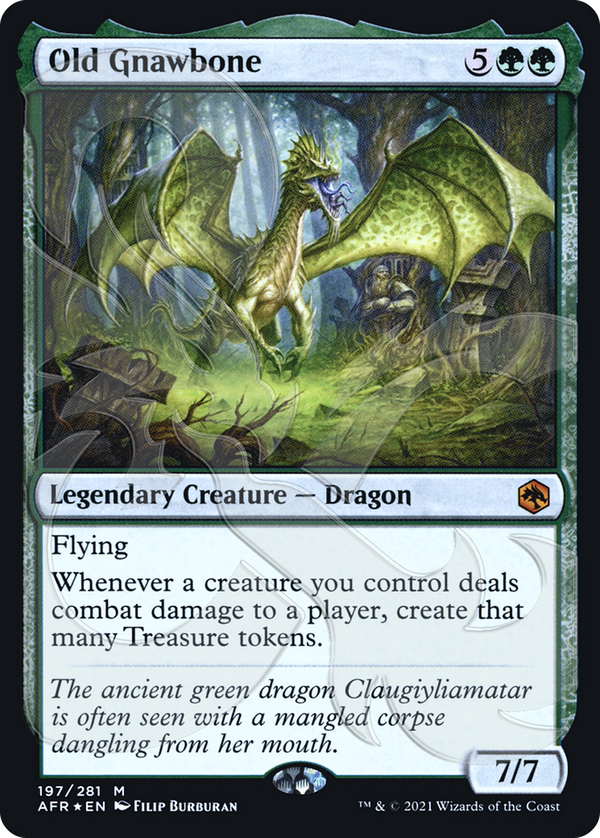
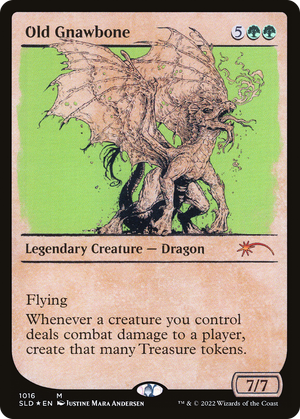
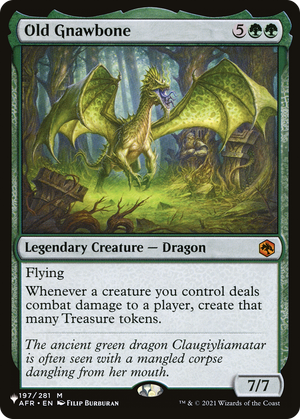
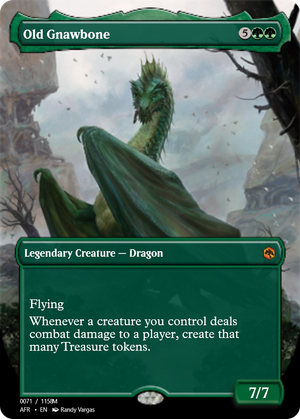
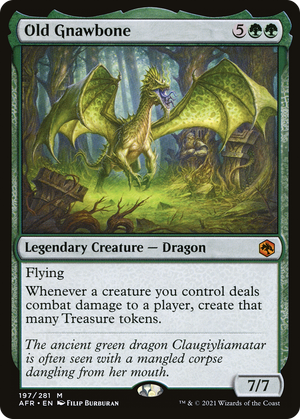
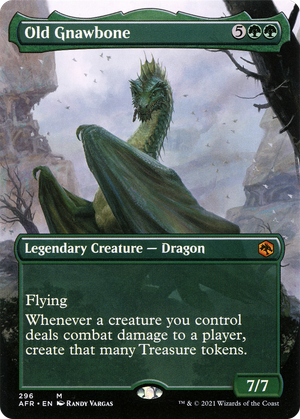
Old Gnawbone


Ramp payoffs usually funnel excess mana into a single fatty and hope it connects; this reverses the arrow, converting combat damage into acceleration on the back swing. Every point a creature pushes through becomes a Treasure, so a wider or larger board pays out proportionally more, and those Treasures pay for any color. The quiet detonation lives in that color-fixing clause: a green threat suddenly bankrolls a turn no green card could have afforded. The trigger reads on every attacker you have, so an existing board of trampling or evasive threats can cash out the same turn the Dragon resolves: cast it pre-combat, swing with what you already have, and the Treasures land before the second main phase. That is the design's real acceleration window, because the mana appears once damage is on the board and can fund a turn full of things the opponent has not seen. Finisher and ramp engine occupy the same slot, and both halves point toward the same explosive, closing turn. The friction is the price: seven mana buys a flier with no haste that broadcasts its own payoff and invites the removal it deserves, so the payout depends on the board it lands into rather than the board it might build alone. Doubling as both threat and engine turns it into a lightning rod the instant it resolves.