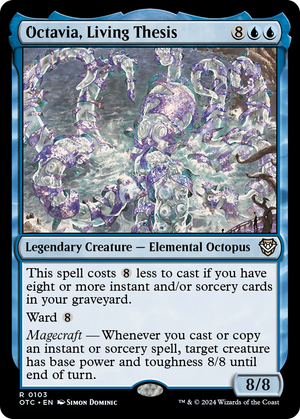
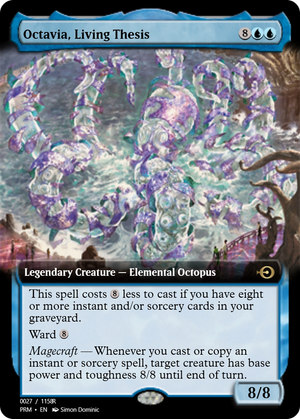
Octavia, Living Thesis


The cost reduction is the whole design pivot. Printed at ten mana, this reads like an unplayable durdle until you notice the eight-instants-and-sorceries clause turns it into a two-mana 8/8 with Ward : not a payoff you cast late, but the reward for having already done the work a spellslinger deck was doing anyway. That reframing is the point. The graveyard threshold is a deckbuilding contract paid in advance, and the body is what it buys, a beater the opponent needs eight extra mana of removal to touch. The magecraft trigger is where the card stops being a finisher and becomes an engine: every time you cast or copy a spell of that kind, a target creature is stamped to base 8/8 until end of turn. The obvious line is offensive, aiming it at your own small creature (a mana dork, a token, a leftover chump) to conjure an extra 8/8 out of nowhere and stack a second clock alongside the octopus. Note the wording is base power and toughness, so it overwrites rather than adds, and repeated triggers re-set the same number instead of stacking; it can also shrink an opposing threat larger than 8/8, though those are rare enough that the ability reads as a buff far more often than a nerf. It is an uncommon instance of a top-end blue creature that rewards a graveyard full of spent spells instead of a hand full of unspent ones, closing a game the deck was already building toward.
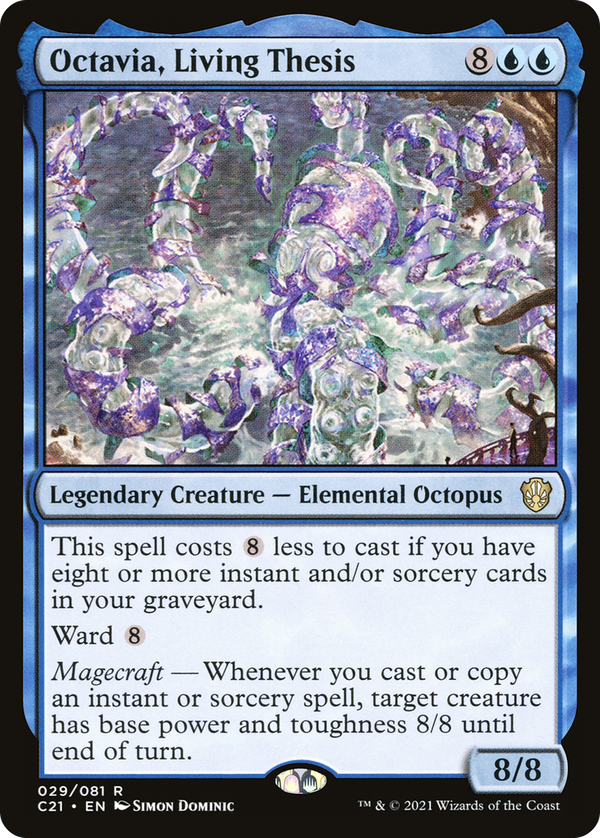
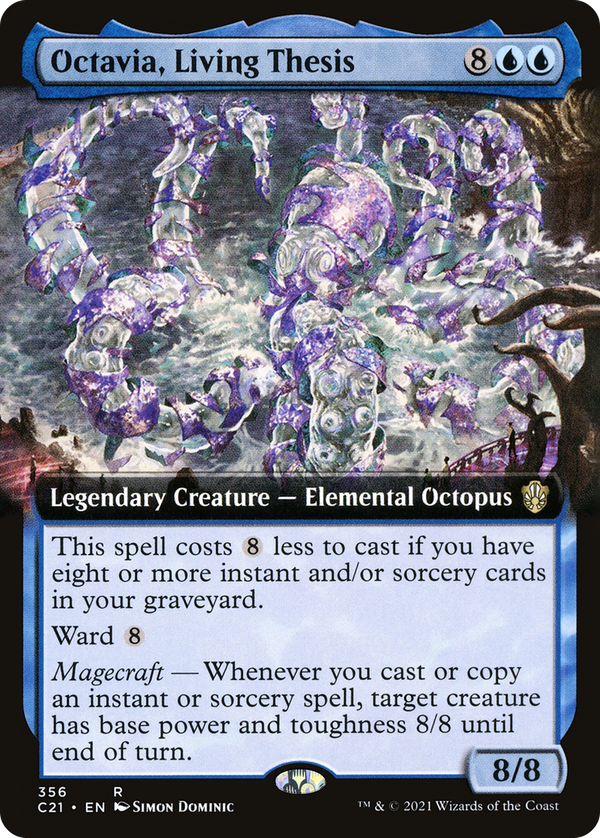
Rules text
less to cast if you have eight or more instant and/or sorcery cards in your graveyard.
Ward
Magecraft — Whenever you cast or copy an instant or sorcery spell, target creature has base power and toughness 8/8 until end of turn.