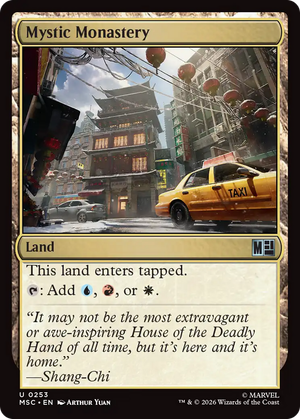
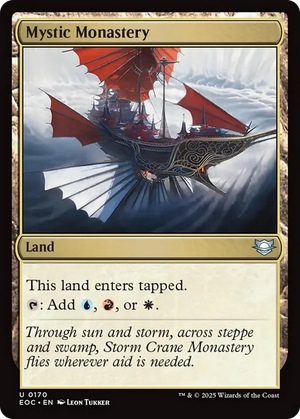
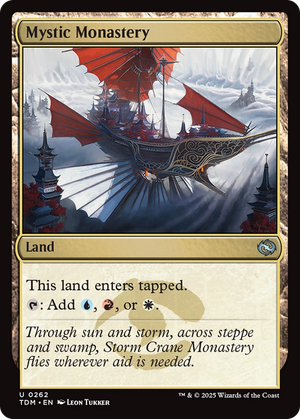
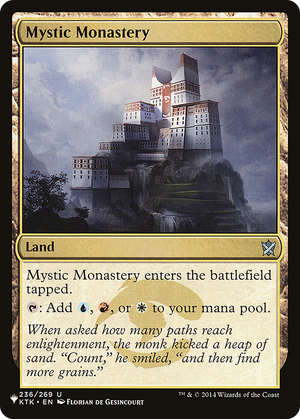
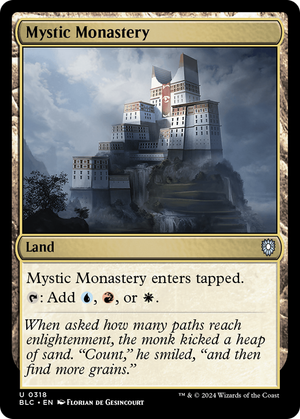
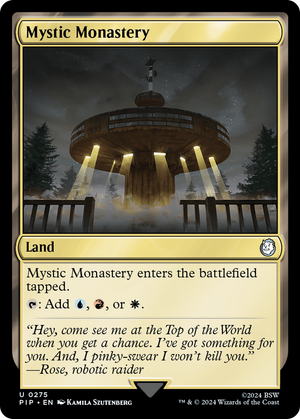
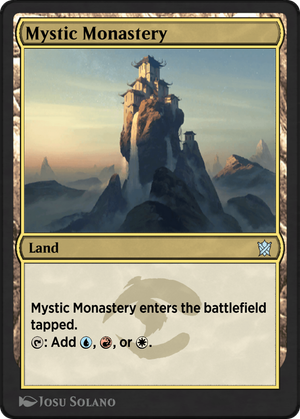
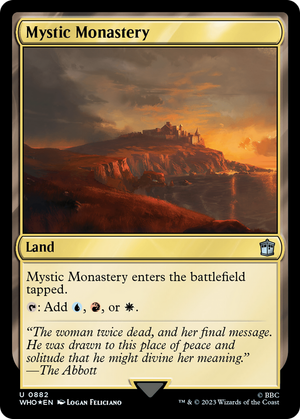
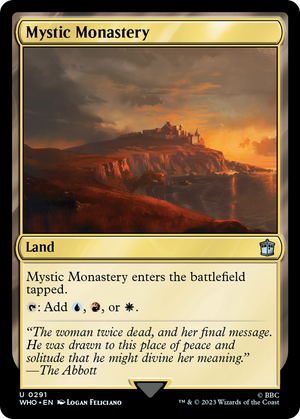
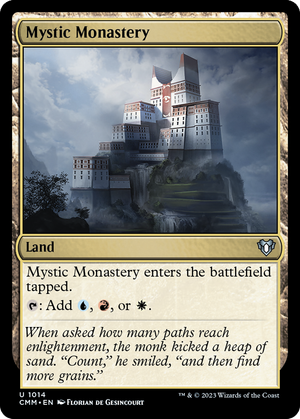
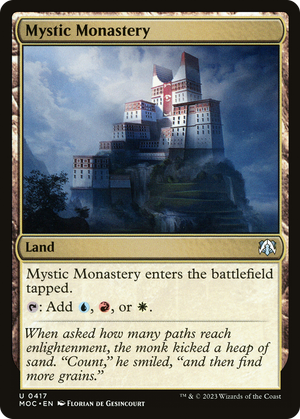
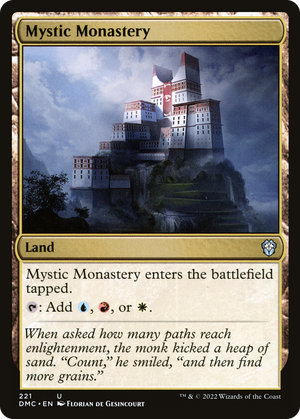
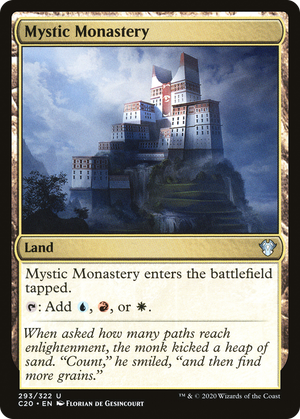
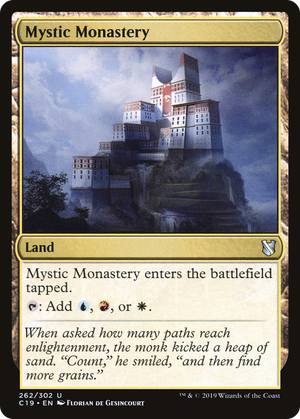
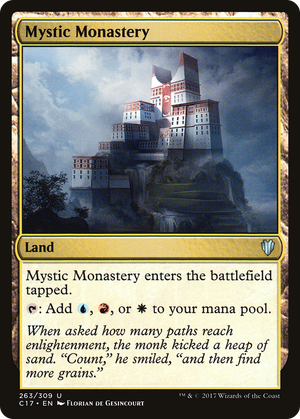
Mystic Monastery
The triland was the design answer to a problem that the original taplands and the painlands both got half-right: three colors of fixing in a single slot, with the tax paid up front rather than in life or in subsequent damage. Entering tapped is the entire cost, and it is a cost the deckbuilder pays on the turn the land arrives rather than every time it taps for mana. That tradeoff shapes how these lands are sequenced: they want to come down early, when a tempo loss matters least, and they punish the greedy curve that needs untapped color on turn three. The color identity here (Jeskai's blue, red, and white) maps to a specific wedge, and the cycle's value comes from collapsing what would otherwise be two or three separate dual lands into one card, freeing slots for spells. It is unglamorous fixing, the kind of land that never wins a game on its own but quietly enables the three-color decks that do. The lineage runs from the original tap-dual cycle through the painlands and forward into the later triomes that bolted on a land type and a cycling ability; this is the plain middle of that progression, the version with no upside attached to the tapped clause, just the fixing and the tempo bill that pays for it.
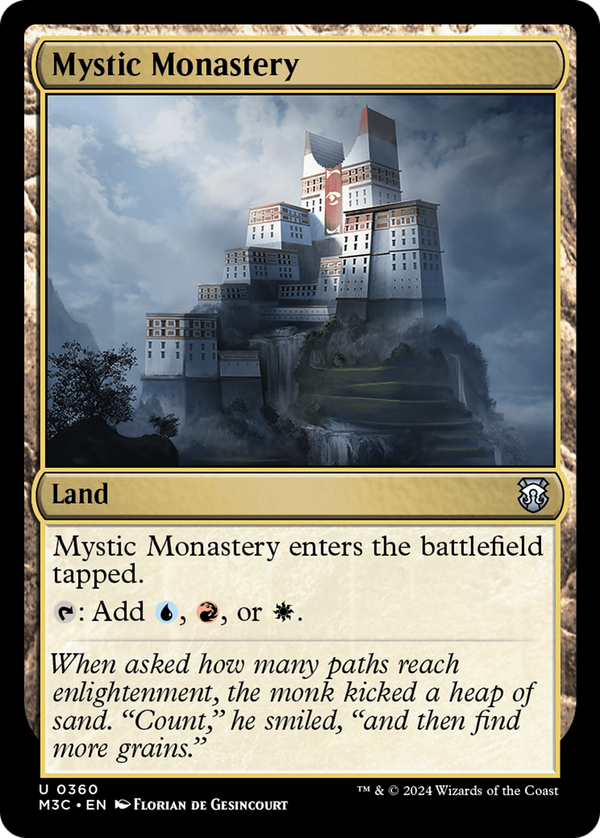
Rules text
 : Add
: Add  ,
,  , or
, or  .
.