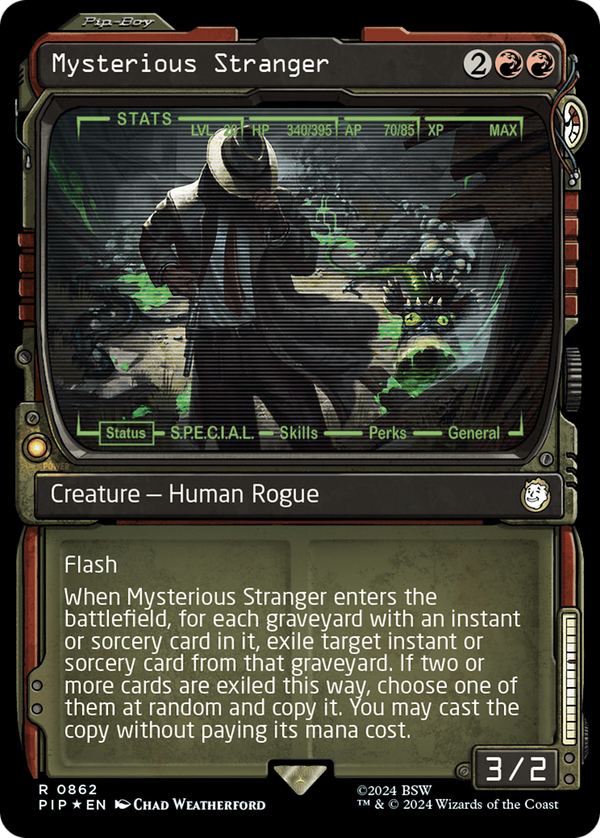
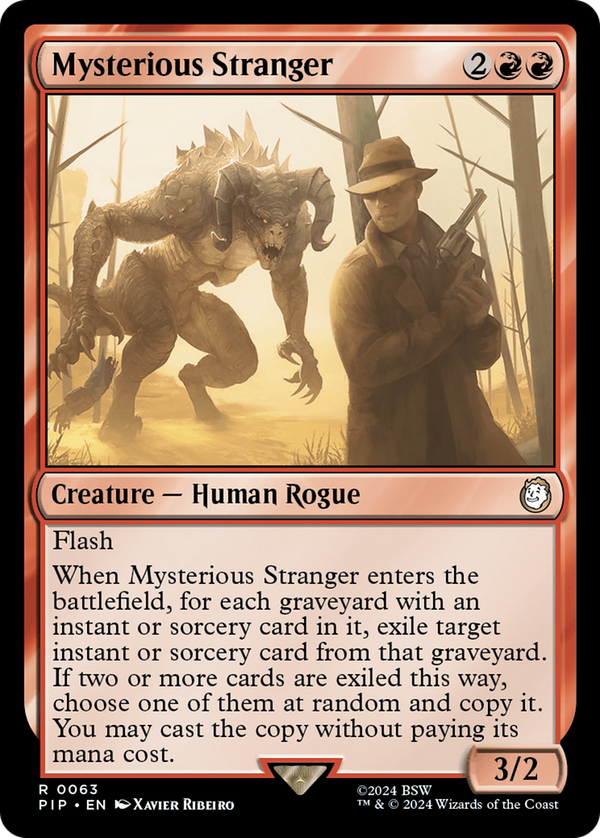
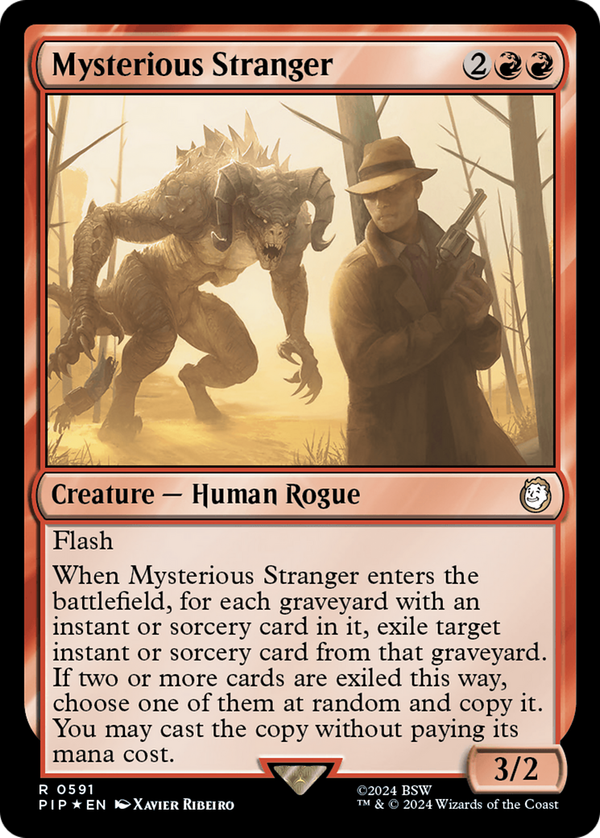
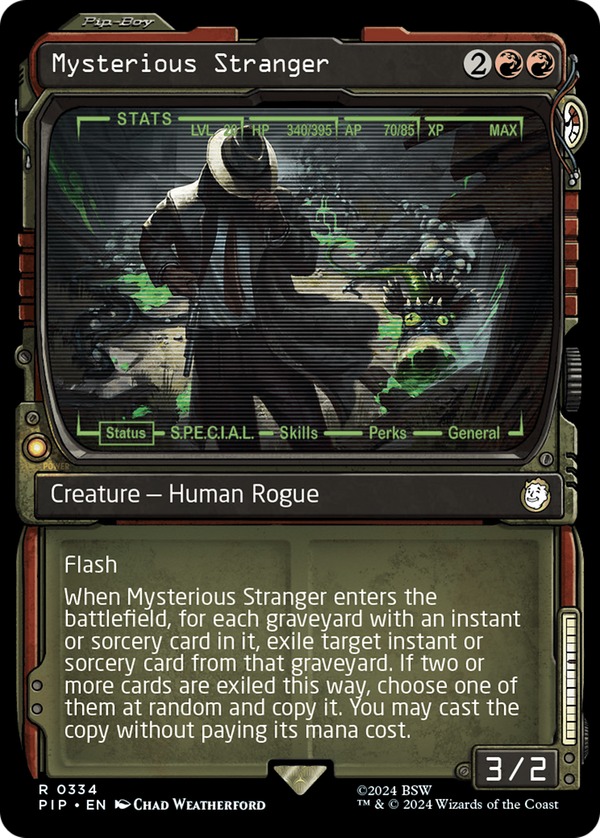
Mysterious Stranger


Flashback with a gambling problem, and a threshold to clear before you're allowed to gamble at all. The trigger fires per graveyard, exiling one instant or sorcery from each pile that holds one, but the copy effect only kicks in when two or more cards leave graveyards: recur a single spell and you exile it for nothing, no cast attached. That floor is the design discipline. A card that simply recast the best instant in any yard would be a Snapcaster Mage effect stripped of its restraint; requiring at least two exiles, then picking the copy at random, forces a real cost onto a flexible steal. The randomness buys back the payload, and the payload only exists once the graveyards are stocked. Flash is doing structural work too. It lets you hold the trigger until end of turn or a combat step, waiting for both sides of the table to fill their yards before cashing in, and the body arrives as a surprise blocker or an ambush threat rather than a telegraphed sorcery-speed play. The creature and its trigger are still fair game for counterspells; what flash buys is timing, not protection. The result is a spell-recursion piece that leans on a full graveyard across the whole table but refuses to promise which spell you get back, a rare case of red getting graveyard value without the blue-white precision that usually polices it.