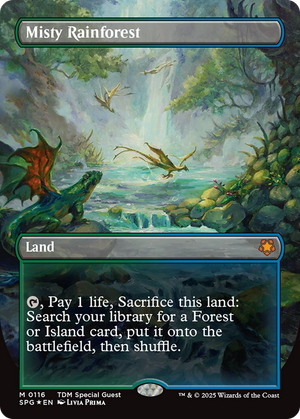
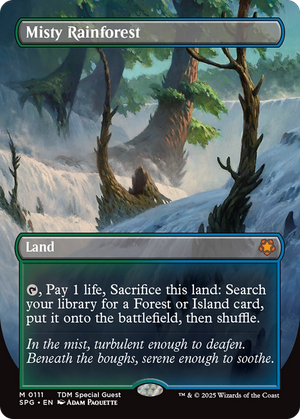
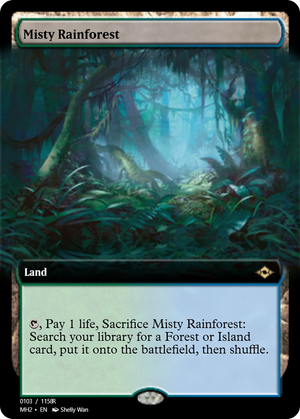
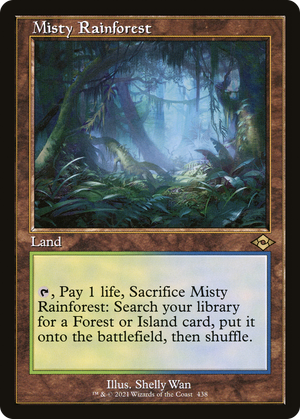
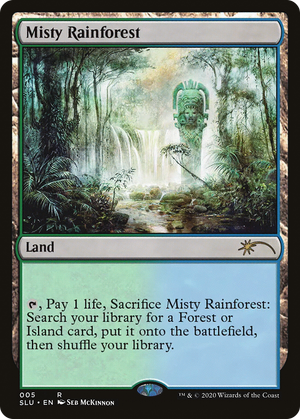
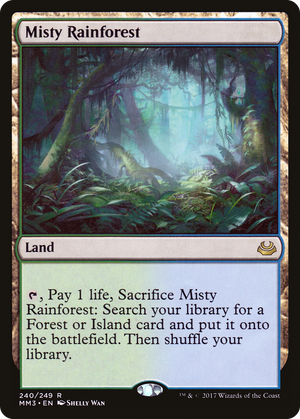
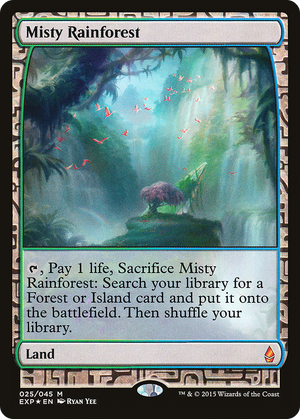
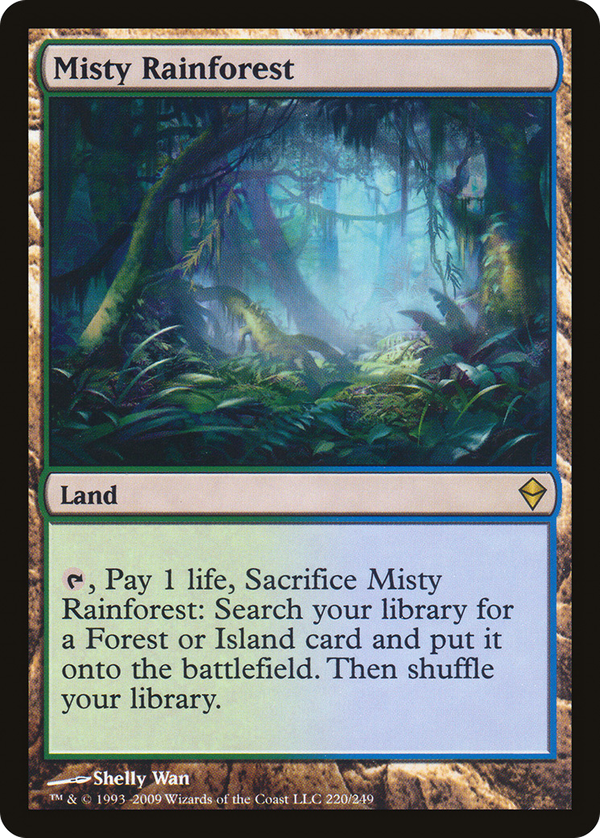
Misty Rainforest
One point of life and a tapped sacrifice buy you the exact dual, shock, or basic the next play needs, then shave a card off the deck on the way out. The Simic split is the version that has aged best, because the colors it bridges (the ramp, the card draw, the counterspells) reward filling the graveyard, fixing fetch counts for delve and snapshotting a land type for landfall in a single gesture. What separates a fetchland from an ordinary tapland is the sacrifice clause: every activation is a shuffle, which powers the brainstorm-into-shuffle line and reloads the top of the library on demand, with one life serving as the only friction on an otherwise free engine. Crucially, it searches for a Forest or Island card, not a basic, so any dual or triple land carrying those types comes off the library, which is the entire reason this generation of fetches redefined how greedy a manabase could be. Earlier fetchlands paid life and pulled basics only; this design widened the search to the typed nonbasics that proliferated alongside it, and the two halves lock together so tightly that a serious blue-green deck rarely runs one without a stack of the other. The upside is structural rather than flashy: consistency, color, graveyard fuel, and a shuffle effect, all bought for a single point of life.
Top Decks
Played Alongside
- Arcane Signet1× together
- Brainstorm1× together
- Breeding Pool1× together
- Cabal Coffers1× together
- City of Brass1× together
- Command Tower1× together
- Counterspell1× together
- Cultivate1× together
- Cyclonic Rift1× together
- Damnation1× together
Rules text
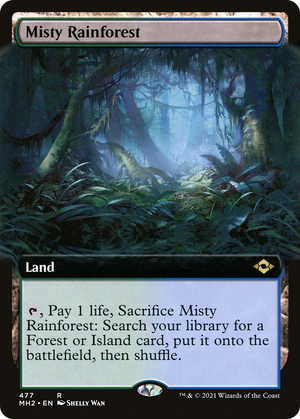
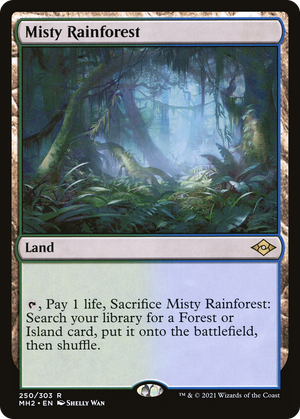
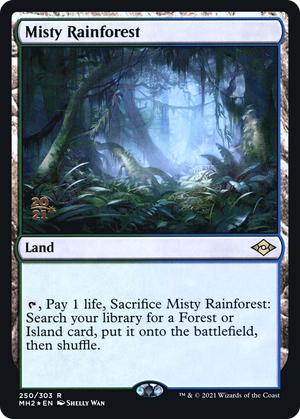
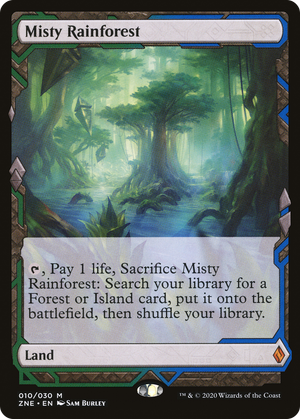
 , Pay 1 life, Sacrifice this land: Search your library for a Forest or Island card, put it onto the battlefield, then shuffle.
Format Status
More formatsFewer formats
Other printings
- Special Guests#116
- Special Guests#111
- Magic Online Promos#91407
- Modern Horizons 2#438
- Modern Horizons 2#477
- Modern Horizons 2#250
- Modern Horizons 2 Promos#250s
- Zendikar Rising Expeditions#10