Mishra's War Machine

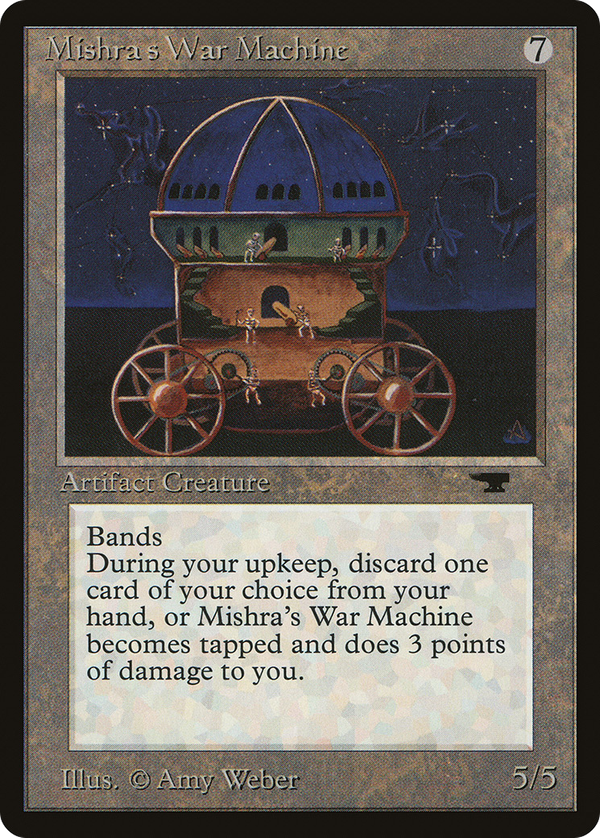
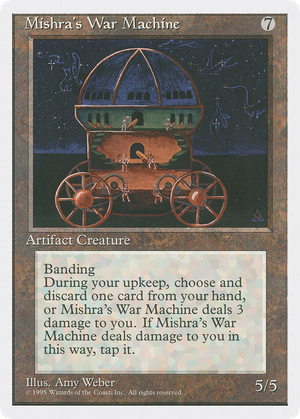
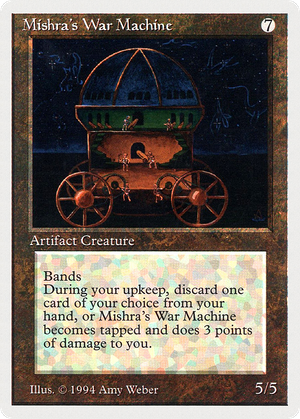
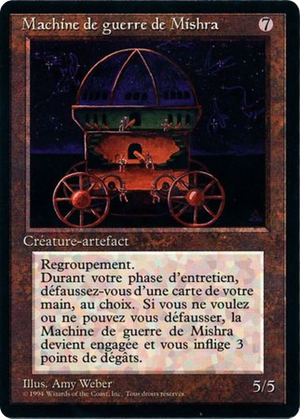
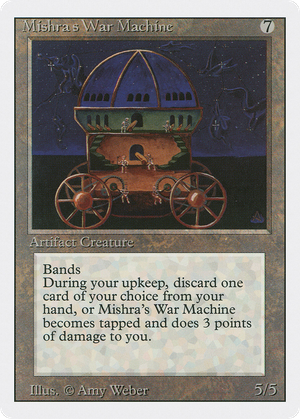
The upkeep clause is the entire design idea. A 5/5 for seven was already steep in 1994, but the body is rated for the full value of a 5/5 attacker every turn; the discard-or-take-3 tax exists to make sure it usually is not one. Each upkeep you either pay a card to keep it untapped or you eat three and watch it tap itself, which is the punishing part: a tapped creature cannot attack and cannot block, so the turn you decline the card cost is a turn the machine does nothing at all. That tension (a beater that costs you cards to swing, or a dead body that costs you life to keep) is a remarkably modern bit of design for a set that was mostly cataloging artifacts. The banding rider stacks a second decision on top: a Juggernaut that can lead an attacking band turns the discard tax into an offer to coordinate a whole creature suite around it, with damage assignment in your hands on both sides of combat. The result reads at the table less like a finisher and more like a clock you are running against your own hand. Banding has aged into a rules-text curio and the rate has aged past relevance, but the underlying lever (a body costed for full uptime, with a self-inflicted tax that asks whether you can afford that uptime) is one Wizards has returned to repeatedly in the decades since.