Mirkwood Elk


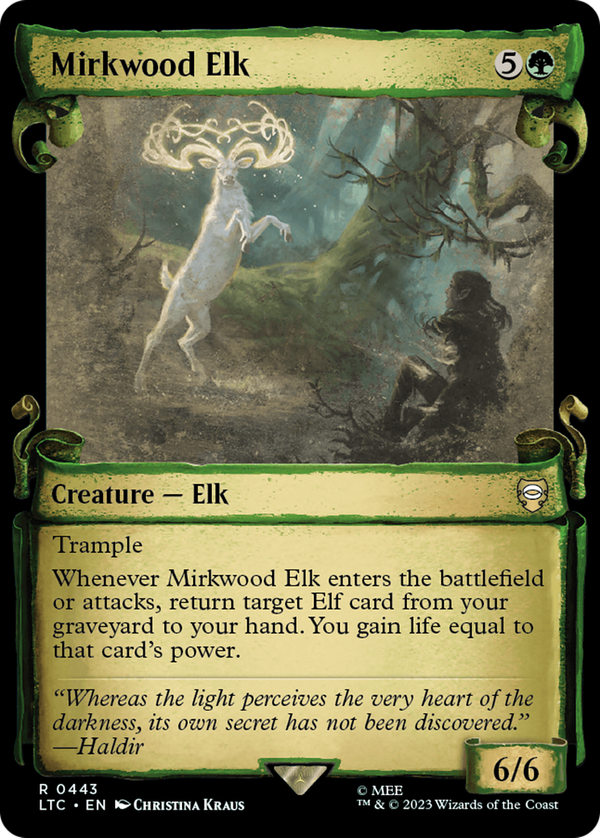
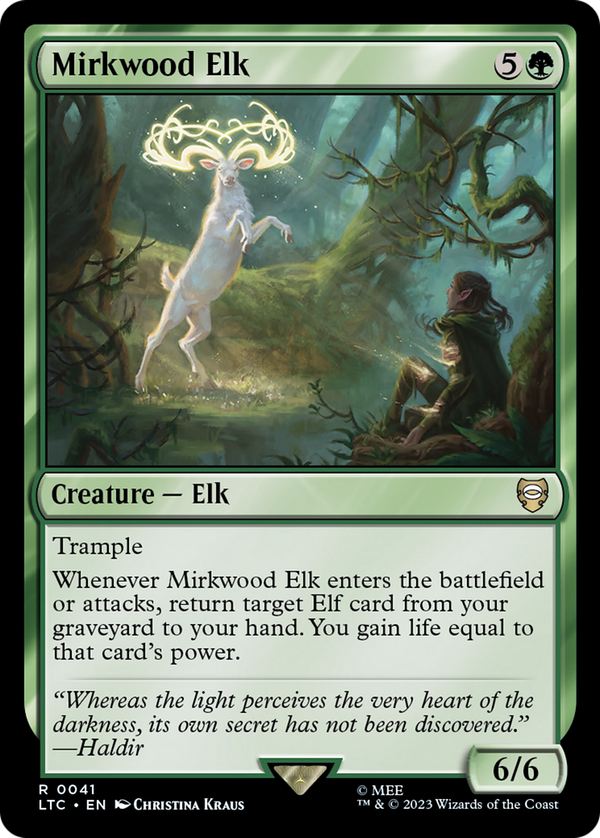
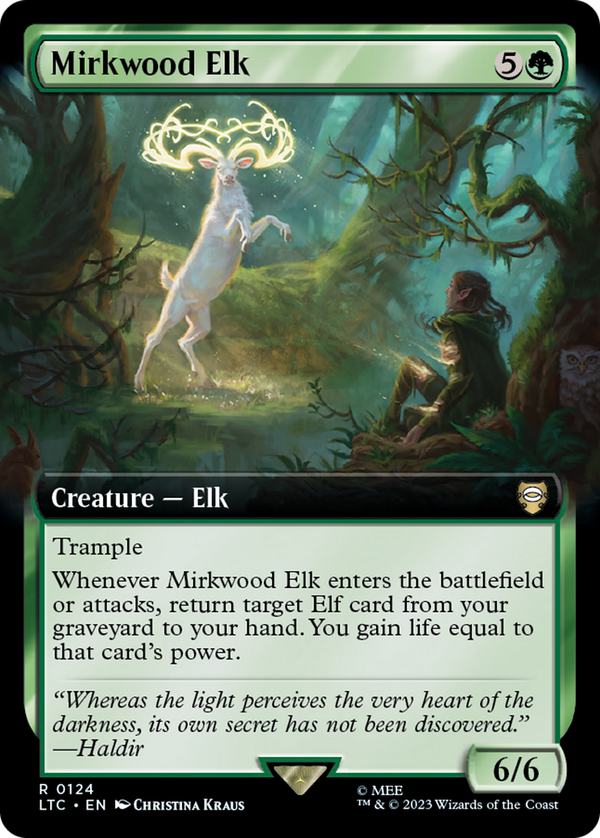
The design tell here is the recursion clause attached to combat, not just to entry. Most graveyard-return creatures fire once on the way down and then settle into being a body; this one repeats the trigger every time it swings, so a 6/6 trampler doubles as a repeatable engine that keeps refilling your Elf reserves and stapling their power onto your life total. That the lifegain scales off the returned card's power (not a fixed number) rewards recurring your heaviest Elves rather than your cheapest, which quietly pushes the deckbuilding toward beefy tribal payoffs instead of a swarm of one-drops. The trigger keys off attack declaration, so it resolves before blockers are even chosen: you get the return and the life whether or not the Elk trades in combat, and the trample is separate value on top, a way to keep pushing chip damage through a chump rather than a way to protect the ability. The dependency worth naming is graveyard state, not combat math: with no Elf card to return, the trigger has nothing to do and you are left with a 6/6 trampler, still a fine attacker but a dead engine. Structurally it is a tribal lord's inversion: rather than pumping the team on the board, it repairs the team in the graveyard, turning attacks into a self-sustaining loop of returns and lifegain that only grows more punishing the longer a game runs.