Mirage Mockery


The modal split here is the tell of a design solving a templating problem, not a strategic one. Both halves do the same thing (copy one of your creatures), so the choice between artifact and nonartifact targets exists purely so that entwine has two distinct picks to combine. Pay the extra and you clone one of each in a single resolution, which is where the card earns its keep: two token copies stamped out from one cast, their enters-the-battlefield abilities all firing together as the copies arrive. That doubling matters most when your creatures pay you on arrival rather than over time, since a token copy skips whatever accrued value the original built up and starts fresh. The sorcery speed is the honest cost. Blue's flash-clone tradition (Phantasmal Image and the line of instant-speed doubles that ambush a combat or seize an activated-ability window) trades on catching the opponent mid-play. This one gives all of that up: no responding to a fetch, no flickering a dying creature at the last moment, no end-step blowout. What you get instead is raw throughput. A single card that produces two bodies at once is a different kind of engine piece than a clone that copies the best thing on the board; it wants a board already worth duplicating, and it rewards width over the single knockout copy. That is a deliberately unfashionable place for blue to plant a clone effect, and the entwine cost is what makes the trade legible.
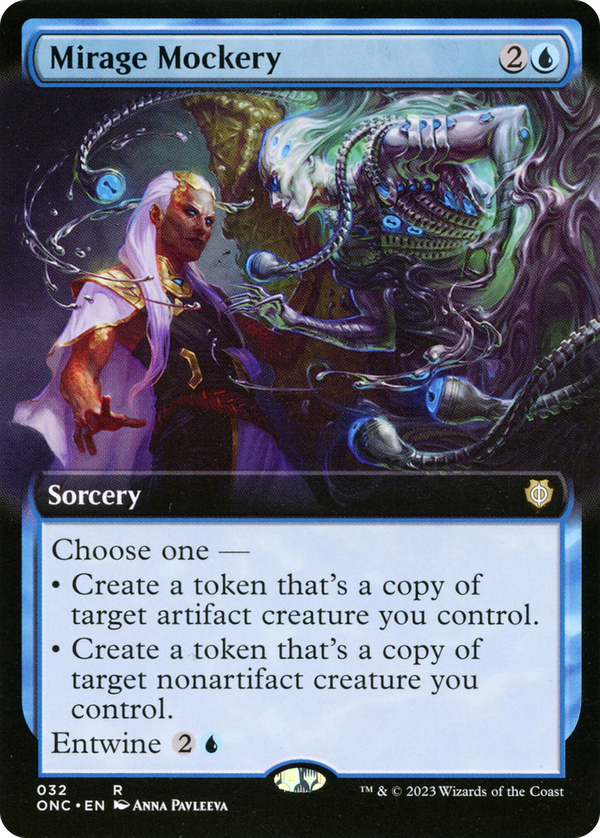
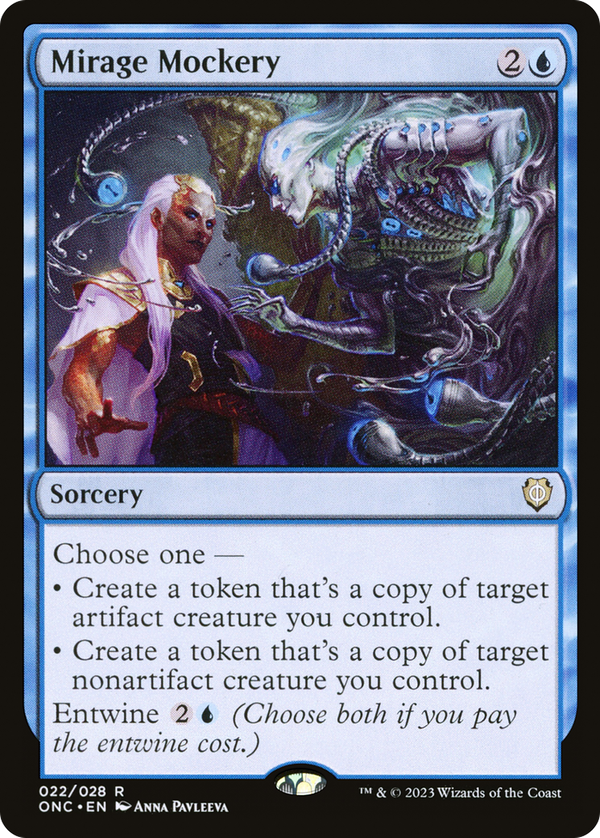
Rules text
(Choose both if you pay the entwine cost.)