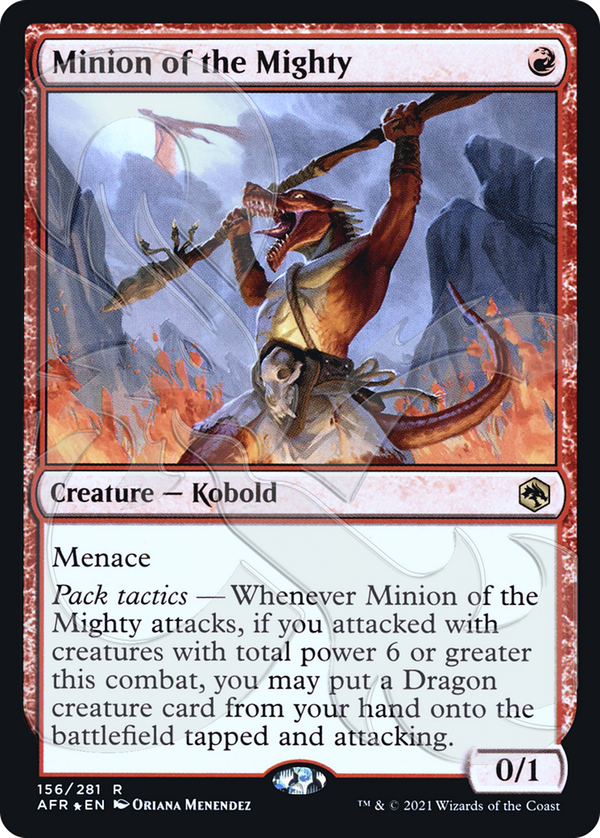
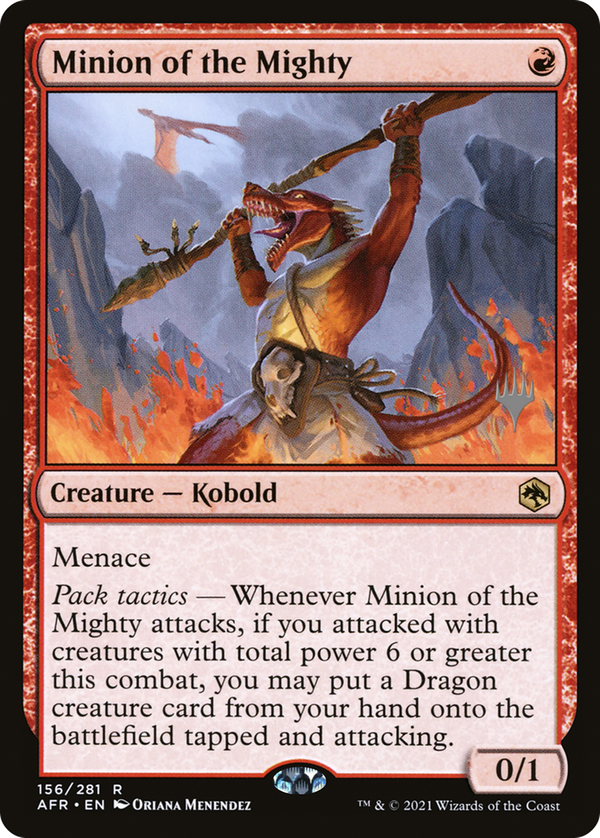
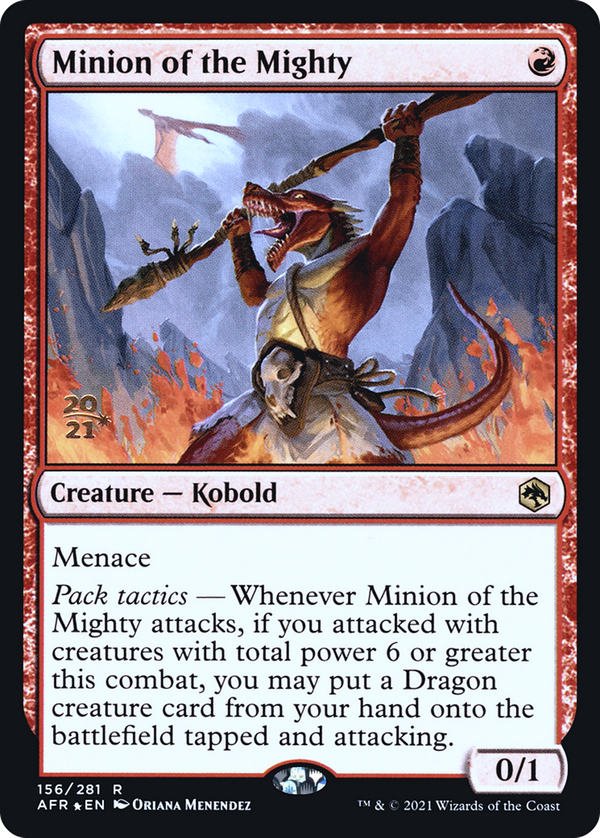
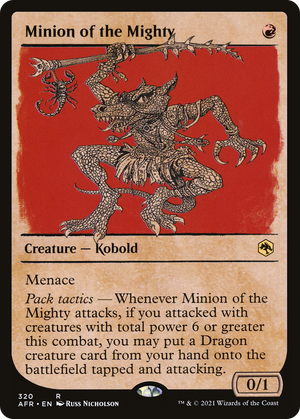
Minion of the Mighty

Cheating a Dragon into play is old business, but the currency here is unusual: not life, not a discard, not a die roll, but a board already wide enough to be winning combat. The Kobold's 0/1 body is the joke and the point at once. It brings nothing toward its own six-power threshold, so its whole job is to survive long enough to swing while a real team does the heavy lifting. Pack tactics gates the payoff behind an already-committed attack, which is the friction that stops this from being an early blowout: by the time the Dragon lands, you have to be declaring attackers with meaningful power, and the Dragon arrives tapped and attacking rather than defending. That framing does more than it first appears. Because the Dragon enters attacking, it sidesteps summoning sickness entirely, converting a hand of expensive fliers into an alpha strike two or three turns ahead of schedule. Menace does the quieter work of keeping the enabler alive: forcing two blockers makes killing the Kobold in combat cost more than it should, so the accelerant can do this again next turn. The condition itself is settled at the declare-attackers step, checking the total power you committed to the swing, so once you have the six-power team on the table there is no reactive blocking that unwinds the trigger; the opponent has to interact before combat or eat the Dragon. The reward is aggressive tempo, not a durable engine, and the Dragon is the exclamation point on a turn that was already good.