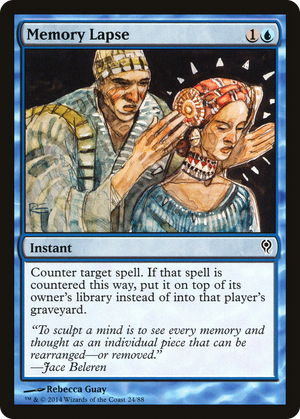
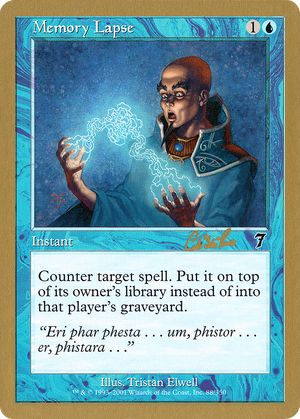
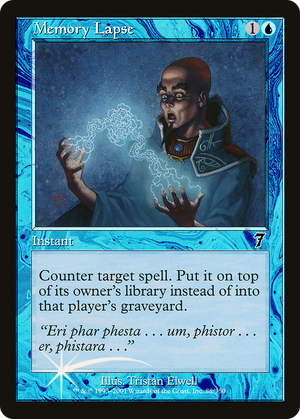
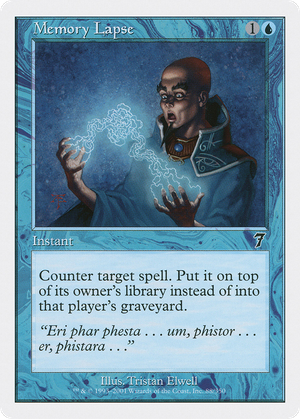
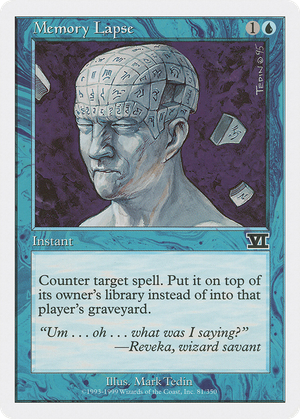
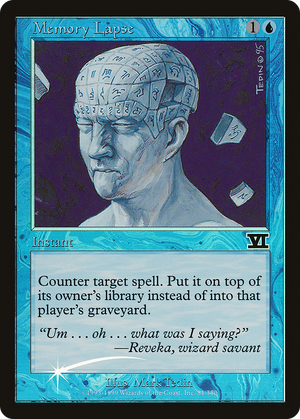
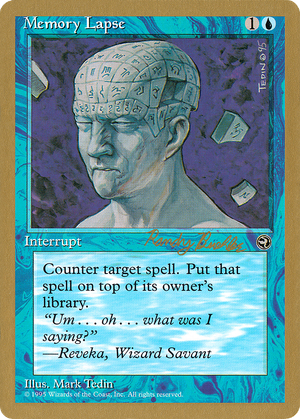
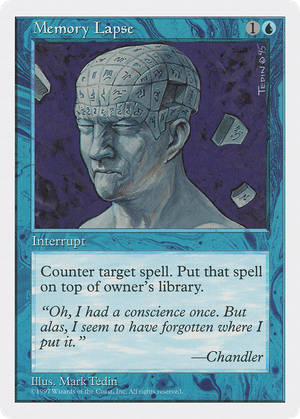
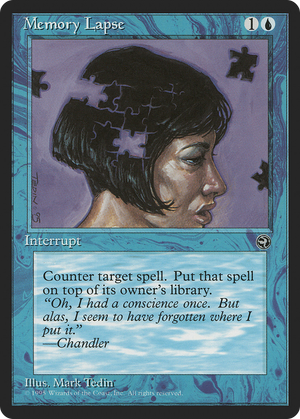
Memory Lapse


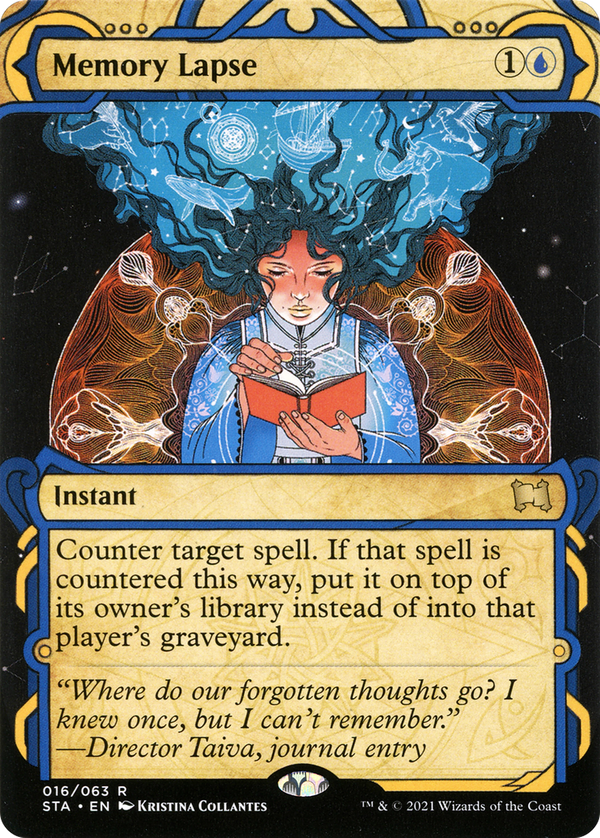
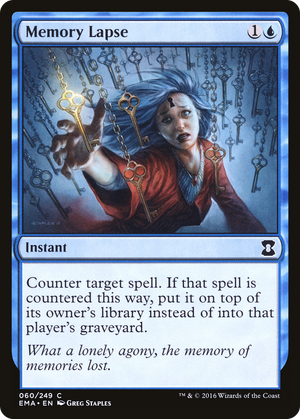
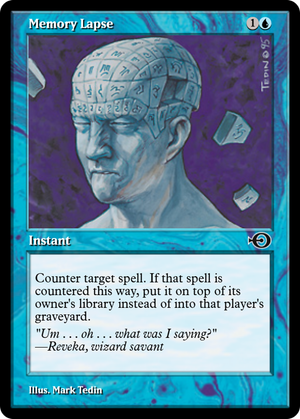
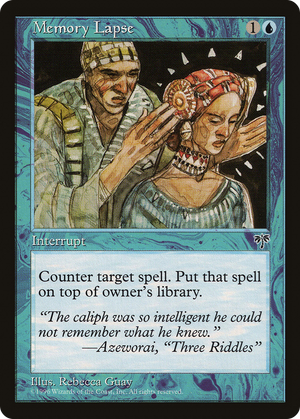
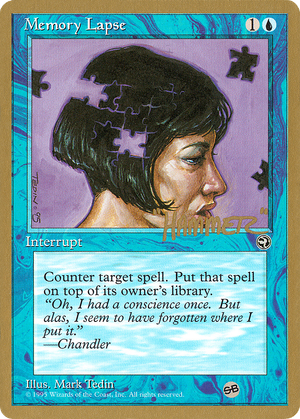
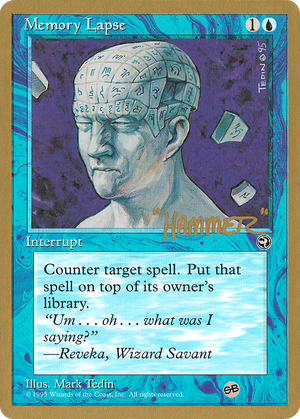
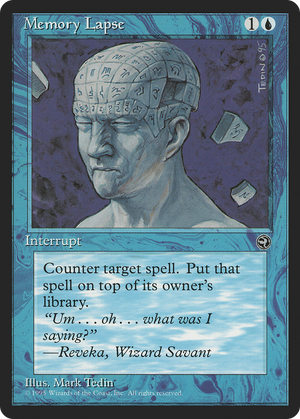
Counter target spell, then hand it right back: the spell goes on top of its owner's library instead of into the graveyard, so the opponent redraws it next turn and pays the mana again. Read as a permanent answer, that is a downside, and against a single threat it is. The design insight is that the tempo trade is the whole point. You are not removing a spell; you are taxing it a full turn, denying the opponent a fresh draw off the top, and buying a window. In a deck built to convert windows into pressure or to chain disruption while a clock runs, a one-turn lock on the opponent's mana is frequently better than a clean counter, because it stacks: every cast keeps the same card stranded on top while their hand and their turns erode. The constraint that it leaves the spell recastable is exactly what makes a two-mana, no-restrictions counter fair; the line between "fair" and "tempo engine" runs straight through whether you have a deck that profits from the turn you just stole. That is why a card that looks strictly worse than a hard counter has outlived nearly everything printed alongside it: it plays as something else entirely, and the something-else has never stopped being useful to decks that hit hard the turn after.