Meeting of the Five






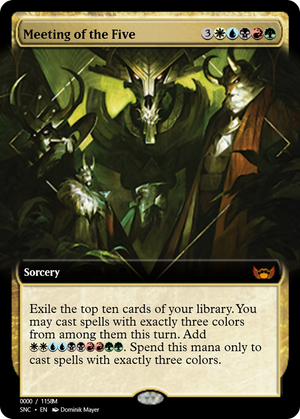
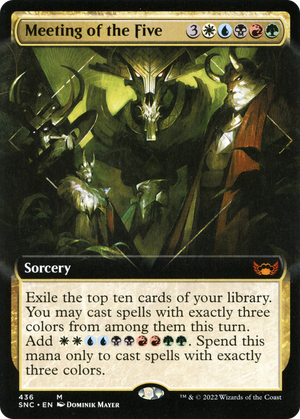
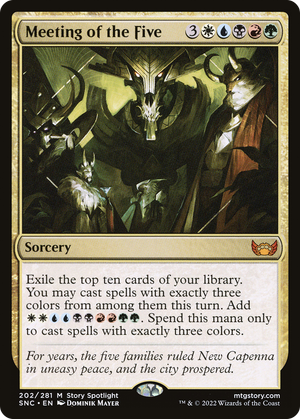
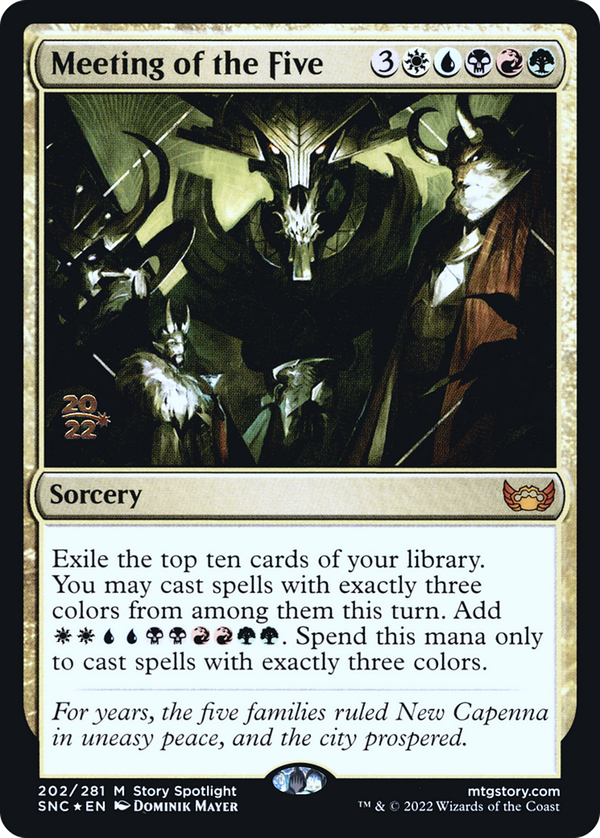
The eight-mana all-five-colors casting cost is the joke and the point: a spell whose entire payoff is defined by the number three, wearing a cost built from every color in the game. The mechanism is a two-part gate. First it exiles ten cards and grants permission to cast only the three-color spells among them, a nod to the wedge-and-shard structure that has organized multicolor design since the guilds became clans. Then it hands you ten mana in fixed color pairs, WWUUBBRRGG, and shackles every drop of it to that same exactly-three-colors constraint. The self-imposed restriction is what keeps the payoff coherent: this mana cannot be cashed into a colorless bomb or a mono-color finisher, so the engine only fires if your deck is stuffed with three-color spells worth flipping into. That makes it less a value pile than a puzzle piece, a card that assumes a specific kind of library and does nothing if you build wrong. And it does not skip the bill the way Cascade does: the ten mana it produces is exactly what you have to pour back into casting three-color spells, so a wedge or shard that runs cheaper than the mana on offer nets you extra spells, while an expensive one might eat the whole pool for a single cast. The design conceit is celebratory rather than efficient: it exists to crown the player who committed to a critical mass of three-color cards, and to sit as dead weight for everyone else.
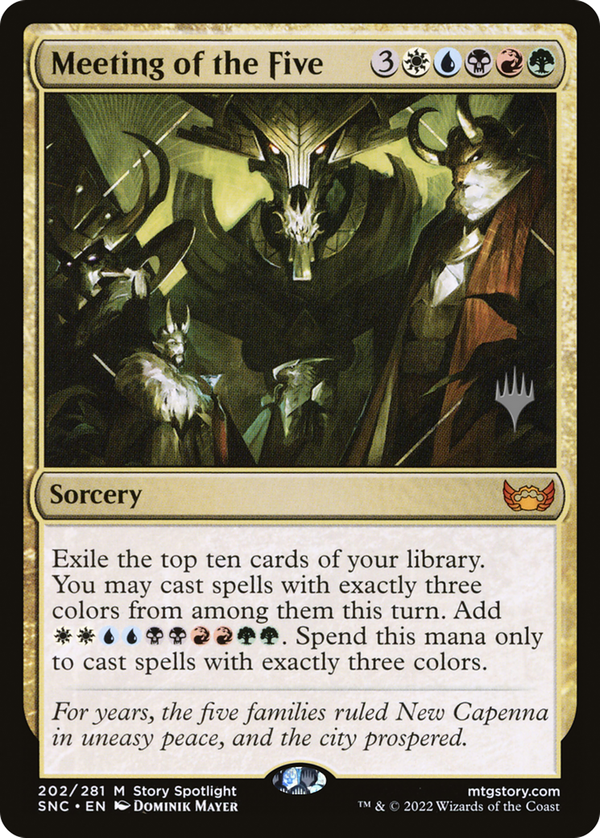
Rules text
. Spend this mana only to cast spells with exactly three colors.