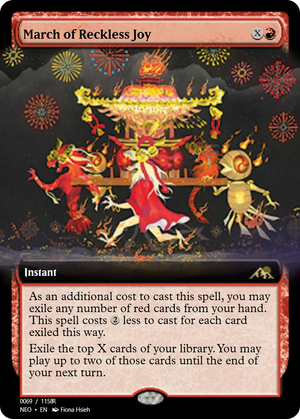
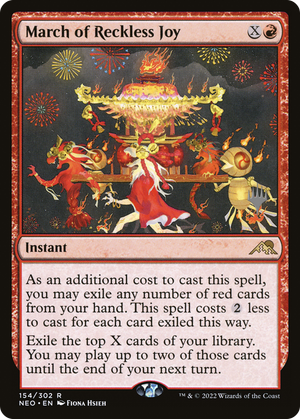
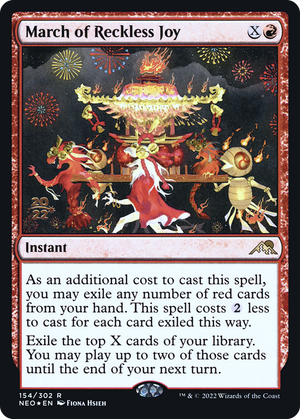
March of Reckless Joy


The additional cost is the whole gambit: slam this for at face value and impulse-draw the top X, or strip red cards out of your hand to knock  off per exile and cast it for a pittance. That trade is the card's tension. Every red card you exile to reduce the cost is a card you no longer get to play, so you are shrinking your effective hand to fund a dig that only lets you play up to two of what it turns up anyway. The math wants X high and the exiles minimal, right where impulse-draw decks tend to be flooded with more cards than they can spend. The play window carries as much weight as the count: the exiled cards stay available until the end of your next turn, so this is a two-turn resource rather than a single-turn burst, and casting it at instant speed on an opponent's end step converts the full X into fuel for your following turn. This belongs to red's tradition of card advantage on a leash, the effects that hand the color the raw quantity it has historically lacked while billing it as temporary access rather than true draw. The cost-reduction clause gives it a wrinkle those plain X-spell impulse draws don't have: it asks you to pay in exactly the currency it produces.
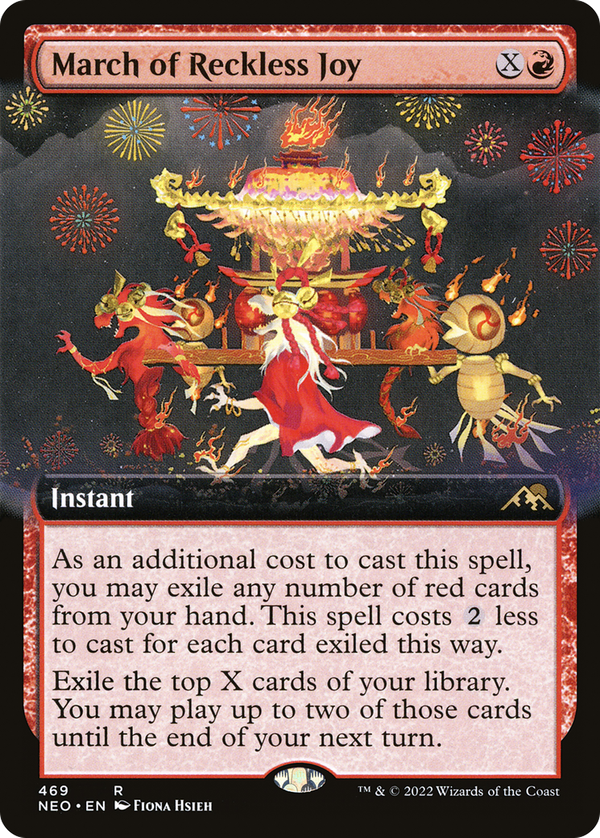
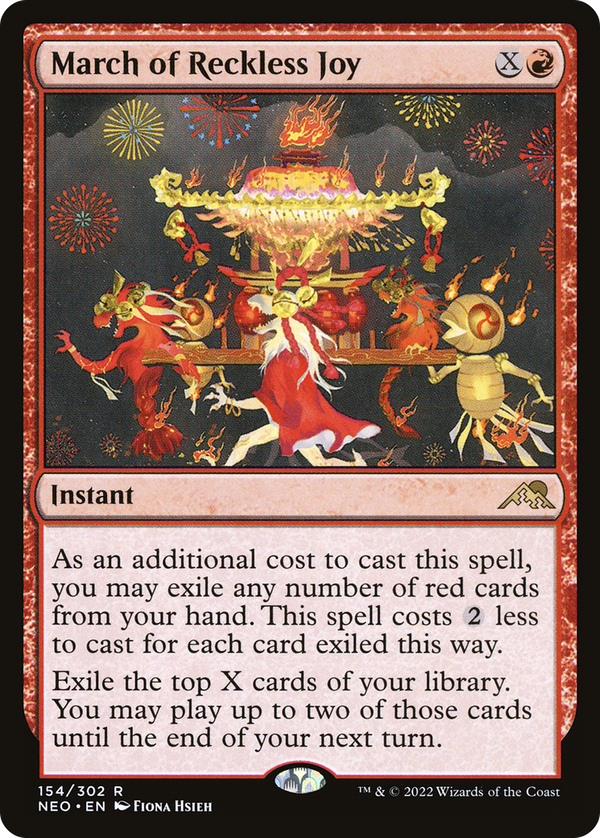
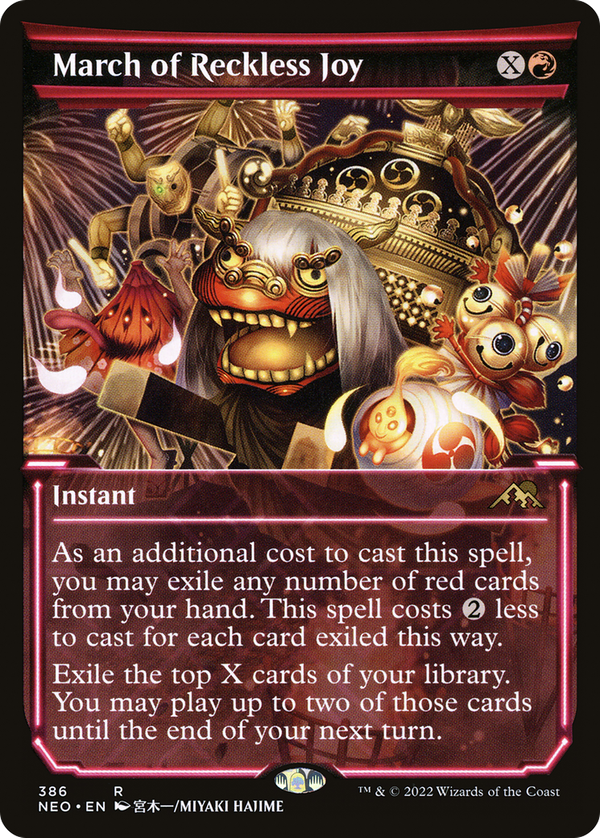
Rules text
less to cast for each card exiled this way.
Exile the top X cards of your library. You may play up to two of those cards until the end of your next turn.