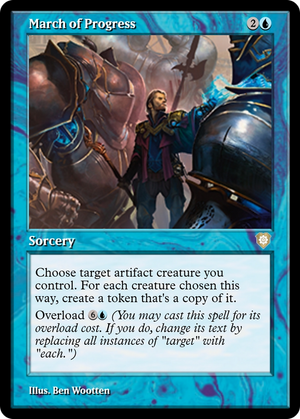
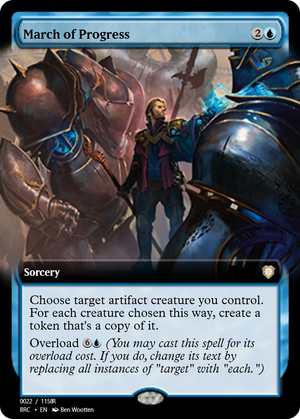
March of Progress


The overload cost is where the real design lives. Cast for its base price, this is a single-target clone locked to your own artifact creatures: a clean way to duplicate a value engine or a beater. But the overload line reframes the whole card. For  it stops targeting and duplicates your entire artifact-creature board at once, and the board impact scales far past the mana difference, because each new copy can itself be an ETB trigger, sacrifice fodder, or a body that ends the game. The gap between the two modes is the tension the card is built around: it demands a fistful of extra mana and a deckbuilding commitment to artifact creatures to unlock the payoff, and it rewards a board state you had to assemble first rather than one it hands you. That constraint (artifact creatures only, no tokens of noncreature artifacts, no copying an opponent's threats) is what keeps a mass clone from being a generic blue finisher; it belongs to decks that treat artifacts as a load-bearing subtheme, not a splash. Overload has always traded on the same premium, letting a surgical spell graduate to a board-wide effect for a steep upcharge, and this is one of the cleaner expressions of that idea pointed at going wide rather than blowing up.
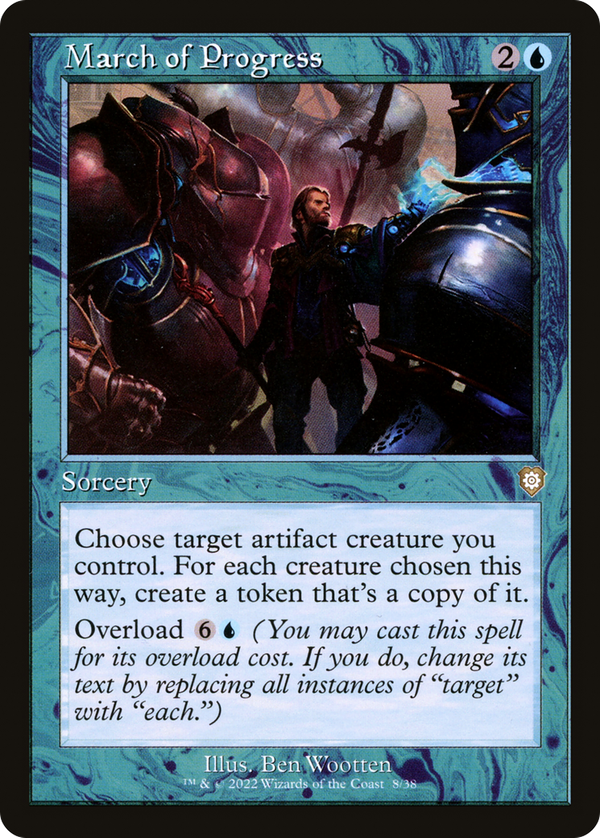
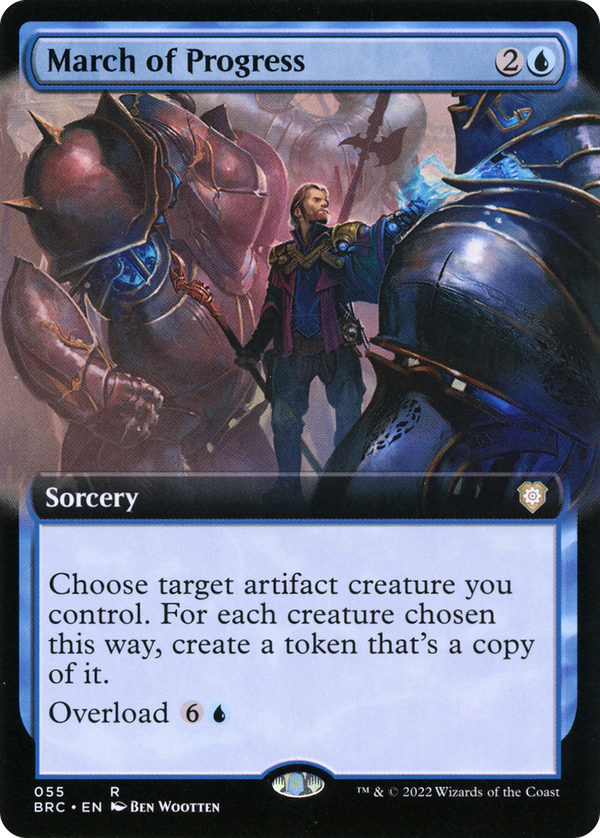
Rules text
(You may cast this spell for its overload cost. If you do, change its text by replacing all instances of "target" with "each.")