Lyse Hext



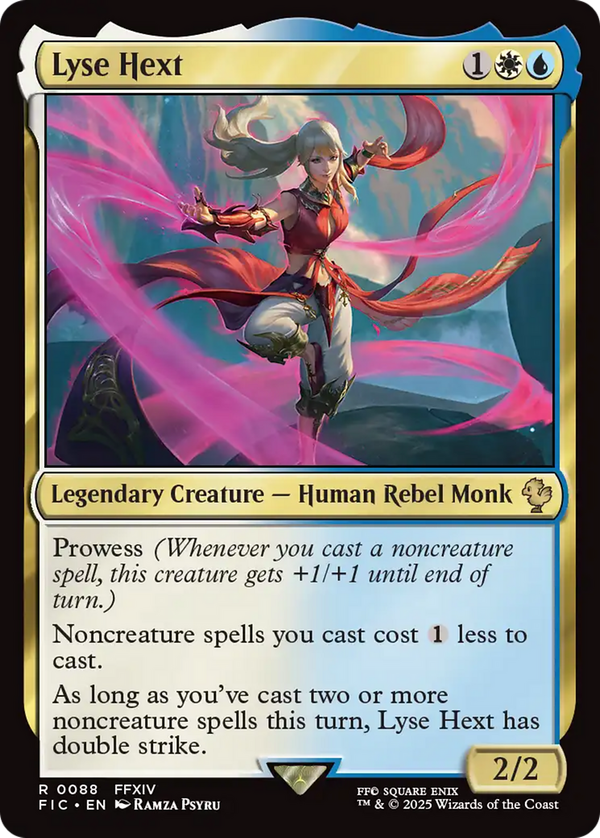
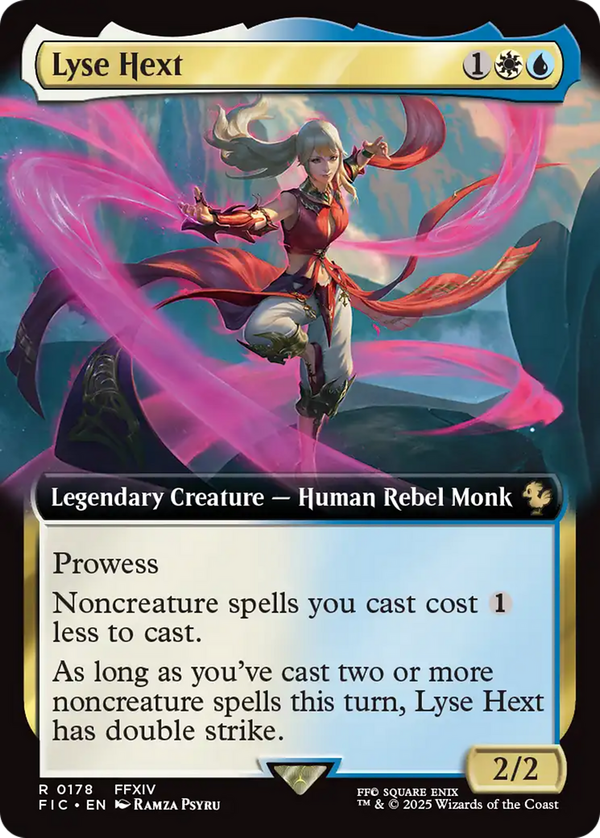
The cost reduction is the hinge, not the prowess. Plenty of Azorius commanders reward casting spells; this one changes the arithmetic before the spell hits the stack, shaving a generic mana off every noncreature spell you cast. That reduction is what makes the double-strike clause reachable rather than aspirational: getting to two noncreature spells in a turn is a real ask on a normal curve, but when each one costs a mana less, the second cast comes online a turn earlier and often for free off the mana you'd already committed. So the body's growth and its damage-doubling are gated behind the same behavior the reduction is paying you to do anyway, and they compound: two cheap cantrips or removal spells leave a 4/4 with double strike swinging for eight, off a two-mana investment above the deck's baseline. The design leans on a tension spells-matter decks always carry, which is that noncreature-heavy builds tend to run light on threats that can actually end the game. This answers that by turning the cheap interaction you were already going to cast into the thing that kills. The prowess keyword is the small, evergreen half of the package; the cost reduction and the double-strike clause are the parts that ask you to build around cheap noncreature spells and reward you for stacking them into a single turn rather than trickling them out.
Rules text
less to cast.
As long as you've cast two or more noncreature spells this turn, Lyse Hext has double strike.