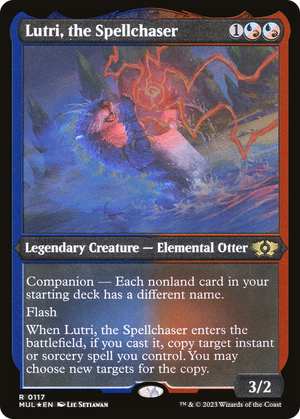
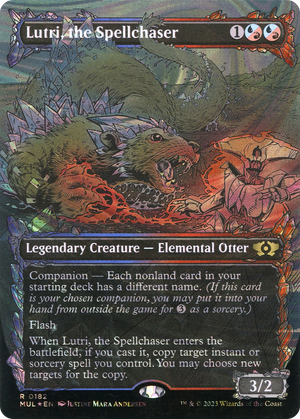
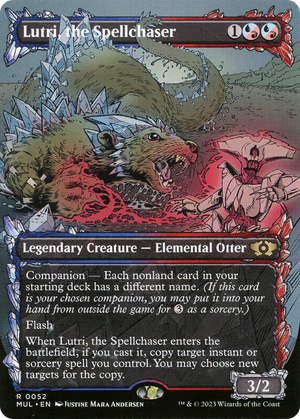
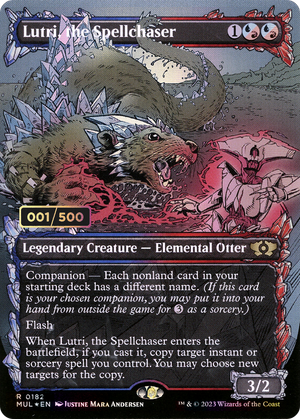
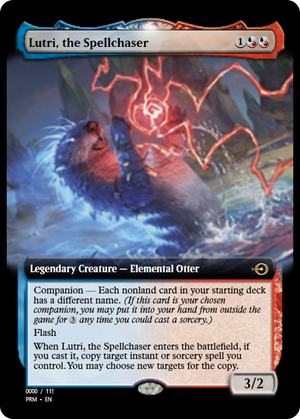
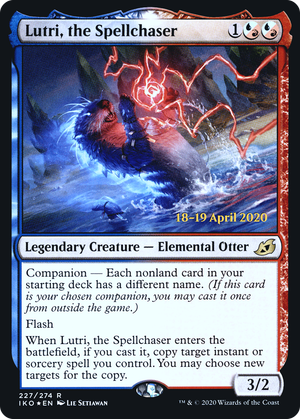
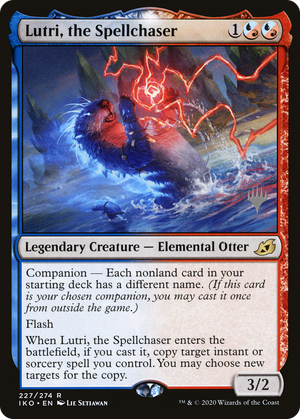
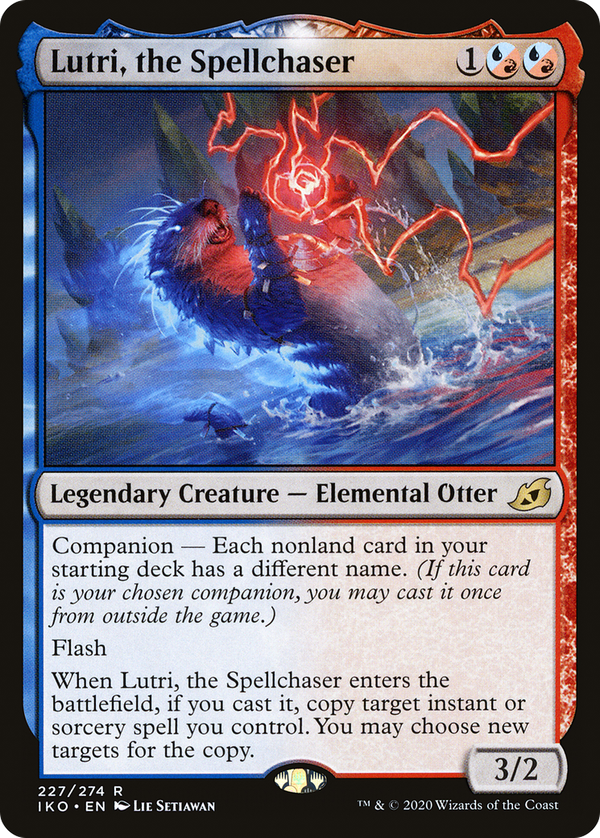
Lutri, the Spellchaser


Companion launched as a ten-card cycle, and this was the one whose restriction charged nothing in the format it mattered most. The deckbuilding tax reads as steep on paper: every nonland card in your starting deck must have a different name, which forbids the four-of discipline most sixty-card constructed decks are built on. That is a real cost there. It is nearly free in singleton formats, where "no duplicate names" is already the price of admission, so the condition the card was priced against simply does not bind. What you get instead is a Fork on a permanent leash: a flash body parked outside the deck, fetchable every game, that copies any instant or sorcery you cast with targets rechosen at will, in a format where each of your other cards is already unique. In singleton Commander that undercut a structural assumption the whole format rests on, so it became the only companion banned there outright rather than reworked. The later companion errata that raised the activation to include the card in your hand and cast it from there hit the mechanic across the board, but the condition here was the one no cost could make expensive enough, because the condition was already met. What remains under the Otter is a clean value engine: flash it in response to your own removal or combo piece, choose fresh targets, resolve twice off one card. The design lesson outlasts the ban: a restriction is only a cost where it actually restricts something.
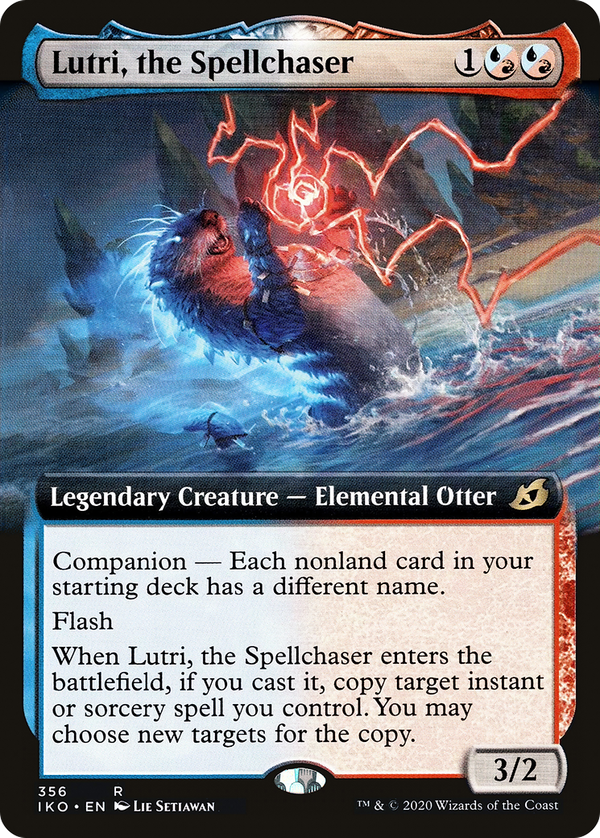
Rules text
 as a sorcery.)
Flash
When Lutri enters, if you cast it, copy target instant or sorcery spell you control. You may choose new targets for the copy.
as a sorcery.)
Flash
When Lutri enters, if you cast it, copy target instant or sorcery spell you control. You may choose new targets for the copy.