Lock and Load


The trouble with a payoff that scales off spells cast this turn is that you have to pay for the payoff up front, in the same turn you're trying to chain your instants and sorceries. This is where plot rewrites the sequencing. Rather than holding three mana open to fire it off after a busy turn, you spend  on a quiet turn to exile it, then cast it for free on the turn you actually go off. The card that counts your spells no longer competes with them for mana. That is a genuinely clever solve to a design problem that has dogged this effect since the earliest spell-count draw payoffs: the count wants a big turn, but the cost of the counter shrinks the big turn. Decoupling the payment from the resolution lets you go all-in without the tax. What the plot cost buys, in effect, is a card you've already paid for waiting patiently in exile, ready to convert a flurry of cheap spells into a refill for zero additional mana that turn. The ceiling is high and self-referential: it counts every other instant or sorcery you jammed before it, so the more you front-load the turn, the deeper the draw runs. The deckbuilding tension is real, though: the free-cast turn only justifies the setup turn if your spell density is high enough to make the count pay.
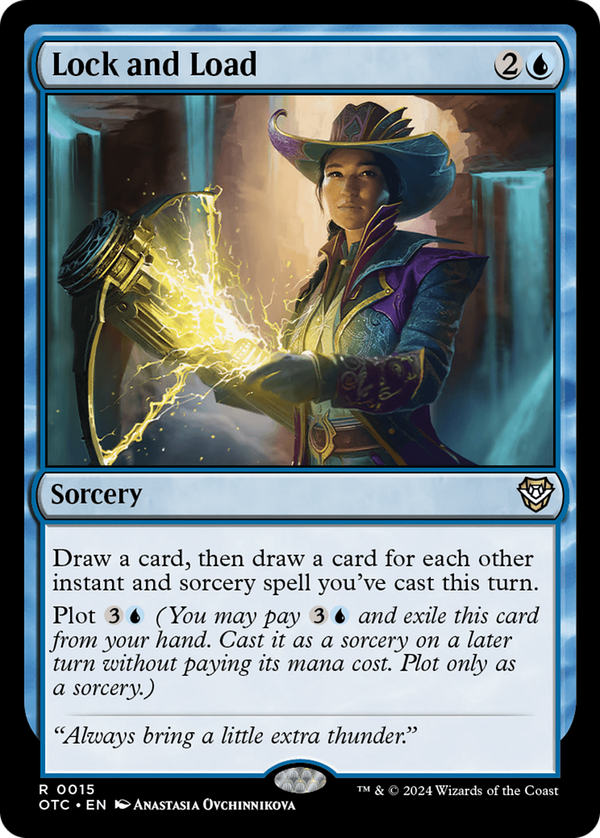
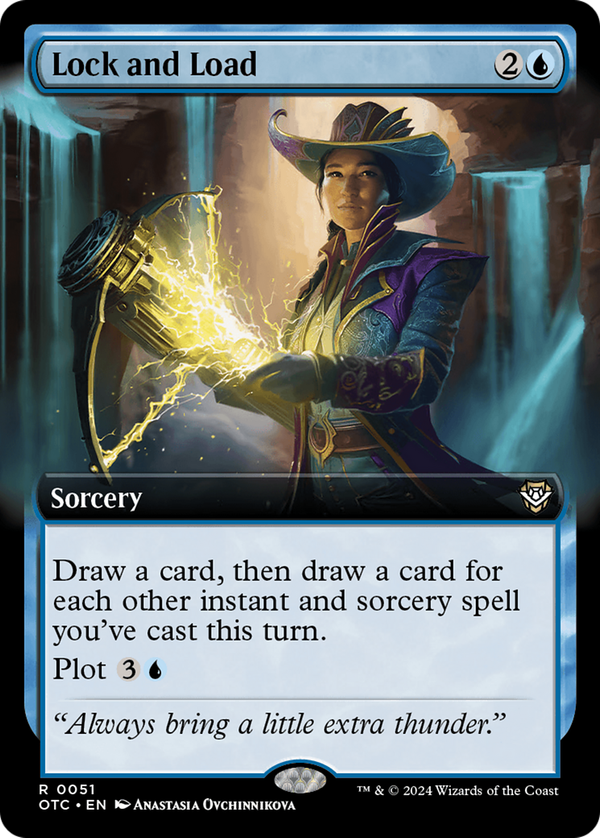
Rules text
(You may pay and exile this card from your hand. Cast it as a sorcery on a later turn without paying its mana cost. Plot only as a sorcery.)