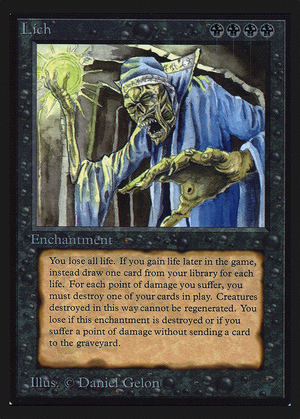
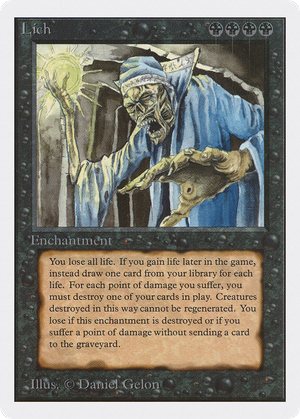
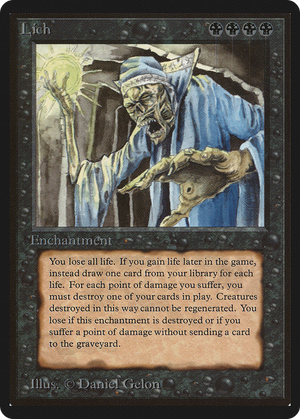
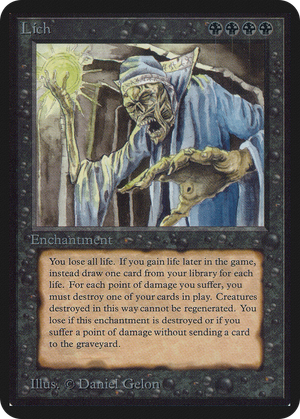
Lich

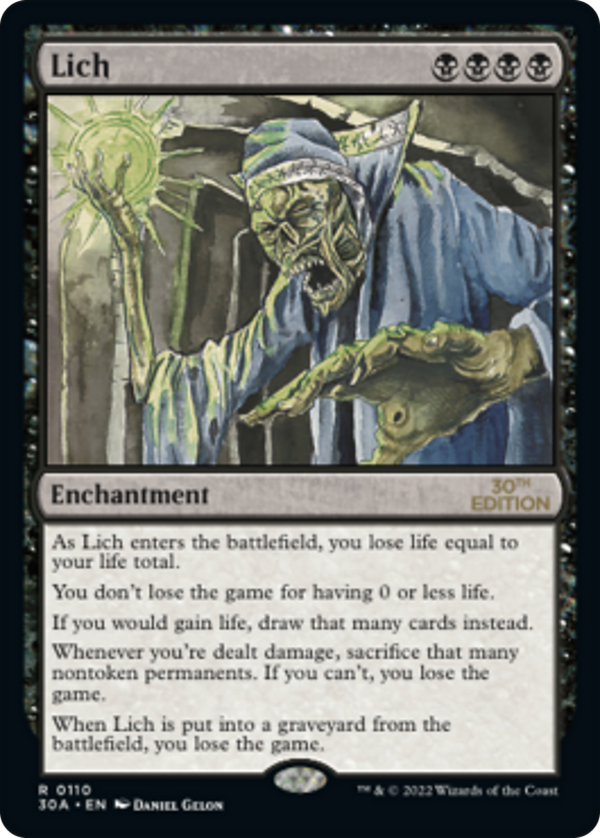
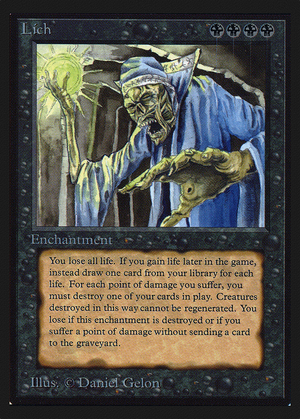
Alpha's most baroque puzzle box, and the clearest window into how the original design team thought about life total as a resource. The card refuses to treat life as a hit-point bar: it zeroes you out on entry, severs the loss-at-zero rule, converts incoming healing into card draw, and re-routes damage into a permanent-sacrifice tax. The result is a closed system where the player is alive only as long as the enchantment is, and the death-trigger that costs you the game closes the trap. Every clause exists to stop an obvious escape: the enters-the-battlefield life loss prevents you from stacking gain effects first, the no-lose rule keeps the engine running, the damage-to-sacrifice clause stops you from simply tanking hits, and the graveyard trigger means destroying your own Lich is suicide rather than a reset. Note the asymmetry the templating creates: bouncing Lich does not fire that trigger at all, but it kills you anyway, because the moment the static prevention effect leaves, state-based actions read your 0 life and end the game. It is a card built out of interlocking replacement effects, static rules, and triggers at a time when the templating for them was still being invented, which is why the rules text reads like a contract with itself. The design has been revisited (Lich's Mirror, Lich's Mastery), but each successor smooths one of Lich's sharp edges; the original keeps all of them. A card that asks whether you can survive being its owner.