Leyline Binding


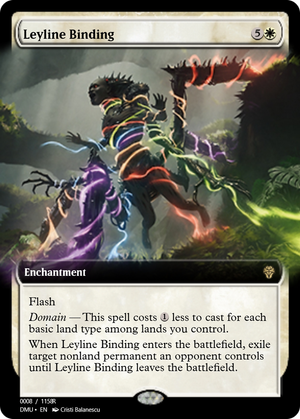
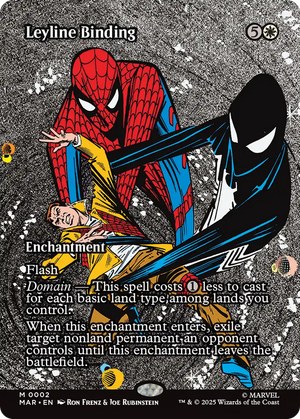
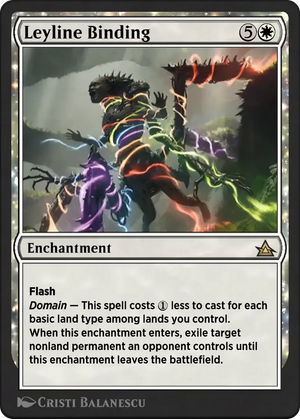
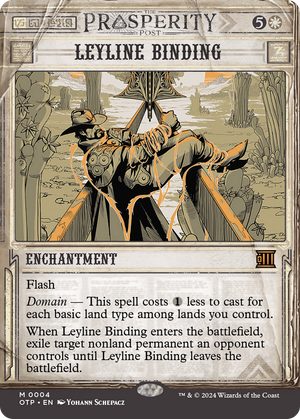
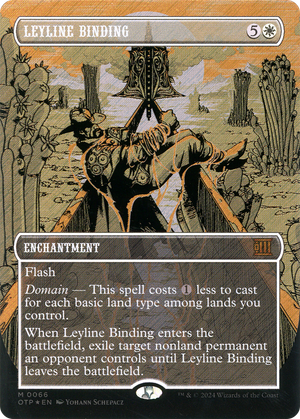
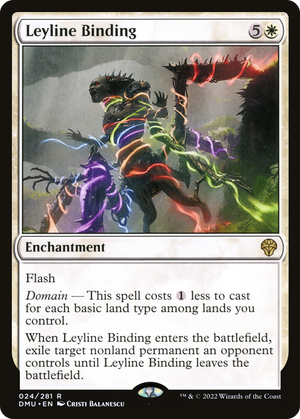
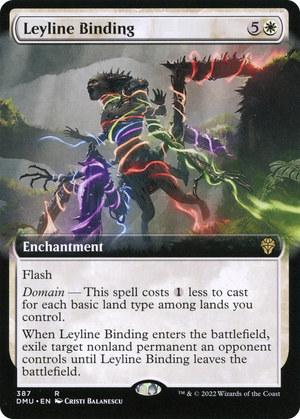
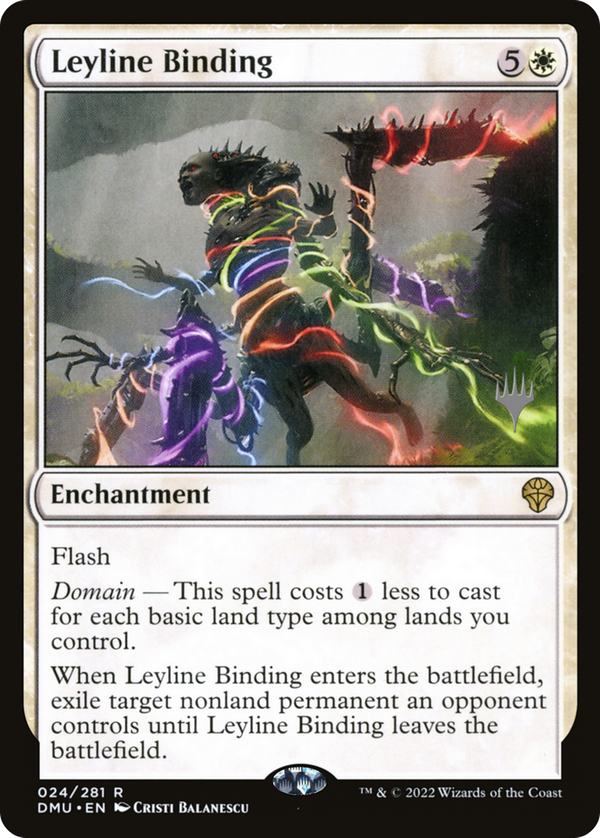
Domain has been a scaling mechanic since the Invasion era, but it mostly fed top-end payoffs: bigger spells, wider effects, incremental value that rewarded a five-color board you had already assembled. This inverts the reward by pointing domain at the cost line instead of the effect. The printed six is a fiction almost nobody pays; three basic land types bring it to three mana, four bring it to two, and a full five-type manabase flashes it in for a single white. That combination is the whole trick. Removal that answers any nonland permanent regardless of type usually charges you flexibility somewhere: it moves at sorcery speed, or it locks in a premium price, or it leaves the threat on the battlefield as a return target. This asks only that your manabase run wide, which greedy multicolor decks were already doing to cast their spells, and pays domain forward into the mana cost itself. The exile-until-it-leaves clause is the honest half of the deal: it is a temporary answer, not a permanent one, so enchantment removal hands the threat back. It also uses the modern templating, which cuts differently from older Oblivion Ring designs: destroy the enchantment while the enter trigger is still on the stack and nothing is exiled at all, since there is no lingering permanent to strand the target the way the old exile-on-a-timing-loophole cards could. What makes it notable is how completely it collapses the tension domain lived with for two decades: the manabase is rewarded the instant you most want a cheap, unconditional answer.
Rules text
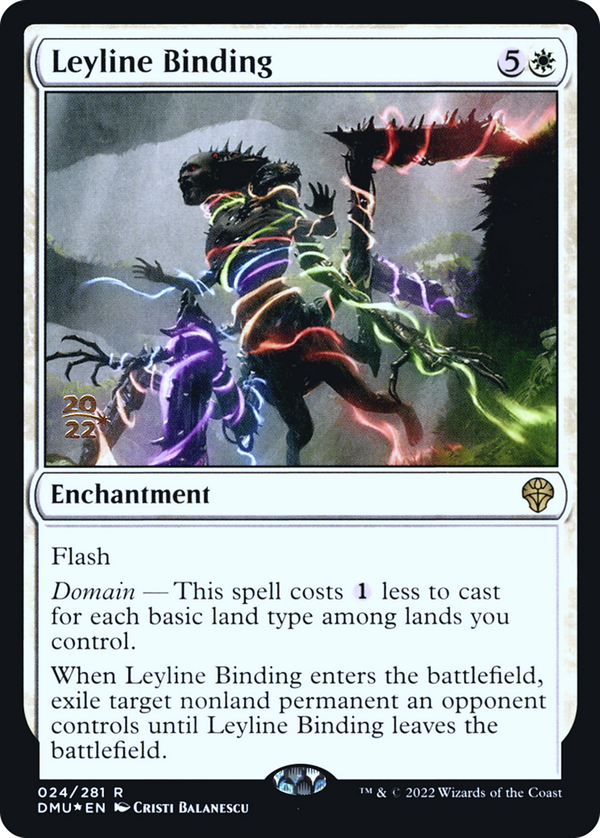
 less to cast for each basic land type among lands you control.
When this enchantment enters, exile target nonland permanent an opponent controls until this enchantment leaves the battlefield.
less to cast for each basic land type among lands you control.
When this enchantment enters, exile target nonland permanent an opponent controls until this enchantment leaves the battlefield.