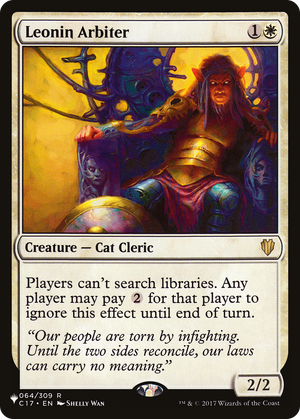
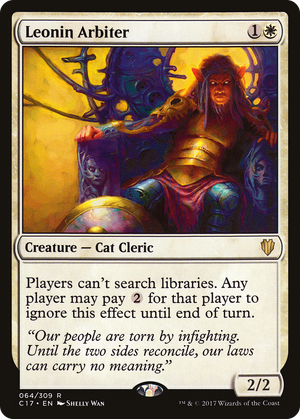
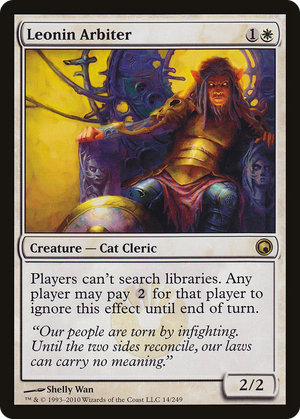
Leonin Arbiter


The genius of this design is that it doesn't ban searching outright; it taxes it. The symmetrical-looking lock (no one can search libraries) is asymmetrical in practice, because the decks that lean hardest on fetching are the ones grinding their resources thinnest. Against a fetch-and-tutor manabase, the  escape clause isn't a release valve so much as a tariff: cracking a fetchland becomes a two-mana action, and every wished-for answer costs an extra pair of mana you'd rather spend elsewhere. The toll buys a player the rest of the turn, so a single payment unlocks all the searching they care to do before passing; the cost is in the choice to pay at all, made over and over as the game stretches. This is hatebear engineering at its sharpest: a 2/2 body that pressures the board on its own terms while quietly making the rest of the table's mana less efficient. It sits in the lineage of white's stax-lite disruption pieces, the ones that don't say "you can't" but rather "it'll cost you," letting the controlling player set the rate. The Path to Exile interaction is the famous wrinkle: unless the affected player pays first, the land-tutor stapled to that exile clause simply evaporates, turning a mode of your own removal into pure exile with no land handed back. A small creature doing structural work on a table's resource engine, priced so it has to fight, not just sit.
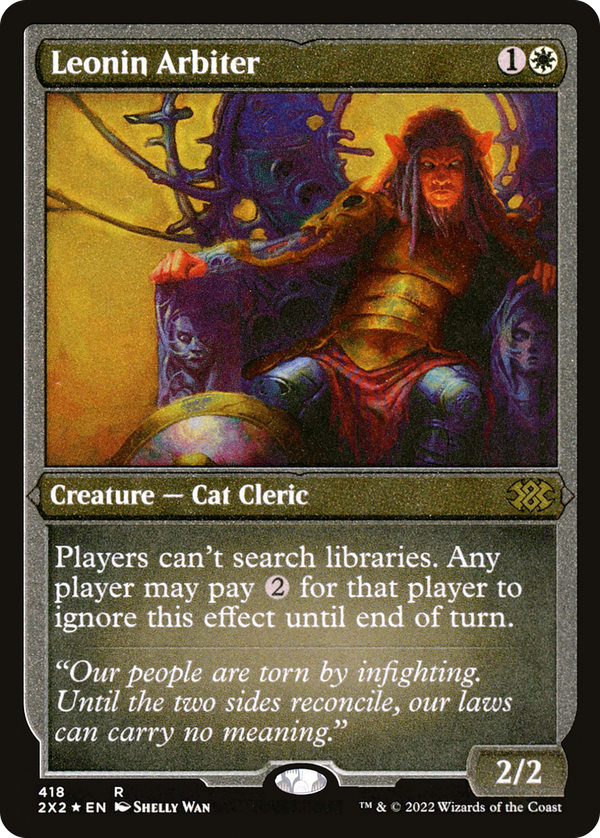
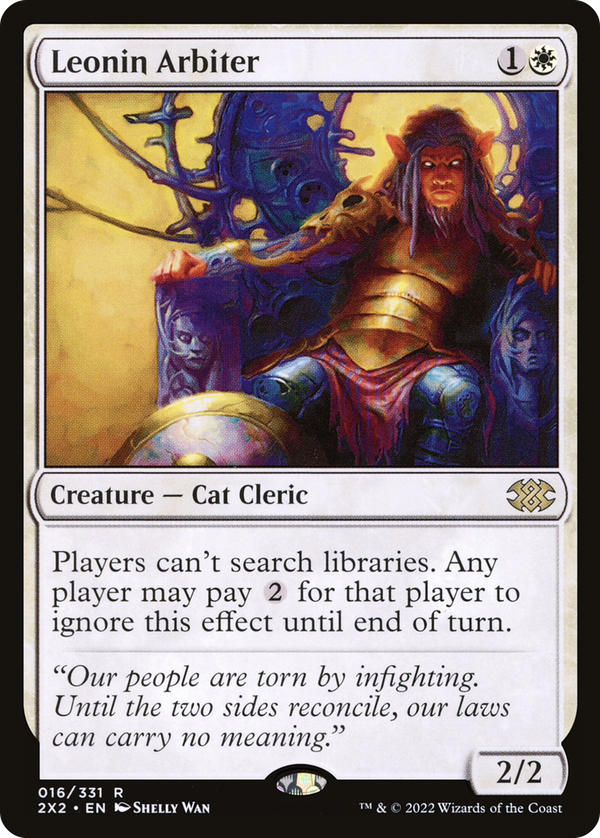
Rules text
for that player to ignore this effect until end of turn.