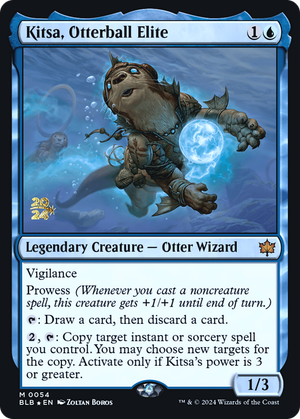
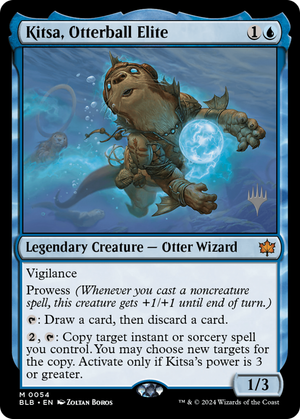
Kitsa, Otterball Elite


The copy ability is walled off behind a power threshold, and that wall is what turns a two-mana body into an engine rather than a blowout. Starting at power 1, this needs two noncreature spells to clear the 3-power bar (or one spell plus a pump effect), which means the copy only becomes live on a turn where you were already casting the instants and sorceries it wants to fork. That circularity is the whole point: prowess builds the power, the power unlocks the fork, and the fork is another spell resolving on your side of the board, all pointing along the same axis. The activation still costs  on top of the tap, so it is a discount on fork effects rather than a free one; that mana tax and the power gate together are what keep it from stealing a game on turn two. Vigilance solves the tension between pressuring and enabling: tapping to copy or to loot never asks the body to sit back from an attack. The loot ability underneath is the quieter connective work, smoothing the draws and digging toward the spell worth duplicating on the turns when nothing else is happening. What makes it hang together is that a fork stapled to a creature has historically cost five or more mana; here the price is paid in setup and sequencing instead of raw cost, and the threshold is the meter that measures whether you have earned the copy yet.
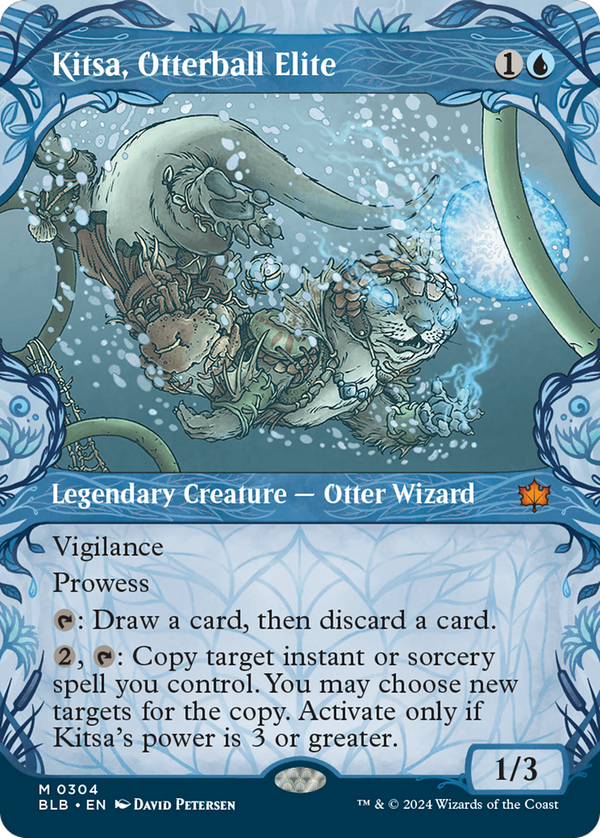
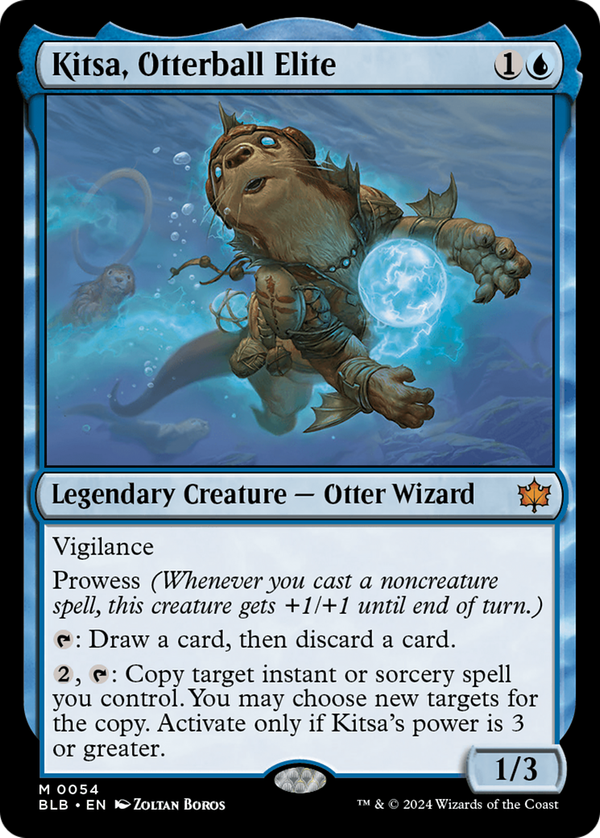
Rules text
 : Draw a card, then discard a card.
, : Copy target instant or sorcery spell you control. You may choose new targets for the copy. Activate only if Kitsa's power is 3 or greater.
: Draw a card, then discard a card.
, : Copy target instant or sorcery spell you control. You may choose new targets for the copy. Activate only if Kitsa's power is 3 or greater.