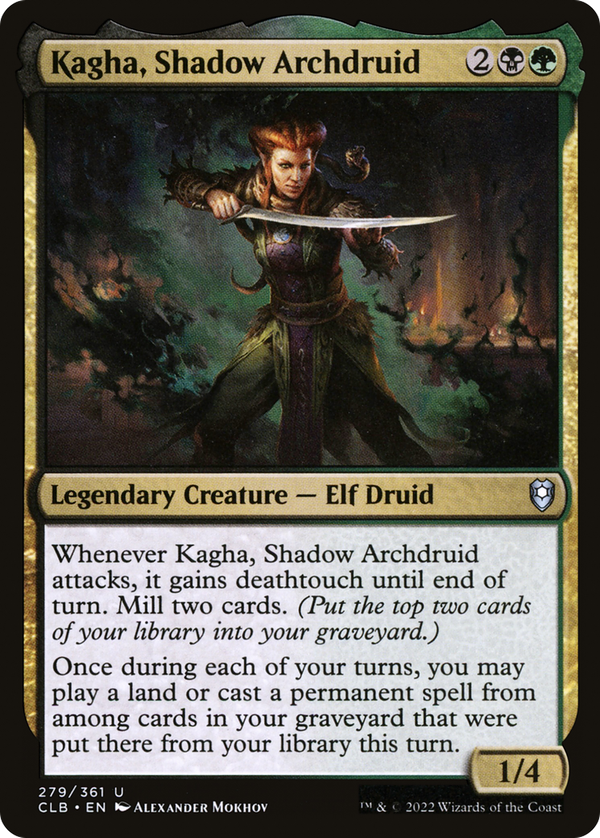
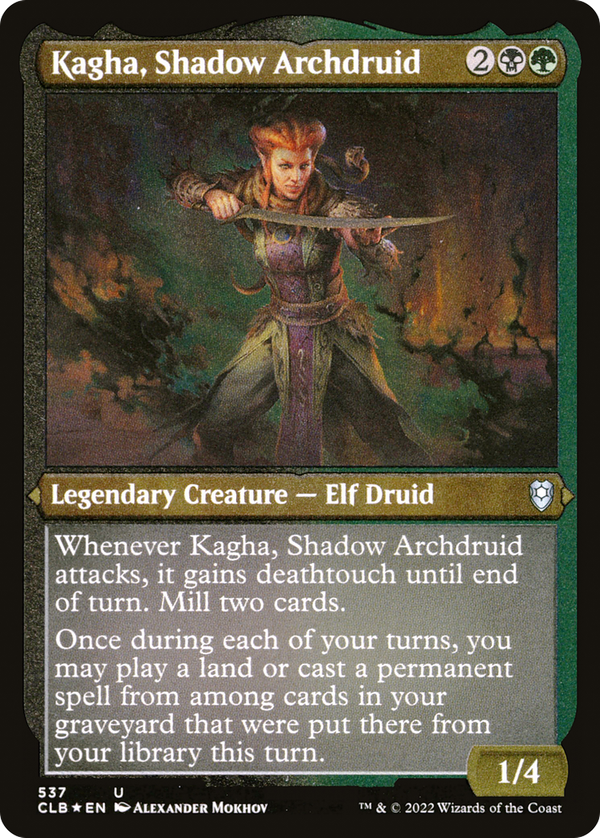
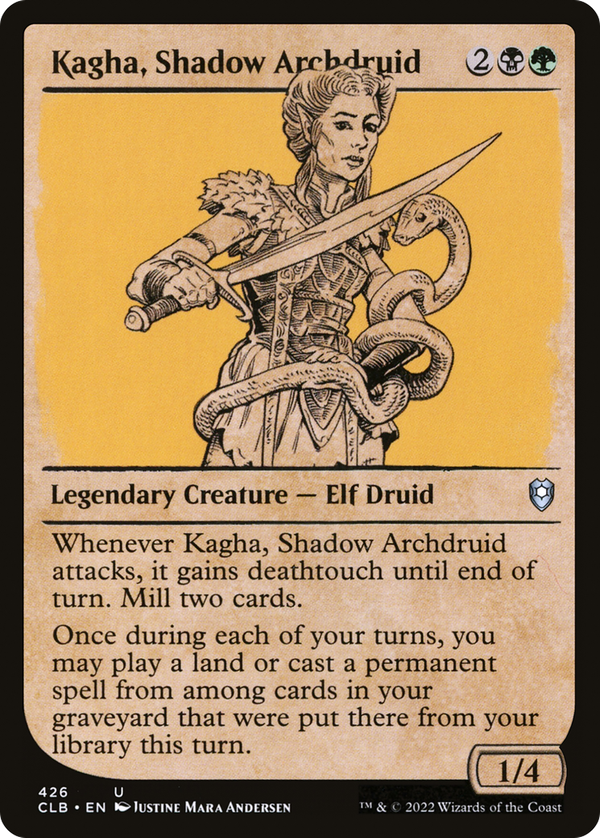
Kagha, Shadow Archdruid



Self-mill is usually a means to an end: fuel a graveyard payoff, dig toward a reanimation target, feed a delve count. This design collapses means and end into one permanent by tying a recursion clause to whatever hit your graveyard from your library this turn. The attack trigger drops two cards, and the second ability lets you replay a land or cast a permanent spell from that fresh material, once per turn. But the clause is not fenced to the attack: any mill you run this turn from other sources widens the pool you can spend, so the more your deck flips face-up before your main phase, the fatter the second hand you get to cash in. The mill stops being pure attrition and becomes a delayed draw step routed through the graveyard. The deathtouch-on-attack rider is what keeps a 1/4 relevant as a repeated aggressor: a small deathtouch body trades up and pries open blockers, which is exactly what a creature whose whole job is to keep swinging and refilling needs. Sequencing carries weight too, because the recursion only touches cards milled this turn: you attack (and pile on any other self-mill) before committing the rest of your mana, so you know what the yard offers before you spend it. A value engine built on the premise that your own library, turned over two cards at a time, was already a resource worth reaching for.