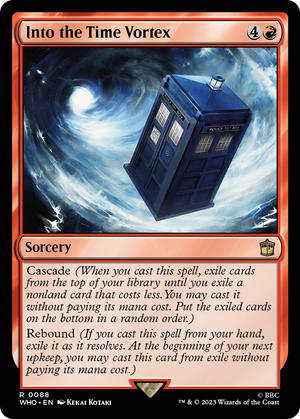
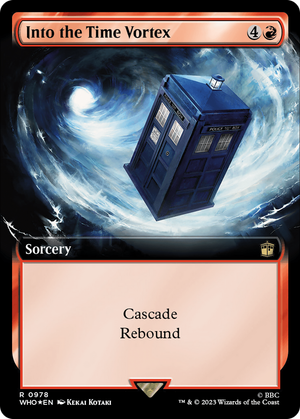
Into the Time Vortex


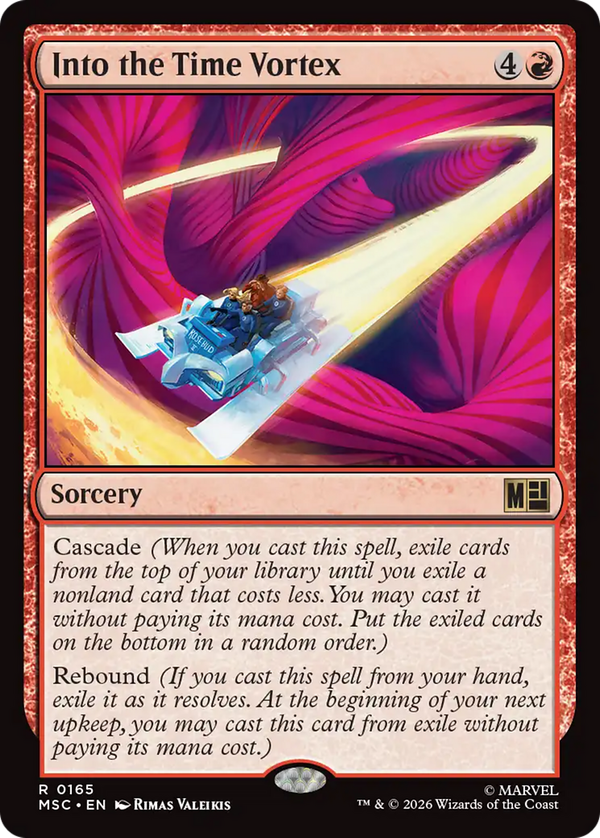
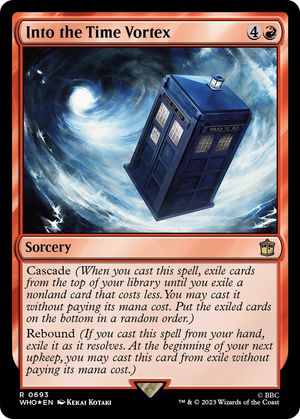
Cascade and rebound are both free-recast mechanics, and stacking them on one sorcery answers a simple greedy question: why get one spell out of a card when you can wring four? The initial cast triggers cascade, which digs until a cheaper nonland spell falls out and hits the stack for free. Because you cast it from hand, rebound then exiles it as it resolves, and next upkeep you recast it, firing cascade a second time. That is four spells off one card across two turns: the original cast, its cascade hit, the rebound cast, and its cascade hit. The wrinkle worth naming is the timing dependency: rebound only fires when the spell was cast from hand, so a copy that arrives via cascade or another free-cast effect does not earn the delayed encore, which keeps the loop from folding into itself. What pays for all that is the five mana up front and the pure variance of what cascade turns up; you are buying two random spells below the cost line, not choosing them. It reads as a red spell doing very un-red things (card advantage, a two-turn value engine), which is the design license these high-cost, spectacle-forward sorceries tend to earn: the ceiling is loud, the floor is whatever your deck happens to be feeling.