Inquisitor Eisenhorn



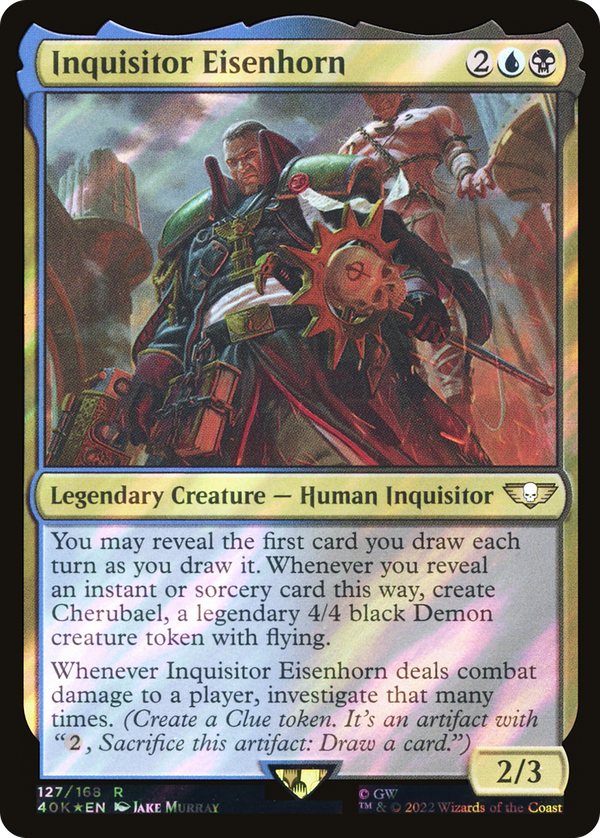
The reveal clause is the interesting piece, because it turns a decision you rarely get to make into a recurring one. You draw that first card every turn regardless; the only new choice is whether to show it, and unless a card in hand cares about hidden information, you flip it and hope for a spell. Fill the deck with instants and sorceries and each turn becomes a chance at a 4/4 flying Demon named Cherubael, though the legend rule caps that reward: you are refreshing one token, not building a horde, so the value is in having a recurring flyer whenever the last one dies rather than in stacking bodies. That ceiling is what keeps the reveal from being a runaway. The second ability points the same direction from the other side of the board. Combat damage scales the investigate count directly, so an evasive-or-not 2/3 that keeps connecting converts its damage into a steady stream of Clue tokens, and the longer it survives the more it draws. Both halves reward a spell-dense, low-to-the-ground configuration: the reveal wants a high instant-and-sorcery count to hit, and the small body wants stealth and repeated hits rather than raw pressure. Neither ability goes dead while the other stalls, which is what lets a fragile 2/3 justify the deckbuilding it quietly asks for.
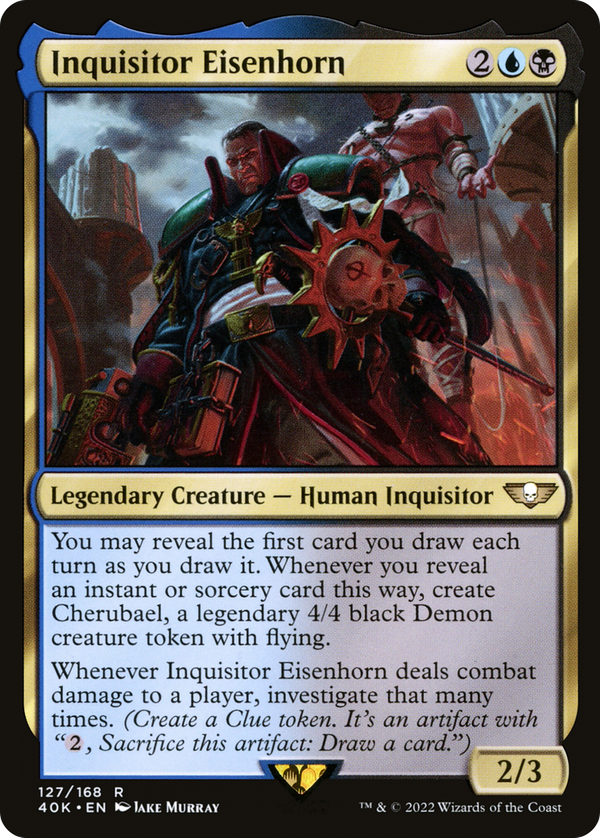
Rules text
, Sacrifice this token: Draw a card.")