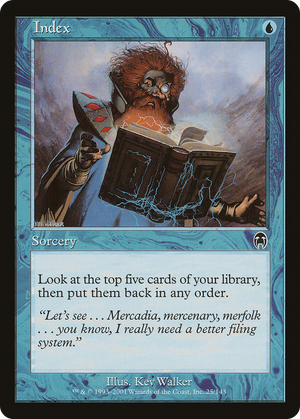
Index

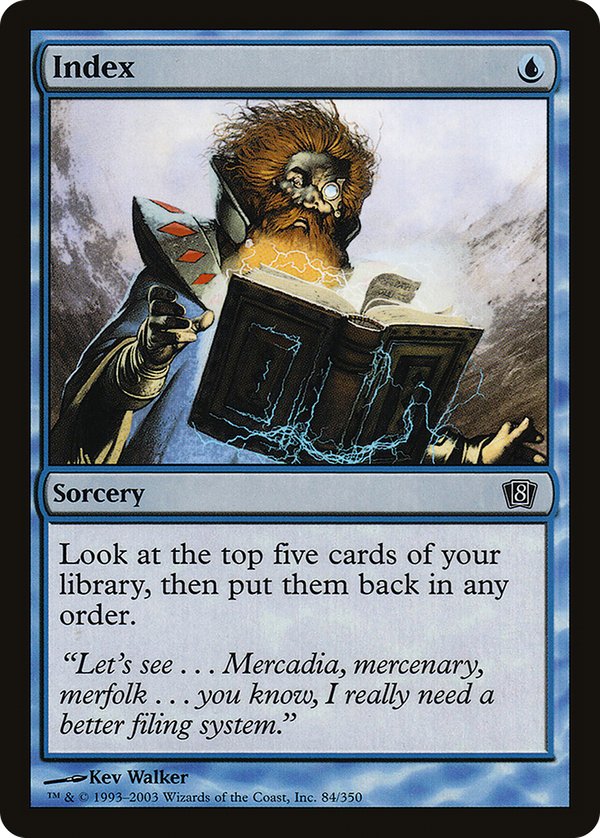
Pure information, no card advantage: that is the whole bargain, and it explains why this effect has spent its existence on the margins of playability. Reordering the top five cards lets you stack a draw step, line up the cards you want in the sequence you want them, and bury the lands or dead cards beneath what matters. The problem is that nothing leaves: every card stays in your library, so the arrangement you build only advances at the speed of your natural draws, and once you pull the top card the stack underneath sits exactly as you left it, useful but inert until you get there. Compare the trajectory of the mechanic since: scry collapsed this same look-and-arrange function into a rider on other spells and added the option to bottom what you do not want, which is the piece this card structurally lacks. The closest evergreen descendant of the standalone version is surveil, which does the same digging while feeding a graveyard. What survives is its value to anything that cares about library order for its own sake: miracle setups, top-of-deck tutoring chains, or combos that need a specific card waiting on top (though as a sorcery it cannot do that arranging at instant speed). It is a clean, honest piece of card-quality smoothing from an era before smoothing came stapled to everything, and its design legacy is the cautionary one: looking without selecting is rarely worth a card and a turn.