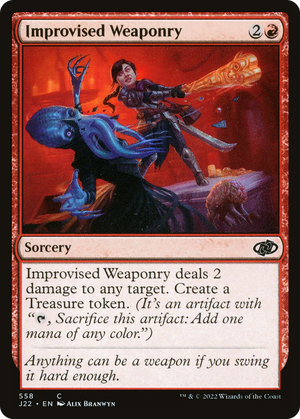
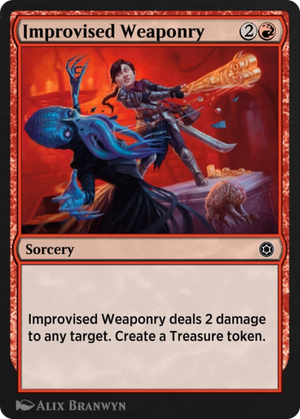
Improvised Weaponry


The rate to notice is what the Treasure does to the price. Two damage at sorcery speed for three mana is unremarkable on its own; plenty of red spells hit harder for less. But the Treasure refunds a mana on a later turn, so the spell effectively costs less than it prints once you account for the ramp, and it smooths a color you were short on while it clears a small threat. Stapling burn to a Treasure lets the removal serve as the excuse while the fixing arrives as the payment plan. The card wants a home already leaning on artifacts, where the token is not merely a mana rock but fuel: something to feed a sacrifice outlet, something to count toward an artifact-matters cost, something that pays for the next spell as it is cashed in. Read as pure removal it does two jobs a burn spell usually does not; the mana it gives back is what pulls it out of the also-ran pile. The sorcery-speed clause is the honest limit. You cannot hold it up as a combat trick or a response, so it belongs to the proactive turn rather than the reactive one, which is exactly where a card whose real value is fixing and tempo wants to be spent anyway.
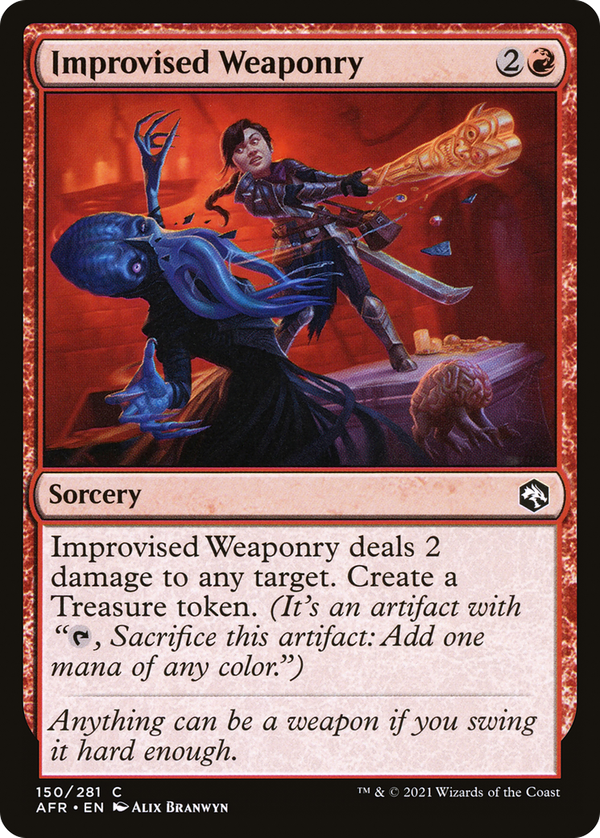
Rules text
 , Sacrifice this token: Add one mana of any color.")