Functionally Jungle Hollow. The Khans gainland in BG paint, and the question for Limited is only ever what the format does to clean two-color fixing. TMT is a medium-speed legendary-matters environment with hybrid-mana commons that splash readily and a real artifact-and-equipment subtheme, which means decks routinely want a third color and have the time to pay the tempo tax for it. That puts this in the comfortable middle of the pack for any BG seat and earlier than usual when the deck is reaching for a third color off Mechanized Ninja Cavalry, Putrid Pals, or a hybrid uncommon. The one life matters more here than it does in a faster set: the Food commons and the grindier Golgari sacrifice lines turn the gainland trigger from rounding error into a real increment over the course of a game. The only decks that pass are the rare ones planning to curve out on turn three and never blink, and TMT does not produce many of those.
Illegitimate Business
How this card plays
Functionally Jungle Hollow. In Commander the gainland cycle is the floor of fixing, not the ceiling: most Golgari decks running this are doing so because they want the dual color access at common cost and are happy to eat the tapped turn somewhere in the first few turns of a long game. The one life matters less here than the format's pace forgives the tempo hit, which is the trade that makes these reliable hundred-card filler. The Golgari slice's modest synergy with sacrifice and drain shells is real but marginal; you run it for the mana, and it adds a copy to a pool that was never short on this effect. Nothing about the new printing changes what the deck wanted, which was a tapped dual that gains a point. It still does that.
Functionally Jungle Hollow. In Modern the gainland chassis is too slow to matter: the format's enters-tapped fixing slots go to dual lands that produce immediately or fetch what they need, and a tapland with no upside beyond a single life point sits well below that bar. It is legal and yet to register in tracked tournament play, which is the honest read for a card whose tempo cost has been a non-starter at this speed since the cycle debuted. Nothing about this printing changes that math.
Registered in 0.0% of tracked decks, 3.0 copies on average. Last seen May 24, 2026.
Functionally Jungle Hollow: the Golgari entry in this set's common gainland cycle, and nothing about Standard moves the read. The chassis has the same job it has always had, taxing you a turn of tempo for unconditional black-green fixing and handing back a point of life that the sacrifice-and-drain shells in this color pair are happy to bank.
In a format with shocks, fast lands, and a deep enough dual pool to run, the gainland is what you reach for when the deck is fine being a turn slow, which Golgari midrange usually is. That keeps it on the fringe of Standard manabases rather than in the core: not absent, but never the dual you start with. The decks that want it want a small handful, and the printing adds those copies to the pool without changing what they cost the deck to play.
Functionally Jungle Hollow, the Golgari gainland, now legal in Pioneer. Nothing about the format changes the read: a tapped dual that gains a life is fixing for casual and budget BG bases, and Pioneer's competitive end runs faster, cleaner manabases than a turn-one tapped land can support. It has yet to register in tracked tournament play, which is what you would expect from a land whose tempo cost prices it out of decks paying for their mana with shocks, fastlands, and Pathways. The printing adds a copy to the pool and a price floor; the deck that wanted Jungle Hollow, if one exists at this level, already had it.
Registered in 0.0% of tracked decks, 4.0 copies on average. Last seen May 23, 2026.
Functionally Jungle Hollow, the Golgari slice of the gainland cycle, now legal in Pauper for whatever wants it.
Which is almost nothing. Pauper's mana bases lean on the gainlands when the deck genuinely needs them, but black-green is not a pairing the format's tier decks are built around, and the speed tax matters more here than in Limited: the format is fast enough that a tapped land turn one is a real cost most archetypes won't pay for fixing they can get elsewhere. Where a BG midrange or sacrifice shell does exist, it takes these as a clean four-of, because the life rider is upside in exactly the drain-and-sacrifice math the color pair runs on. That deck is a fringe presence rather than a fixture, so a new printing changes the read not at all: it adds a copy to the pool and a price floor, and the small slice of Pauper that wanted the cycle's Golgari land already had it.
Functionally Jungle Hollow, which tells you everything about the rate and nothing about why it would matter here. In Vintage the gainland is a non-card: the format's mana base runs on duals, fetches, and the Power Nine, and a tapland that gains a single life asks for a tempo concession that no Vintage deck has reason to pay. It is legal and has yet to register in tracked play, which is the honest expected result rather than an oversight. The Golgari color pair that most wants the life total exists in Vintage primarily through faster, cheaper mana, and a common dual that enters tapped does not compete with what those decks already run.
Functionally Jungle Hollow. In Legacy the entire conversation about a common gainland is whether the format would ever stoop to a tapland for fixing, and it does not: dual lands, fetches, Bayou itself, and the shocks all enter untapped and do real work, so a card that costs a full turn of tempo for two colors and a point of life has no seat in a format built on the best mana in the game. It is legal and has yet to register in tracked tournament play, which is the expected result rather than a surprise. Nothing here changes that. The decks that want black-green mana in Legacy already have strictly better lands, and the one life is not a tax those decks are looking to pay.
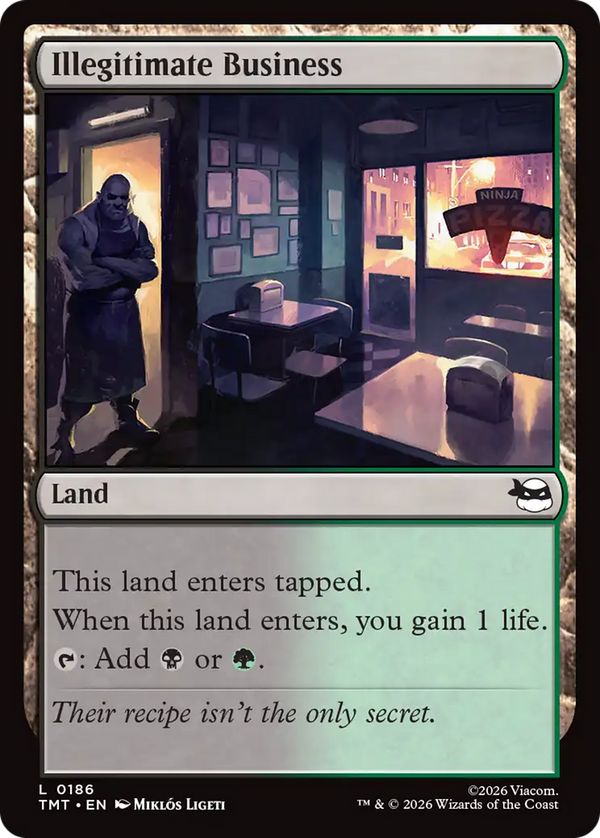
Rules text
 : Add
: Add  or
or  .
.