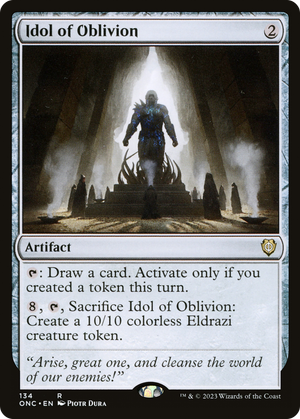
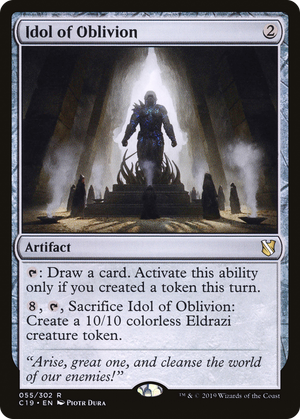
Idol of Oblivion

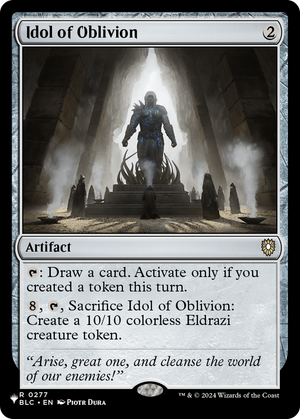
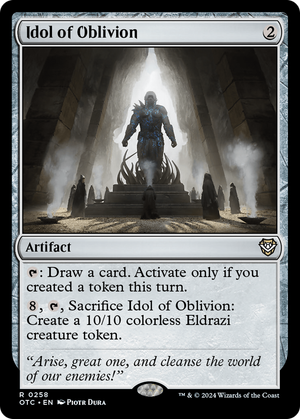
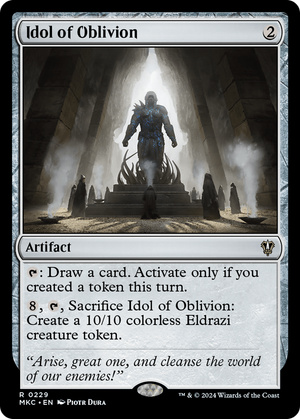
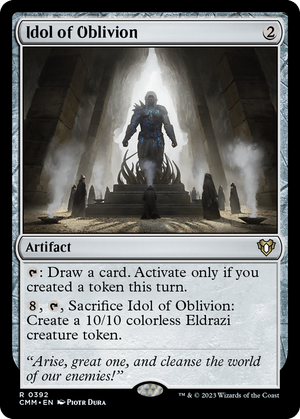
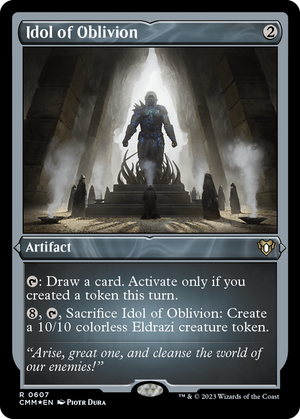
Two mana buys a card-advantage engine that only pays out if your deck is already doing the thing it wants: make a token every turn. That gate is the whole design. Unlike a Phyrexian Arena or a Skullclamp that draws off any board, this artifact sits dead the moment your token production stalls, which ties its ceiling directly to how relentlessly a deck can generate bodies. In a machine that spits out a Saproling, a Thopter, or a Treasure every turn, it is a repeatable draw that costs nothing but the tap; in a deck that makes tokens in lumps rather than a steady trickle, it goes cold for turns at a stretch. That conditional cadence is what separates it from an unconditional draw source and what marks it as a payoff rather than a staple.
The sacrifice line is the tell that the designers knew it: eight mana and the artifact itself for a 10/10, a mana sink deliberately priced far above where you would ever want to reach for it. It exists so the card is never fully blank, a floor for the games where your token engine has been dismantled and the Idol has nothing left to draw off. Read whole, this is a card that rewards single-axis commitment first and hands you an expensive escape hatch second, for the games where that axis gets pulled out from under you.
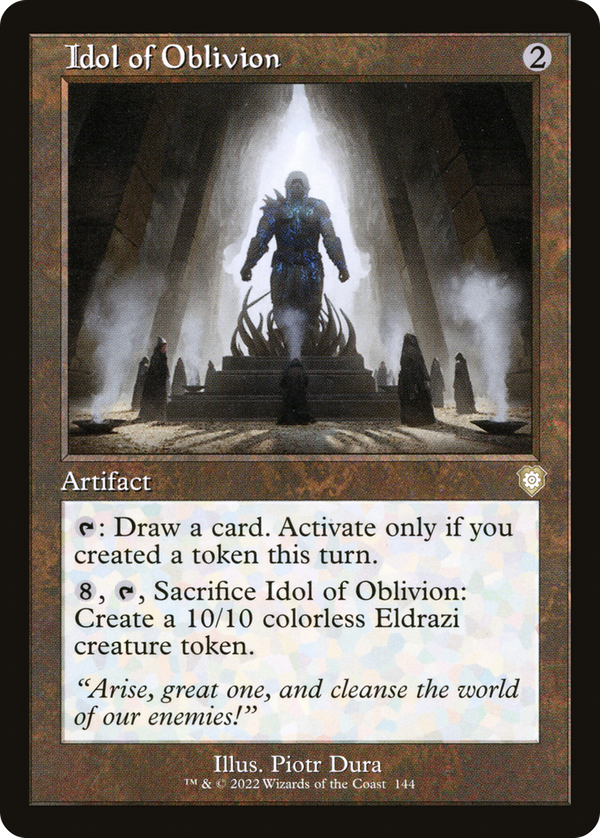
Rules text
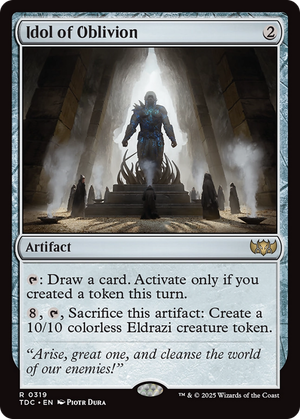
 : Draw a card. Activate only if you created a token this turn.
 , , Sacrifice this artifact: Create a 10/10 colorless Eldrazi creature token.