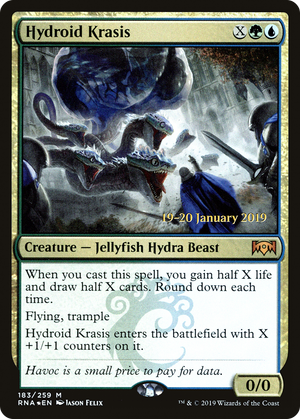
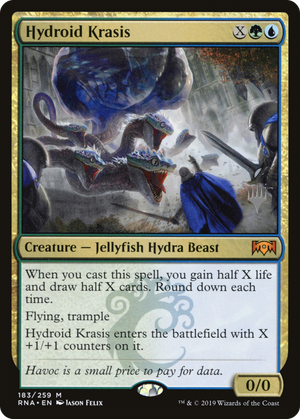
Hydroid Krasis



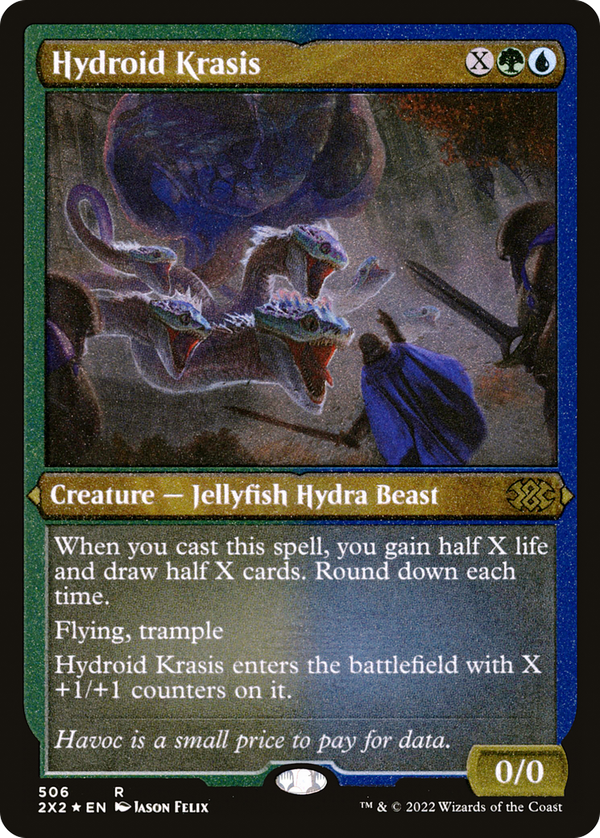
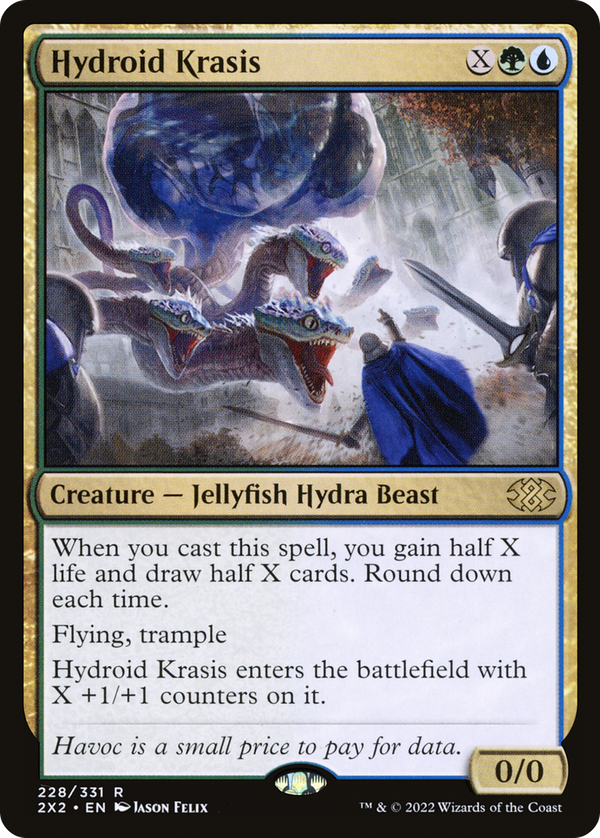
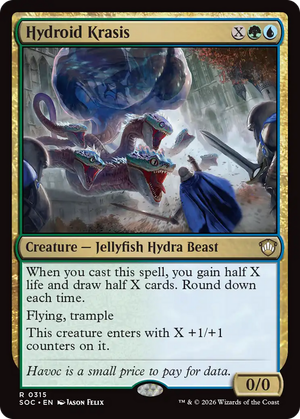
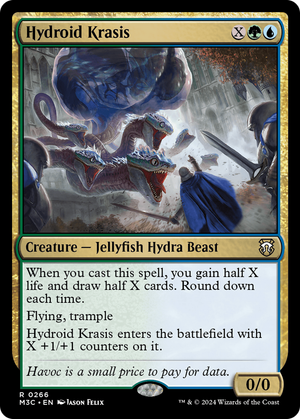
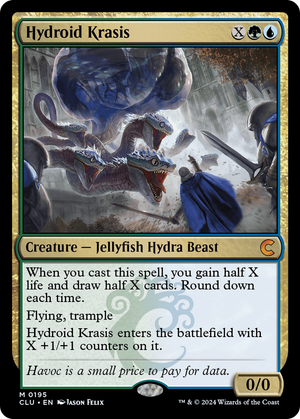
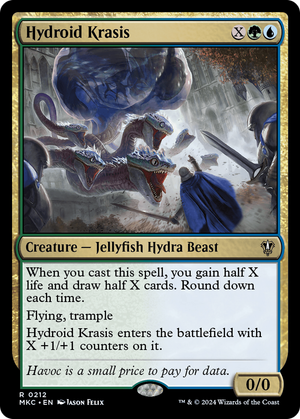
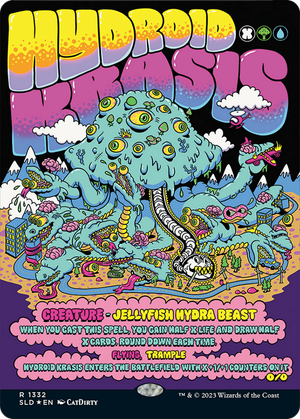
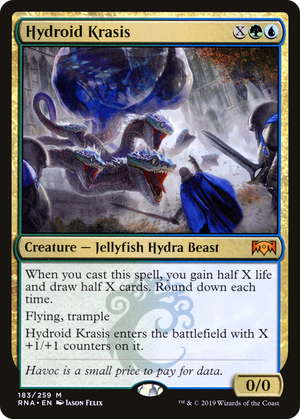
The genius of the design is that it pays you before counter magic can catch it. The card-draw and life-gain are stapled to the cast trigger, which resolves on the stack independent of the creature itself: counter the spell and you still drew your cards, still gained your life. That single clause turns what looks like a top-heavy X-spell into a value transaction that cannot be denied, which is precisely why it became the mythic fair Simic decks reached for whenever the game went long. The body it leaves behind is almost secondary, a flying, trampling hydra that scales with the same X you spent, but the point was never the creature. The point was that spending mana on the endgame never felt like a gamble; even the worst case, a hard counter into an empty board, still refilled your grip and stabilized your life total. Scaling both halves at half of X, rounding down each time, is the restraint that keeps the rate from spiraling: you pay full price for the flyer and only half for the value, so the sweet spot lives in the mid-to-late game rather than the explosive early blowout. The perennial Simic problem is how to make a ramp payoff that doesn't fold to interaction, and the answer here is elegant: you put the payoff where interaction can't reach it, on the cast trigger rather than the resolved permanent.